Water Leak Boiler Troubleshooting Guide
A practical, step-by-step guide to diagnose and fix a water leak in your boiler. Learn safe, quick remedies and when to call a professional to prevent damage and restore heating fast.


Most water leaks in boilers come from a worn pressure relief valve, loose connections, or a corroded heat exchanger. Quick fix: shut off the boiler, turn off the water supply, and place a bucket under the drip. If you smell gas, hear hissing, or the leak continues after basic steps, power down the unit and call a licensed technician immediately.
Why a water leak boiler is urgent
A water leak boiler isn’t just a nuisance—it's a safety and efficiency concern. The moment you notice moisture around the boiler, you should act quickly. According to Leak Diagnosis, a water leak boiler is most often a sign of pressure-relief valve wear, loose fittings, or corroded components. Ignoring a leak can lead to mineral buildup, reduced heating efficiency, higher energy costs, and in worst cases, property damage from flooding. This guide walks you through immediate actions, common sources, and practical checks you can perform safely as a homeowner.
Common sources of boiler leaks
Leaks originate from multiple points depending on boiler type (gas, oil, or electric) and age. The most frequent sources include: - Worn or damaged pressure-relief valve seals that drip under normal pressure; - Loose or corroded pipe joints and valve connections; - A failing expansion tank or circulation pump seal; - Cracked heat exchanger or boiler shell from corrosion or overheating; - Gasket failures in burner assemblies. Each source has distinct symptoms and fixes, so identifying the most likely cause helps you decide whether a tightener, valve replacement, or professional service is needed.
Safety and immediate actions you should take
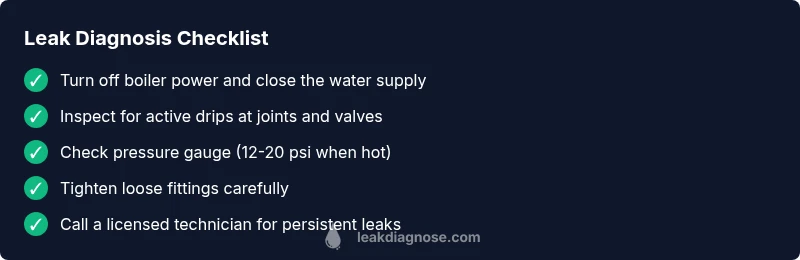
First, shut off power to the boiler where safe (electric main or breaker) and close the water supply to minimize further leaking. Place a container or towels to catch drips and protect floors and cabinets from water damage. Do not attempt to weld, cut pipes, or force fittings—thermal shock or gas/oil risks require licensed technicians. If you smell gas, hear hissing, or see scorch marks, evacuate and call emergency services or your gas supplier. After the immediate danger is contained, document the leak with photos for your technician and insurance.
How to inspect safely without professional tools
With the boiler off and pressure low, you can perform basic visual checks. Look for wet spots on joints, rust around connections, and the pressure gauge reading (typical residential boilers run 12-20 psi when hot). Gently tighten accessible fittings with the correct wrench, being careful not to over-tighten. Inspect the expansion tank and any relief valves for signs of moisture. Do not open sealed controls or energy-safety devices. If you cannot locate the leak or it reappears after tightening, preparation for professional service is required.
Prevention and maintenance to reduce future leaks
Regular maintenance is the best defense against leaks. Schedule annual inspections, flush the system as recommended by the boiler’s manufacturer, check the expansion tank, and replace worn gaskets and seals proactively. Keep the area around the boiler dry and uncluttered to spot leaks early. Install a drip pan with a secondary containment plan if the boiler sits in a basement or utility room. Investing in a corrosion inhibitor by a professional can extend life and reduce mineral buildup.
What to do if the leak stops after tightening
Sometimes a leak appears to stop after tightening a connection, but the root cause can still be present. Monitor the area for any return dampness for 24-48 hours and check the pressure gauge; if pressure climbs rapidly, you likely have a more serious issue such as a compromised heat exchanger. In such cases, do not delay professional assessment. A boiler technician can perform a pressure test and advise on safe operation.
Quick maintenance routines you can perform safely
From time to time, visually inspect all visible joints, clean dust from the burner area, and ensure ventilation around gas or oil boilers is unobstructed. Keep a log of any drips, noises, or changes in performance to share with a technician. Remember, some steps require turning off power and water—always prioritize safety.
Steps
Estimated time: 1-2 hours
- 1
Shut off power and close water supply
Power down the boiler at the switch or breaker and shut the main water supply to prevent more water from entering the system. Place a bucket beneath the area to catch drips and protect flooring while you assess.
Tip: If you’re unsure where the main water shutoff is, locate the nearest readily accessible valve and practice turning it before you start. - 2
Assess the visible leaks and gauge readings
Observe which joints or valves are leaking and check the boiler’s pressure gauge. A normal residential boiler reads around 12-20 psi when hot; a sharp rise usually signals a major issue.
Tip: Document any wet spots and take clear photos for your technician or insurer. - 3
Tighten loose fittings cautiously
Using the correct wrench, gently tighten any accessible fittings and joints that look loose. Do not over-tighten, which can strip threads or crack connections.
Tip: Turn slow, check for drips every few turns, and stop if leakage worsens. - 4
Decide whether to call a professional
If tightened fittings don’t stop the drip, or if you suspect a faulty pressure-relief valve or heat exchanger, schedule a professional inspection promptly. Gas and oil boilers require licensed technicians.
Tip: Ask for a written estimate and discuss potential replacement parts vs repairs. - 5
Test and monitor after minor fixes
After any fix, restore water and power, then monitor system performance and the leak area for 24-48 hours. If leakage recurs or pressure climbs, contact a boiler technician immediately.
Tip: Keep emergency contact numbers handy for fast response.
Diagnosis: Visible water pooling around boiler or damp spots on the floor, sudden drop in boiler pressure, or unusual noises indicating a leak
Possible Causes
- highWorn or failed pressure-relief valve seals
- highLoose or corroded pipe joints and valve connections
- mediumCracked heat exchanger or boiler shell due to corrosion/overheating
- lowFaulty expansion tank or gasket failure in burner assembly
Fixes
- easyTighten accessible fittings and connections that appear loose
- mediumReplace the pressure-relief valve seals or the valve itself
- hardIsolate and replace a cracked heat exchanger or compromised boiler shell
Questions & Answers
What are the most common causes of a boiler leak?
The most common causes are a worn pressure-relief valve, loose pipe connections, corrosion at joints, and faulty gaskets or seals. Each cause has a distinct fix, from tightening fittings to replacing valves or the heat exchanger.
Common causes include worn relief valves, loose joints, and corroded parts. Tighten or replace components as needed, and call a pro for serious damage.
Can I fix a boiler leak myself?
You can perform basic safety steps like shutting off power and water, collecting drips, and tightening accessible fittings. Do not attempt gas line work, combustion chamber repairs, or replacing heat exchangers yourself.
Basic safety checks are possible, but avoid major repairs on gas or oil boilers without a professional.
When is it safe to continue using a boiler after a leak?
Only after a professional confirms the system is secure, pressure is stable, and there are no lingering leaks. Do not operate if you see active dripping or hissing sounds.
Only resume use once a pro says it’s safe and the system is leak-free.
Should I replace my boiler if it leaks frequently?
Frequent leaks usually indicate an aging system or serious damage. A technician can assess repair viability and estimate replacement costs.
If leaks recur despite repairs, consider replacement for reliability and safety.
Will homeowner insurance cover boiler leak repairs?
Many policies cover sudden leaks and resulting water damage, but coverage varies. Contact your insurer with photos and repair estimates for a claim review.
Check with your insurer; coverage depends on policy terms and the cause of the leak.
What warning signs indicate a dangerous boiler issue?
Gas odor, hissing sounds, soot, or flame color anomalies are serious warnings. Evacuate and contact emergency services if you suspect a dangerous condition.
Gas smells or flames mean danger—evacuate and call for help immediately.
Watch Video
Main Points
- Shut off power and water at the first sign of a leak.
- Identify the leak source before attempting fixes.
- Tighten simple fittings safely; replace faulty valves or heat exchangers as needed.
- Call a licensed technician for gas/oil boilers or when leaks persist.