Leak from Water Heater: Urgent Troubleshooting Guide (2026)
Facing a leak from your water heater? This urgent troubleshooting guide covers safety steps, common leak sources, a diagnostic flow, and practical fixes for homeowners and DIYers in 2026.


Most leaks from a water heater come from a loose valve, a worn T&P relief valve, a corroded inlet/outlet connection, or the tank itself failing with age. For a quick fix, shut off the cold-water supply and power to the unit, then inspect and tighten loose connections, replace a leaky drain valve, or reseat fittings. If active leaking continues, stop using the heater and call a plumber.
Quick safety check before you start
Before you reach for tools, prioritize safety. According to Leak Diagnosis, a leaking water heater can indicate anything from a loose valve to a failing tank, and rushing into repairs can create a shock risk or flood. The Leak Diagnosis team found that most household leaks originate at fittings or valves, not the tank itself, so start with these simple checks first. If you smell gas, hear hissing, or see scorch marks, stop immediately and evacuate the area; call emergency services. For electric water heaters, turn off power at the breaker and avoid touching metal components with wet hands. For gas units, switch off the gas supply at the shutoff valve and ventilate the area. Have a flashlight, a bucket, and towels ready, and prepare to shut off water supply if the leak worsens. Always know your local codes and when to call a licensed professional. This guide aims to help homeowners safely diagnose common leak sources and decide whether to DIY or escalate to a pro.
Common causes of a leak from water heater
Leaks can originate from several areas on a water heater. The most frequent culprits include a loose or faulty drain valve, a leaking T&P (temperature-pressure) relief valve, corroded inlet/outlet connections, or a tank that has aged and begun to fail. Less common but possible sources are damaged piping, faulty unions, or a mis-seated thermostat access. By understanding these sources, homeowners can prioritize fixes that reduce risk and prevent water damage. Remember that the exact source can be confirmed by careful observation and, if needed, a professional assessment. The Leak Diagnosis guidance stresses starting with the easiest, most accessible components.
Safety first: shutting off power and water
Always shut off electricity or gas to the heater before touching any components. For electric models, switch off the circuit breaker or remove the fuse; for gas models, close the gas valve and ensure good ventilation. Then shut off the cold water supply to minimize further water flow. Draining the system is safer after you have stabilized power and water. Protect floors with towels, place a bucket under the suspected drip, and wear gloves to avoid contact with hot surfaces or dirty water. If you feel uncertain at any point, stop and call a licensed professional.
Immediate actions you can take
Start with the simplest fixes: tighten accessible fittings and attach or reseat hoses. If the drain valve is dripping, replace the valve seal or valve itself using basic plumbing tools. If the T&P valve leaks, avoid tampering with it aggressively—replace it if necessary and follow the manufacturer’s instructions. Keep monitoring the area for new leaks after each step. Do not use the heater if you notice continuous dripping from the tank itself, as this indicates more serious tank failure.
Diagnostic flow: symptom to diagnosis
- Symptom: water is pooling near the base or dripping from a valve. - Possible causes: drain valve, T&P valve, inlet/outlet fittings, tank corrosion. - Priority: address obvious drips first, then test each component in sequence. - Action: tighten fittings, inspect gaskets, and consider valve replacement. If you observe continuous wetness on the tank body, this usually signals a tank leak that requires professional assessment or replacement. This flow helps homeowners avoid wasted effort on non-problem components.
Step-by-step fixes for the most common causes
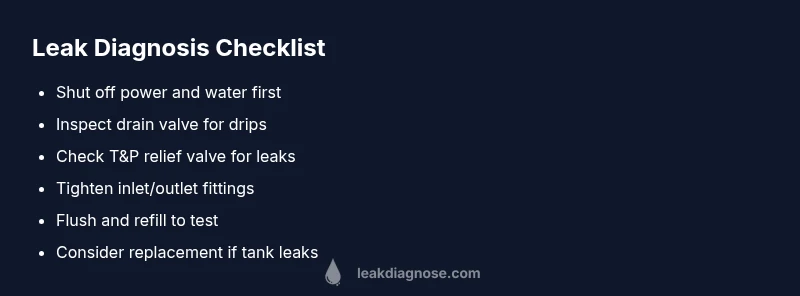
- Tighten/replace the drain valve if dripping from the drain outlet. 2) Inspect and replace a faulty T&P valve. 3) Tighten loose inlet/outlet fittings and reapply thread sealant or plumber’s tape where appropriate. 4) If the tank shows signs of corrosion or a pinhole leak, plan for tank replacement. 5) Refill and test the system, watching for new leaks. 6) Rebuild or replace worn supply lines as needed. 7) Restore power or gas and confirm safe operation before use. The focus is on safe, repeatable steps that minimize risk.
Prevention and maintenance to reduce future leaks
Regular maintenance helps prevent leaks. Schedule an annual inspection, flush the tank to remove sediment, check the anode rod, and replace worn valves and fittings before they fail. Keep the area around the heater dry and uncluttered to spot leaks quickly. Consider installing a drain pan with a secondary containment and a floor drain. Use a water alarm to detect slow leaks early, which gives you time to address issues before significant damage occurs.
When to call a professional
If you notice active leaking from the tank body, if electricity or gas is involved, or if you are uncomfortable performing any step, stop and call a licensed plumber or HVAC technician. A professional can verify tank integrity, replace dangerous components, and help you decide whether repair or replacement is the best option. Prompt professional help can prevent water damage and fire hazards.
Steps
Estimated time: 60-120 minutes
- 1
Power down and isolate utilities
Turn off power to the heater at the circuit breaker (or switch off the gas supply for gas models). Close the cold water supply. This prevents further risk while you inspect leaks.
Tip: Label the breaker to avoid accidental re-energizing during the repair. - 2
Identify the leak source
Carefully observe where water is coming from. Dry the area first to spot fresh drips and check valves, fittings, and the tank rim for moisture patterns.
Tip: Use a dry notebook or phone photo to track drip locations over time. - 3
Tighten or reseat the drain valve
If the drain valve weeps, tighten the nut and replace the stem seal if accessible. If needed, replace the drain valve entirely.
Tip: Do not use excessive force; shut the valve before attempting replacement. - 4
Inspect/replace the T&P relief valve
Check for continuous dripping when the valve is in a resting position. Replace if it leaks or the handle sticks. Safety valve replacement should follow manufacturer instructions.
Tip: Handle the valve assembly gently to avoid damaging the tank or pipe connections. - 5
Check inlet/outlet fittings
Tighten any loose connections; reseal threads with appropriate plumber's tape. Inspect for crusted mineral buildup that might point to slow leaks.
Tip: Only tighten to snug; overtightening can crack fittings. - 6
Refill and test the system
Open the cold water valve, restore power or gas, and allow the tank to fill and pressurize. Watch for new leaks and test the T&P valve per instructions.
Tip: Monitor for several minutes after restoration before resuming full use. - 7
Decide on replacement if needed
If the tank shows corrosion, leaks from the body persist, or repeated failures occur, replacement is often the safest long-term choice.
Tip: Leak prevention: consider upgrading to a higher-capacity unit with modern safety features.
Diagnosis: Visible water pooling around the base of the heater or dripping from valves
Possible Causes
- highLoose or faulty drain valve
- highWorn or mis-seated T&P relief valve
- mediumLeaking inlet/outlet connections or piping
- lowTank corrosion or pinhole leak in the tank wall
Fixes
- easyTighten or replace the drain valve; replace valve seal if necessary
- mediumReplace the T&P relief valve if it leaks or sticks
- easyTighten and reseal inlet/outlet fittings; apply plumbers tape as needed
- hardIf the tank shows corrosion, replace the water heater
Questions & Answers
What is the most common cause of a water heater leak?
The most common causes are a loose drain valve and a faulty T&P relief valve. A slow leak from fittings or corrosion in older tanks can also occur. Identifying the exact source helps target the right fix.
Most leaks come from the drain valve or the relief valve. If unsure, start by inspecting those parts and tighten or replace as needed.
Can I fix a leak from the water heater myself?
Many minor leaks from fittings or valves can be fixed by a homeowner with basic tools. However, leaks from the tank itself or complex gas connections should be handled by a licensed professional.
Some fixes you can do yourself, but tank leaks require a pro.
Is a leaking T&P relief valve dangerous?
A leaking T&P valve indicates pressure or temperature may be too high. While not immediately dangerous, continuing leaks can signal unsafe conditions and should be addressed promptly.
A leaking T&P valve isn't instantly dangerous, but it means the system isn’t safe and needs fixing.
When should I replace instead of repair a water heater?
If the tank shows significant corrosion, frequent leaks, or the unit is older than its expected lifespan, replacement is often more cost-effective and safer than repeated repairs.
If the tank is corroded or very old, replacement is usually best.
Why does a dripping drain valve continue after closing?
Drips after closing can indicate a worn stem seal or valve body damage. Replacing the drain valve or seal typically resolves the issue.
A bad seal or valve can keep dripping after you shut it.
Watch Video
Main Points
- Shut off power and water before inspecting.
- Drain/drain valve and T&P valve are the most common leak sources.
- Tighten, seal, or replace fittings first—tank leaks require caution.
- If unsure, call a professional to avoid damage.
- Regular maintenance reduces future leaks and damage.