Water Heater Leak Top: Urgent Troubleshooting Guide
Urgent guide to diagnose and fix a water heater leak top, with a practical, step-by-step flow, safety notes, and prevention tips from Leak Diagnosis.


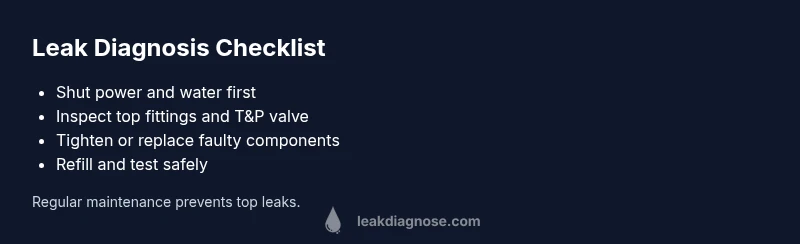
Turn off power or gas to the water heater, then shut the cold-water supply. Close the drain valve and place a bucket underneath. Inspect the top area for leaks, focusing on the T&P relief valve and hot water inlet. If water continues to drip after these steps, the issue may require professional repair.
Why water heater leak top matters
A leak at the top of your water heater is a red flag that often points to the tank’s upper connections rather than a random spill from the surrounding area. When water appears around the top, it can indicate a loose or corroded inlet/outlet fitting, a failing temperature and pressure (T&P) relief valve, or a compromised top seal. These scenarios require careful attention because they affect hot water safety, energy efficiency, and the long-term integrity of the unit. Treat any sign of a top leak as urgent and investigate methodically to prevent more serious damage such as corrosion, mold, or electrical hazards in adjacent spaces. Leak Diagnosis emphasizes that quick, safe checks can stop a minor drip from becoming a costly repair.
Common causes of leaks around the water heater
Leaks around the top of a water heater are most often caused by fittings that loosen over time, a failing relief valve, or a corroded top seal. Other possibilities include damaged insulation or mineral buildup that transfers moisture to the exterior. Here’s how to think about each source:
- Loose or damaged inlet/outlet fittings at the top: Over time, vibrations and temperature swings can loosen threads. A simple tightening or resealing often stops a slow drip.
- Faulty or worn T&P relief valve: This safety device releases pressure if the tank gets too hot or pressure spikes. A malfunctioning valve can leak from the discharge line or the valve body itself.
- Corrosion or cracks near the top: If the tank shell shows pitting or rust around the connections, the unit may be nearing end-of-life and require replacement.
- Top seals or dielectric fittings degrading: Some models use gaskets or seals at the top; if these fail, moisture migrates to the outer surface.
If you notice significant moisture, keep the area ventilated and call for professional service when basic tightening or valve replacement doesn’t stop the leak.
Immediate safety steps you should take
Safety is the top priority when you discover a water heater leak top. Follow these steps to reduce risk:
- Shut off power to the unit (electric) or shut off the gas supply (gas models). Do not touch electrical components with wet hands.
- Close the cold-water supply to the heater to stop incoming water. If you cannot reach the supply safely, leave it to a professional.
- If you see active dripping, place a bucket under the leak and soak up pooling water with towels. Avoid standing water near electrical outlets or appliances.
- Relieve pressure by briefly opening a hot-water faucet somewhere in the house, then close it after water stops spouting. This reduces tank pressure and minimizes splashing.
How to inspect the top area without dismantling the heater
You don’t need to disassemble the unit to perform a meaningful inspection. Look for signs of moisture around the top fittings and along the discharge line from the T&P valve. Check for corrosion on the metal threads, rust on the valve body, or discoloration indicating mineral buildup. If the discharge line is blocked or kinked, moisture may back up and leak from the valve rather than the tank itself. A clear sign of trouble is water that pools at the top while the rest of the system remains dry. Document any findings with photos so a technician can assess quickly.
Diagnostic flow to pinpoint the leak source
A methodical diagnostic flow helps identify whether the leak is from the top connections, the relief valve, or internal tank issues. Start with the simplest checks and progress to valve replacement if needed. The flow is:
- Observe the leak pattern and area. Is water coming from the top fittings or the discharge line?
- Tighten and reseal top fittings if accessible. Recheck after a short period.
- Inspect the T&P valve and discharge line for signs of wear, corrosion, or mineral buildup.
- If leakage persists after top fittings are secured, or if the valve body shows damage, plan for replacement or professional evaluation.
- After any work, refill and restore power/gas slowly while watching for renewed leakage.
If the leak continues or you observe rust, replace the affected components or consult a licensed plumber.
Step-by-step: fix the most common top-leak source
The most common top-leak source is a loose or worn top connection or a faulty T&P valve. This section provides a practical repair approach while emphasizing safety.
- Turn off power and water to the heater, and drain a little water to safe level if needed. Ensure the area is dry and you have a bucket handy. Tip: wear gloves to protect your hands.
- Tighten any loose inlet/outlet fittings at the top using the appropriate wrench. Check PTFE tape or thread sealant compatibility before re-tightening. Tip: apply only a little torque to avoid stripping threads.
- If the top valve shows corrosion or the valve body leaks, replace the T&P relief valve following manufacturer guidelines. Tip: collect old valve for disposal according to local codes.
- Inspect the discharge line for kinks or blockages and ensure it runs downward with proper support. Replace if damaged. Tip: never cap, bend, or alter the valve line.
- Refill the tank slowly, restore power or gas, and monitor for leaks. Tip: keep a towel handy during the first test run.
- If a leak remains after these steps, the tank may be compromised or the top seal degraded; arrange professional service. Tip: document any symptoms and part numbers to speed up repairs.
Safety considerations and when to call a professional
Dealing with a water heater leak top involves risks such as scalding water, electrical shock, and gas hazards. If you smell gas, hear hissing sounds, or the area remains damp after basic checks, contact emergency services and avoid using electrical switches near the unit. If you are uncertain about valve replacement or tank integrity, a licensed plumber is the safest option. prompt professional assessment can prevent catastrophic water damage.
Maintenance and prevention to avoid future leaks
Prevention starts with regular inspection and early action. Schedule annual checks of the T&P valve, drain valve, and top fittings. Keep the area around the heater dry, flush the system as recommended by the manufacturer, and replace worn gaskets or seals proactively. Record the date of service and any parts replaced to guide future maintenance. A small investment in routine checks can prevent large, costly leaks.
Steps
Estimated time: 60-120 minutes
- 1
Power off and water shutoff
Cut power to the heater (electric) or shut off gas. Close the cold-water supply to stop incoming water. This minimizes risk and stops the flow.
Tip: Never touch electrical components when wet. - 2
Drain a safe amount of water
Place a bucket if needed and drain a small amount to reduce pressure before inspections. This helps keep water splash to a minimum.
Tip: Keep towels handy and wear gloves. - 3
Inspect top fittings
Carefully examine the top inlet/outlet connections for looseness or corrosion. Hand-tighten if threads are clean and undamaged.
Tip: Use a wrench gently; overtightening can strip threads. - 4
Check the T&P valve
Look for signs of leakage around the valve body and discharge line. If the valve drips during normal operation, replacement is often required.
Tip: Do not block the discharge line. - 5
Test or replace the valve as needed
If the valve appears faulty, replace it following the manufacturer’s instructions. Recheck connections after installation.
Tip: Dispose of old parts per local guidelines. - 6
Refill and restore power
Open the cold-water supply slowly and allow the tank to fill. Restore power or gas and monitor for leaks as the system pressurizes.
Tip: Watch for initial drips for the first 15-20 minutes. - 7
Perform a final leak check
Inspect all top fittings and the discharge line after testing. If any sign of leakage persists, escalate to a professional.
Tip: Take photos of the setup to show the technician. - 8
Document and schedule preventive maintenance
Note the date, parts replaced, and any recommendations. Schedule annual inspections to prevent future leaks.
Tip: Set reminders for yearly checks.
Diagnosis: Visible water pooling around the top of the water heater or dampness near the T&P valve and top fittings.
Possible Causes
- highLoose or damaged top inlet/outlet fittings
- highFaulty or worn T&P relief valve or discharge line
- lowCorrosion or cracks at the top section of the tank
Fixes
- easyTighten/top fittings and reseal using appropriate plumber's tape as needed
- mediumReplace the T&P relief valve and inspect the discharge line
- hardAssess tank integrity and consider replacement if corrosion is present
Questions & Answers
What does a leak at the top of a water heater typically mean?
A top leak often points to fittings, the T&P valve, or the top seal. It can indicate a valve problem or deterioration of the tank’s upper connections. Prompt checks are important to prevent damage.
A top leak usually means the upper fittings or the safety valve may be failing; check those parts first and consider professional help if it persists.
Can I fix a top-leak myself?
Simple fixes like tightening fittings or replacing a faulty drain valve are possible for confident DIYers. More complex issues like a bad T&P valve or a tank crack should be handled by a licensed plumber.
You can try tightening fittings or replacing a valve if you’re comfortable with basic plumbing; otherwise, call a pro.
What safety steps should I take immediately?
Power down the heater, shut the cold-water supply, and keep the area dry. Do not touch electrical components if the area is wet. If you smell gas, leave the area and call for help.
Turn off power or gas, shut the water, and dry the area. If you smell gas, leave and call for help.
How do I know if the tank is damaged?
Visible corrosion, rust near the top, blistering of the tank, or continuous leaks after repairs strongly indicate tank damage and potential replacement.
Look for corrosion or rust near the top, and if leaks continue after fixes, the tank may be compromised.
When should I replace the water heater?
If leaks persist at the top after repairs or corrosion is evident, replacement is usually the safer and more cost-effective option than repeated repairs.
If leaks keep coming back or the tank shows corrosion, replacement is often the best option.
What maintenance prevents top leaks?
Annual inspections of valves, regular flushing of the tank, and replacing worn gaskets can prevent many top-leak scenarios.
Regular valve checks and tank flushing can prevent leaks from forming at the top.
Watch Video
Main Points
- Shut off power and water before inspecting.
- Top-leak sources are usually valve or connection-related.
- If the leak persists after basic fixes, consult a professional.
- Prevent future leaks with regular maintenance and timely valve checks.