Hot Water Leak: Urgent Troubleshooting Guide
Urgent guide to diagnosing and fixing hot water leaks in your home. Learn quick checks, safety steps, common causes, and prevention to minimize damage and costs for 2026.


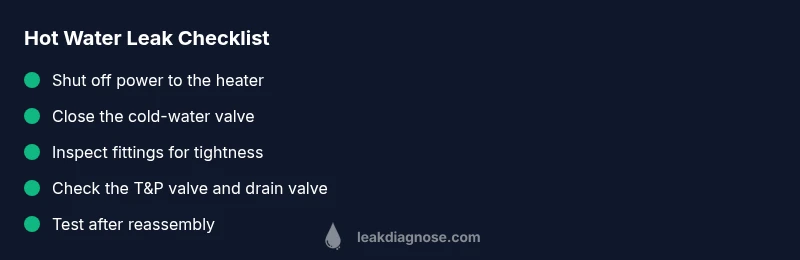
Shut off power to the water heater and the cold-water supply first, then inspect for loose fittings or the valve that’s leaking. If you find a faulty valve or gasket, tighten or replace it. If the leak persists, stop and call a professional immediately. According to Leak Diagnosis, quick action minimizes damage.
What makes a hot water leak urgent and how it harms your home
A hot water leak is more than a puddle. It signals a failure in the water heating system or its connections, which can lead to accelerated water damage, mold growth, and higher utility costs. For homeowners, recognizing the signs early is critical. A persistent drip, sudden pooling near the heater, or damp walls around plumbing lines demand immediate attention. Leak Diagnosis emphasizes that acting quickly reduces structural damage and simplifies repairs. In many homes, a small leak can escalate into a costly problem within hours, especially when it involved warm or hot water that accelerates material wear and invites scalding risks. The right next steps protect floors, walls, and belongings while preserving the integrity of the heating system. Stay calm, shut off power, and proceed with methodical checks to identify the source.
Common sources of hot water leaks and how to spot them
Leaking hot water can originate from several points. The most frequent culprits include loose or worn fittings at the connections on the water heater, a failing T&P valve, corroded or damaged supply lines, and a cracked drain valve. A leak around joints may be a simple gasket issue, while a crack in the tank is a sign of more serious failure. Regularly inspect the inlet and outlet connections, gas or electric control panels, and any flexible hoses. If you notice mineral buildup, rust, or damp spots near the heater, investigate further. Checking these areas first often reveals a straightforward fix, like tightening a connection or replacing a valve. Leak Diagnosis advice highlights that most leaks are detectable with a careful, hands-on inspection.
Immediate safety and shut-off steps you should take now
First, turn off the power to the water heater to avoid electric shock. Then close the main cold-water valve to stop new water from entering the heater. If the leak is at a valve or valve connection, try tightening with an appropriate wrench, but never force a stuck valve. Place a bucket or towels to catch drips, and ventilate the area if water damage or mold risk is present. If you can’t reach the shut-off safely or you notice a gas smell, evacuate and call emergency services. These safety actions protect you while you assess the cause and plan a fix.
Diagnostic flow: how to methodically identify the source
Start with the symptom: water at the floor near the heater, a slow drip from a line, or a sudden spray from a valve. Next, check for the simplest causes: a loose connection, a worn gasket, or a valve that won’t seal. If the leak is behind or beneath the heater, inspect the drain valve and any nearby pipe joints. If you confirm the issue is the T&P valve or tank shell, the repair becomes more involved. Use the following flow as a mental map: observe, isolate, tighten or replace fittings, retest, and escalate if the tank shows corrosion or if the heater is older than its recommended life. Remarkably, many leaks are resolved with a simple tightening or a valve replacement.
Step-by-step fix for the most common cause: loose fittings or worn gaskets
- Power down and isolate: ensure the heater is de-energized and the water supply is off. 2) Dry and inspect: wipe surfaces to locate the exact leak source. 3) Tighten fittings: carefully tighten joints and hose connections using the correct-sized wrench. 4) Replace gaskets: if a gasket shows signs of wear, replace it with a compatible replacement. 5) Test: slowly reintroduce water and power, watching for any continuing seepage. 6) Monitor: over the next 24–48 hours, check the area for new leaks and address any moisture promptly. If the leak returns, the component may be failing and require replacement.
Tools, safety gear, and best practices to prevent injury
Keep a bucket, towels, flashlights, and a basic socket wrench set nearby during repairs. Wear protective gloves to handle hot components and eye protection to guard against splashes. Use a flashlight to inspect hard-to-see joints and valve threads. Always confirm power is off before touching electrical components. Maintain a clean, dry workspace to prevent slips and slips that could cause burns or injuries.
Prevention and long-term maintenance to minimize future leaks
Schedule annual inspections of your water heater and its connections, especially after hard freezes or heavy use. Set the thermostat to a safe level (usually 120°F or 49°C) to reduce pressure and mineral buildup. Drain and flush the tank per manufacturer recommendations every 1–2 years to remove sediment. Replace rubber washers and O-rings proactively when you notice wear. Consider upgrading aging piping and installing protective shields around exposed lines in high-traffic areas. Through proactive care, leaks become rare events rather than frequent emergencies, protecting your home and wallet.
When to call a professional: knowing your limits and safety margins
If you detect a leak behind walls, under the tank enclosure, or if the heater is older and shows corrosion, professional help is wise. A licensed plumber can assess tank integrity, replace compromised components, and verify safe operation of the entire system. If you notice gas odor, burning smells, or hear hissing sounds, evacuate and call the gas emergency line immediately. The Leak Diagnosis team recommends erring on the side of caution when the source isn’t obvious or when your DIY skills don’t cover high-pressure plumbing work.
Steps
Estimated time: 60-90 minutes
- 1
Shut off power and water
Locate the circuit breaker for the water heater and switch it off, then close the cold-water supply valve. If present, close the discharge or drain valve to reduce pressure. This prevents further water flow and reduces risk of electric shock during inspection.
Tip: Label shut-off points for quick action in future emergencies. - 2
Assess the leak source
Dry the area around joints and fittings, then look for the exact location of dripping or spraying. Use a flashlight to inspect the T&P valve, drain valve, and pipe connections. A precise pinpoint saves time and avoids unnecessary disassembly.
Tip: Take a photo of the setup before disassembly to reference fittings. - 3
Tighten or replace components
If a connection is loose, tighten it with the correct tool to snug but not overtightened. If a gasket or washer appears worn, replace with the manufacturer-approved parts. Rebuild only what you can safely handle.
Tip: Replace gaskets with the exact size and material specified by the manufacturer. - 4
Test the repair
Slowly re-open the water supply and restore power. Observe the repaired area for any signs of continued leakage for at least 10–15 minutes. If it remains dry, proceed to use normally but monitor daily.
Tip: Keep towels handy during the initial test in case of a slow drip. - 5
Decide on next steps
If a leak returns or if you notice significant corrosion, plan a professional service or full water heater replacement. Do not run a compromised tank under high pressure for extended periods.
Tip: Document the issue and consult a pro if you’re unsure about component integrity. - 6
Post-repair maintenance
Schedule a service check and consider upgrading older pipes or adding protective shielding. Keep your thermostat at a safe setting to reduce stress on the system and lower mineral buildup.
Tip: Set a yearly reminder to inspect and flush the tank per manufacturer guidance.
Diagnosis: Active leak from water heater, supply line, or nearby pipe
Possible Causes
- highLoose or corroded fittings around the heater
- mediumFaulty T&P (temperature and pressure) valve
- lowDamaged supply line or pipe rupture
- lowOverflow from drain valve during maintenance
Fixes
- easyTighten accessible fittings with appropriate wrench; replace washers/gaskets if needed
- mediumReplace faulty T&P valve; flush and inspect heater safety components
- mediumReplace damaged supply line or pipe with approved fittings and PEX/CPVC
- hardIf tank is ruptured or corrosion severe, evacuate area and replace heater
Questions & Answers
What is the most common cause of a hot water leak?
Loose connections and worn gaskets around fittings are the typical culprits. A small drip often points to a simple seal issue that can be resolved with the right replacement parts.
Most leaks come from loose connections or worn gaskets. A quick seal replacement often solves the problem.
Is a hot water leak dangerous?
Yes, leaks can lead to electrical hazards, mold growth, and structural damage. If you smell gas, hear hissing, or see signs of a gas line, evacuate and call emergency services.
Yes. Leaks can cause hazards like mold or electrical issues. If you smell gas, leave the area and call for help.
Can I fix a hot water leak myself?
Many small leaks around fittings or valves can be DIY fixes if you have basic plumbing tools and safety precautions. For tank or structural issues, it’s safer to hire a licensed plumber.
Some tiny leaks are doable yourself, but for tank problems, call a pro.
How quickly should I act after noticing a leak?
Act immediately. Shut off power and water, then assess source. Even a minor leak can escalate to significant damage within hours.
Act fast. Shut off power and water, then inspect. Quick action prevents big damage.
Do I need to drain my water heater after a leak?
Draining is sometimes needed to access fittings or perform a repair, but not always required for every leak. Follow manufacturer guidance and safety precautions when draining.
Draining isn’t always required, but it helps access leaks. Follow the heater manual.
Watch Video
Main Points
- Act fast to minimize water damage
- Know shut-off valve locations and test them
- Tighten or replace faulty fittings promptly
- Inspect the T&P valve and heater components regularly
- Schedule annual maintenance to prevent leaks