How to Diagnose and Fix a Leak in a Pool: A Troubleshooting Guide
This comprehensive guide helps homeowners quickly diagnose a pool leak, identify common causes, quantify water loss, and follow a step-by-step plan to stop leaks safely and prevent future damage.


Most water loss in a pool that isn't explained by evaporation is due to a leak in the pool shell or its fittings. Start with a simple bucket test and a dye check before you disassemble any equipment. According to Leak Diagnosis, identifying the exact source early saves time, money, and potential damage.
What qualifies as a leak in a pool?
A leak in a pool means water is leaving the system faster than normal evaporation or splash-out would explain. For many homeowners, the first sign is a faster-than-normal drop in water level over a short period. The phrase leak in a pool often triggers alarm, but not every drop is a failure—some days are windy, sunny, or unusually hot, accelerating evaporation. The key is consistent, measurable loss across several days, not just a single observation. For homeowners, the most important message from Leak Diagnosis is to avoid chasing phantom leaks and to verify water loss with a simple, repeatable test before taking apart pool components.
As you begin, document the pool water level at the same time of day for several days, and compare it to evaporation rates typical for your climate. If the loss remains unexplained after these checks, you’re dealing with a potential leak in a pool shell or its equipment. Safety first: never work around a pool while the pump or power is on. This section will guide you through a methodical approach to determine whether you truly have a leak in a pool and, if so, where it’s coming from.
Why pool leaks happen: common sources
When you suspect a leak in a pool, there are several usual suspects to inspect, arranged from most to least likely in typical residential setups. First, check the shell for cracks, patch failures, or poor plaster tolerances that may trap or channel water to the exterior. Secondary culprits include fittings and seals around the skimmer, return lines, and the main drain. Leaks can also originate from pool equipment—pump seals, filter housings, O-rings, and valve gaskets are common leak points. Finally, keep in mind splash-out and wind-driven evaporation can mimic leaks during extreme weather. By understanding these sources, you can focus your inspection where water loss is most likely, saving time and avoiding unnecessary repairs.
A structured approach helps you distinguish a true leak from normal water loss. Begin with a conservative estimate of evaporation, then move to a dye test around suspected shell cracks, and finally inspect plumbing and equipment connections for signs of moisture or dripping.
Immediate safety steps you should take
Before you begin any inspection, you must ensure safety. Turn off all electrical equipment near the pool—pumps, heaters, lights—and avoid handling live components near the water. If you notice structural damage or cracks, avoid stepping on unstable areas and keep pets and children away. Wear gloves and eye protection when handling pool chemicals or performing dye tests. If the pool is unusually full or the water looks murky, consider delaying tests until you can safely shed light on the area with proper PPE. Remember, an informed homeowner can often locate and document a leak without risky exploration; when in doubt, pause and call a pro.
These safety precautions protect you while you identify a potential leak in a pool and decide on the correct repair path.
How to quantify water loss: evaporation vs. leak
A bucket test is a classic, reliable method to separate evaporation losses from a leak in a pool. Fill a wide, watertight bucket with pool water to the same depth as the pool water. Place the bucket on the pool step or deck, ensuring the bucket is not shaded differently from the pool. Mark the water level inside the bucket and on the pool, then wait 24–48 hours. Compare changes: if the pool drops more than the bucket, that indicates a leak; if both drop similarly, evaporation is the primary culprit. This simple diagnostic step helps you determine whether you truly have a leak in a pool shell or plumbing, guiding your next steps.
Diagnostic flow: a practical workflow
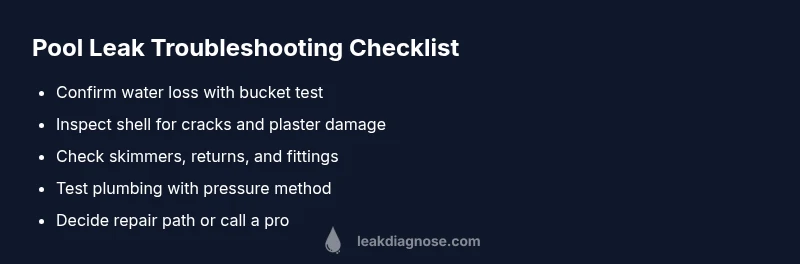
Start with a visual inspection for obvious cracks or damp areas around the shell and around all fittings. Next, perform a bucket test to quantify water loss. If you confirm loss beyond evaporation, focus on three categories: shell integrity, fittings and seals, and plumbing. For shell concerns, look for cracks that widen with pressure tests or dye tests; for fittings, check gaskets and unions; for plumbing, use pressure tests and dye to identify pinhole leaks or loose connections. If the source remains elusive after these steps, escalate to professional inspection. This workflow helps you maintain clarity and momentum when diagnosing a leak in a pool.
STEP-BY-STEP: Fix for the most common cause
The most common cause of a leak in a pool is a leaking plumbing connection or a failed gasket at a fitting. Here’s a practical repair flow you can follow:
- Power down the pump and close the valves to isolate the suspected line. 2. Use a dye test around valves, skimmers, and returns to observe water movement. 3. Tighten or replace loose fittings and seals, applying appropriate sealant to threaded joints. 4. Refill and recheck for moisture around the fittings after turning the system back on. 5. If the pool continues to lose water, perform a pressure test on the return lines and main drain. 6. If leakage persists, document findings and contact a licensed professional for shell assessment.
Tip: Use dye slowly and observe color movement to pinpoint leaks.
Tools, parts, and safety gear you'll need
As you troubleshoot a leak in a pool, gather basic tools: adjustable wrench, plumber’s tape, O-rings, replacement gaskets, non-slip gloves, safety glasses, a dye tester kit, a bucket for the evaporation test, and a flashlight for tight spaces. Safety is paramount when working around electrical equipment and water. Secure the area to prevent slips, and never operate electrical devices while standing in or near the pool unless you’re trained. Having the right tools on hand makes the process safer and faster, reducing the time you spend chasing a leak in a pool.
Prevention tips to minimize future leaks
Preventing leaks is easier than repairing them, and it starts with regular maintenance. Inspect seals, gaskets, and unions at least twice per pool season; keep pump lids tight and lubricate O-rings as needed. Use compatible materials for any repairs to prevent corrosion and plan for periodic pressure testing of plumbing lines. Maintain proper water chemistry to protect plaster and gunite surfaces from deterioration. A proactive maintenance schedule helps you catch issues before they become significant leaks in a pool.
When to call a professional and what to expect
If you cannot locate a leak after a thorough inspection and dye tests, or if shell cracks or structural issues are suspected, it’s time to call a licensed pool contractor or plumber. A professional will perform advanced diagnostics, hydrostatic pressure tests, dye penetrant tests, and possibly a camera inspection to locate hidden leaks. They’ll provide an estimate for shell repair, plumbing replacement, or sealant work. While DIY fixes can save money, some leaks require professional equipment and expertise to ensure waterproof integrity and safety.
Quick maintenance routine after repair
After correcting a leak in a pool, run the system through a full cycle and recheck water levels daily for a week. Confirm with a bucket test that the loss rate matches evaporation, and document the measurements. Refill chemicals to recommended levels and monitor for any recurring damp spots or moisture around repairs. Keeping a log helps you catch slow leaks early and prevents future pool damage.
Steps
Estimated time: 2-3 hours
- 1
Prepare safety gear and tools
Gather PPE and essential tools, including gloves, safety glasses, a dye tester, moisture-detecting cloths, and basic pool tools. Power down equipment before inspection to prevent accidents.
Tip: Always work with the power off; never test around live electrical components. - 2
Confirm water loss with a bucket test
Set up a bucket on the pool step with pool water at the same level as the pool. Mark water levels in and outside the bucket and compare after 24–48 hours. Use the result to decide whether you have a leak in a pool shell or plumbing.
Tip: Label dates and levels to track changes across days. - 3
Perform a shell dye test
If the bucket test suggests a leak, pour colored dye near suspected shell cracks or plaster areas and observe dye movement. If dye is drawn into cracks or seeps through the surface, you’ve identified a leak in a pool shell.
Tip: Dye test is most effective at calm water times; avoid windy days that may skew results. - 4
Inspect fittings and equipment
Check skimmers, returns, main drain, and pump seals for moisture around joints. Tighten loose fittings and replace worn gaskets. Re-run test to see if the rate of water loss changes.
Tip: Keep replacement parts organized and compatible with your equipment model. - 5
Test plumbing connections with pressure
If shell and equipment checks are inconclusive, perform a pressure test on the return lines and other exposed plumbing to locate hidden leaks. Look for damp soil around buried lines or moisture near joints.
Tip: Follow manufacturer guidelines for pressure test limits to avoid damage. - 6
Decide on repair path
If a leak is confirmed in the shell, plumbing, or fittings, plan the appropriate repair or replacement. Larger structural cracks or difficult-to-access leaks may require a professional contractor.
Tip: Document findings with photos and notes to aid the repair process.
Diagnosis: Visible water loss from pool that does not align with normal evaporation or splash-out patterns
Possible Causes
- highCrack or structural failure in the pool shell
- highLeaking equipment seals or gaskets (pump, filter, valve)
- mediumLeaking plumbing connections (pipes, fittings, returns)
- lowEvaporation under extreme conditions (wind, sun, heat)
Fixes
- easyPerform a shell dye test and inspect for visible cracks; seal or patch if appropriate
- easyTighten, reseal, or replace leaking fittings and gaskets
- mediumPressure test plumbing lines to locate pinhole leaks or loose joints
- hardConsult a licensed professional for structural repair if a crack is detected
Questions & Answers
Is it a leak or evaporation?
Evaporation can mimic a leak, especially on hot, windy days. Use a bucket test to compare pool water loss with a controlled water sample. If the pool loses water faster than the bucket, you likely have a leak in a pool shell or plumbing.
Evaporation can mimic a leak, so do a bucket test to confirm before you take action.
What is the bucket test and how do I perform it?
Fill a bucket with pool water to the same level as the pool and place it on a steps or deck where it won’t be splashed. Mark the levels and compare after 24–48 hours. If the pool level drops more than the bucket, you have a leak in a pool.
Use a bucket test: compare water loss in the pool with water in a bucket for 24 to 48 hours.
DIY fixes vs professional help for leaks?
Minor leaks at fittings or gaskets can often be repaired by a competent homeowner. More serious shell cracks or buried plumbing leaks typically require a licensed professional with specialized tools and warranties.
DIY fixes work for small fittings; big leaks usually need a pro.
Can I swim during leak detection?
Avoid swimming during diagnostic tests to prevent accidental exposure to chemicals and to allow accurate measurements. Stop usage if you suspect a structural crack or if dyes are used in shell testing.
Don’t swim during tests; it can interfere with results and safety.
What factors affect repair costs?
Costs vary based on leak location, required repairs, and whether shell work is needed. Plumber or pool contractor estimates will reflect material and labor across shell, plumbing, and equipment work.
Costs vary; get a contractor estimate based on location and repair type.
Will leaks impact pool warranty?
Leaks may affect warranty depending on the source and cause. Check your warranty terms and consult the manufacturer or installer for coverage details.
Warranty depends on the source of the leak; check terms with the maker.
Watch Video
Main Points
- Differentiate evaporation from leaks with methodical tests
- Isolate shell, fittings, and plumbing as leak sources
- Safety always comes first around pool equipment
- DIY fixes work for minor fittings but serious cracks require pro help
- Document findings and test results for accurate repairs