How to Find a Pool Liner Leak: A Practical DIY Guide
Learn a practical, safe approach to locating a pool liner leak with dye tests, bucket tests, visual inspection, and documentation. This DIY guide from Leak Diagnosis helps homeowners pinpoint the source and plan repairs.


By following this guide, you will locate a pool liner leak using simple tests and careful inspection. Start with a visual check, then perform dye tests and bucket tests to confirm the source. Use water-loss tracking and isolation to pinpoint the exact area safely. This approach minimizes guesswork and reduces unnecessary repairs.
Understanding pool liner leaks
Pool liner leaks can occur at seams, around skimmers, at the ladder mounts, or where the liner rests on irregular surfaces. A leak may manifest as unexplained water loss, damp spots on surrounding surfaces, or sudden drops in water level after a day of sun. According to Leak Diagnosis, the first clue is consistent water loss that cannot be explained by evaporation, splash-out, or recent additions of water. Understanding where leaks typically originate helps narrow down the search area and keeps homeowners safe while inspecting. Visual inspection is your initial pass: look for cracks in the liner itself, gaps around fittings, and any blisters or wrinkles that could indicate movement or pressure. This stage sets the foundation for targeted testing and reduces the chance of unnecessary repairs.
Pro tip: take photos as you inspect to track changes over time and to share with a pool professional if needed.
Visual clues and initial inspection
A thorough visual inspection complements other tests. Look for signs of moisture around pool edges, wet patches on the ground, or damp deck areas that appear more than usual. Check the pool’s interior for torn seams, frayed vinyl, or discoloration near returns and skimmers. Inspect around the ladder, light niche, and steps—any abnormal wear here can pinpoint the leak path. If your pool is partially in the ground, examine soil saturation and staining outside the pool shell. Don’t ignore the equipment pad: leaks can originate from plumbing fittings and equipment pads that transfer water to the exterior. As you document findings, keep a log of potential leak spots with date-stamped photos.
Remember: some leaks are slow and invisible; combining visual clues with tests yields more reliable results.
Dye testing: a quick confirm method
Dye testing is a fast, low-cost way to confirm leak location. With the pool pump off, carefully place a few drops of food coloring or pool-approved dye near suspected seam areas or around fittings. If dye is drawn toward a crack or seam, you’ve likely found the leak path. Use a controlled setup: keep the dye away from returns and jets to avoid confusing results. Run the pump briefly and observe dye movement. This method is especially useful for locating leaks in vinyl liners where the dye is drawn toward the source as water flows. Document the dye behavior with notes or video to review later.
If the dye fails to reveal a path, broaden the search to less obvious areas like under coping or the vinyl underlayment; some leaks travel along the liner before appearing externally.
Bucket test: isolating the source of water loss
The bucket test helps differentiate between evaporation loss and an actual leak. Fill a five-gallon bucket with pool water to the same level as the pool water. Place the bucket on the pool steps or a stable surface and mark the water levels on the inside of both the bucket and the pool wall. After 24–48 hours, compare the level drop. If the pool water drops more than the bucket water, you’re likely dealing with a leak outside the bucket. If both drop at similar rates, evaporation is the likely culprit. Repeat on different days with varying temperatures to corroborate results. Keep a written log of observations and photos for accuracy.
This test helps isolate leaks from normal evaporation and helps you estimate the leak’s rate over time.
Pinpointing the leak path: combining tests for accuracy
Correlate dye movement, bucket-test results, and visual clues to triangulate the leak’s location. If dye is drawn toward a seam while evaporation is not accelerating, prioritize the liner seam area and surrounding fittings. If the water loss is significant and dye path traces toward a specific area, you’ve narrowed the field considerably. Mark the suspected site with weatherproof tape, photograph the area, and prepare for a repair plan. If the liner is older or shows multiple signs of wear across the surface, it may be more efficient to plan a liner replacement rather than patching numerous spots.
Safety note: avoid climbing around the edge of the pool or leaning over the water while testing to prevent slips or falls.
Tools & Materials
- Digital thermometer(To monitor water temperature during tests and assess evaporation rates (temperature affects evaporation).)
- Measuring tape or ruler(Useful for marking water level changes and measuring suspected leak extent.)
- Food coloring or pool dye(Non-toxic dye suitable for dye testing to visualize water flow toward the leak.)
- Five-gallon bucket(For the bucket test; ensure it’s clean and free of cleaners.)
- Chalk or waterproof marker(To mark suspected leak spots on the pool surface.)
- Camera or smartphone(Document observations for reference and discussing with a pro.)
- Safety gear (gloves, non-slip footwear)(Protect yourself when inspecting around wet surfaces.)
- Pool-approved sealant or patch kit(If you decide to test a quick patch before calling a pro.)
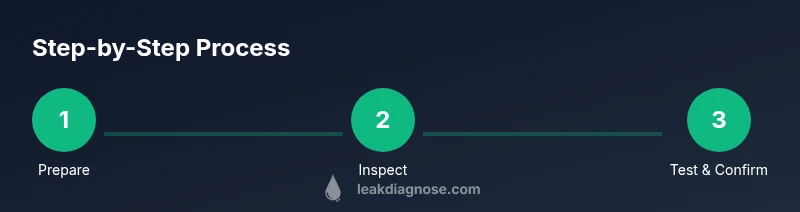
Steps
Estimated time: 45-120 minutes
- 1
Prepare for inspection
Clear the area around the pool, remove debris, and ensure pets and children are away. Turn off the pool equipment if you plan dye tests to prevent water flow from disturbing dye paths. Gather materials and set up a safe workspace.
Tip: Double-check that all electrical devices are off and keep a safe distance from chemical cleaners. - 2
Conduct a visual inspection
Walk the pool edge and interior while looking for tears, seam separations, or rough patches. Check around skimmers, returns, lights, and ladders. Photograph any suspicious areas and log dates.
Tip: Take wide and zoomed-in photos to capture context and details. - 3
Perform a dye test near suspected areas
With the pump off, apply a few dye drops near seams or fittings you suspect. Observe dye movement for several minutes to see if it’s drawn into a crack or seam. Repeat at different spots if needed.
Tip: Keep dye away from the main jets to avoid confusing flow patterns. - 4
Run a bucket test to differentiate evaporation from leakage
Fill a bucket with pool water and place it inside the pool at the same water level as the pool water. Mark levels on both the bucket and pool wall. After 24–48 hours, compare drops to determine if leakage is occurring.
Tip: Record the outdoor temperature during the test to account for evaporation variance. - 5
Triangulate the leak path
Cross-reference dye results, bucket test data, and visual clues to identify the most probable leak area. If results are ambiguous, expand the search to liner edges and under coping.
Tip: Use chalk to mark the exact suspected spot without altering the pool finish. - 6
Document and decide on next steps
Create a concise report with photos, test results, and suspected location. Decide if a patch, liner replacement, or professional assessment is needed.
Tip: If you’re unsure, schedule a professional inspection to avoid further damage. - 7
Plan repairs or replacements
If repairing, obtain manufacturer-approved patch kits or hire a qualified contractor for a liner replacement. Ensure the pool is drained safely if required by the repair method.
Tip: Never attempt high-pressure sealing products on vinyl liners. - 8
Re-test after repairs or maintenance
After any repair, perform the same tests to verify the leak is resolved before refilling or resuming normal use.
Tip: Allow adequate cure time if using patch kits before refilling.
Questions & Answers
What is the most reliable method to locate a pool liner leak?
A combination of dye testing, bucket testing, and careful visual inspection provides the most reliable results. Each method confirms the path from different angles, reducing false positives.
Use dye tests and bucket tests together with a visual inspection to reliably locate the leak.
Can a pool liner leak be fixed without draining the pool?
Small patches or liner repairs can sometimes be performed without fully draining the pool, depending on the location and method. A professional can advise on safe partial draining if needed.
Often, repairs can be done with partial draining, but consult a pro for safety.
How long does a bucket test take to yield results?
A bucket test typically requires 24–48 hours to yield meaningful results, depending on weather and evaporation rates.
Most bucket tests take a day or two to show clear results.
What safety precautions should I take during testing?
Wear non-slip shoes, keep chemical storage away from test areas, and avoid leaning over the water. Ensure a stable setup to prevent slips and falls.
Wear proper safety gear and avoid risky positions near the pool edge.
When should I call a professional for a pool liner leak?
If dye tests are inconclusive, the leak is large, or you notice liner bulging or significant structural issues, contact a pool professional.
If uncertain after tests or you see structural signs, consult a pro.
Will a liner leak always involve replacing the liner?
Not always. Some small seams or punctures can be patched, but larger or aged liners may require replacement for long-term reliability.
Patching is possible for small issues, but older liners often need replacement.
Watch Video
Main Points
- Pinpoint leaks with dye tests, bucket tests, and careful visual inspection
- Differentiate evaporation from leakage to avoid unnecessary repairs
- Document findings and plan repairs with a clear, evidence-based approach
- Consider professional help for structural liner problems or major repairs