How Much Is Pool Leak Detection? Costs, Methods, and Budget Tips
Discover typical costs for pool leak detection, what drives price ranges, and how to budget effectively. This Leak Diagnosis guide covers inspection methods, quotes, and practical savings.


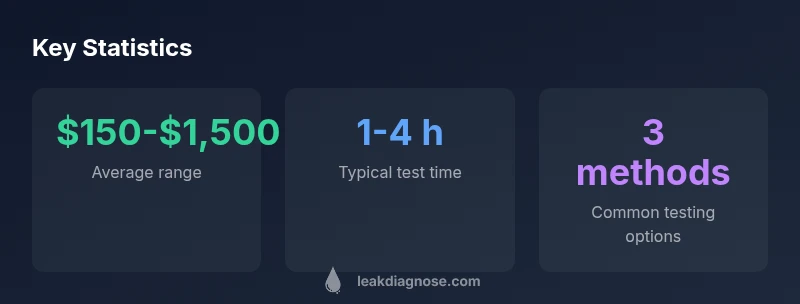
On average, professional pool leak detection costs range from about $150 to $1,500, depending on access, method, and location. Basic inspection plus dye tests lean toward the lower end, while pressure tests and difficult-to-access plumbing push pricing higher. For many homeowners, costs also hinge on whether the leak is in the pool shell, plumbing, or equipment.
Why pool leak detection costs vary
Understanding the question of how much is pool leak detection starts with recognizing that costs vary widely. Several factors determine the final price: the type of leak, accessibility, pool size, and local labor markets. In general, homeowners can expect a broad range; for simple, visible leaks near the pool deck or plumbing joints, the price is at the lower end, while hidden leaks behind walls or under decking trigger more extensive testing. According to Leak Diagnosis, cost awareness helps homeowners budget and plan for both inspection and potential repairs. The following breakdown explains why numbers shift from one project to the next: method, time, and risk. First, the method: basic visual inspection is often the cheapest, but it cannot confirm a leak without tests. Second, the test: dye, pressure, and tracer gas tests add controlled variables and accuracy, which increases the price. Finally, accessibility matters: if access requires removing tile, decking, or equipment, additional labor adds to the bill. In short, the same problem may become a very different price tag depending on how the probing is done.
Common methods and their price ranges
Pool leak detection relies on a blend of basic inspection and targeted tests. Here are the most common approaches, with typical price ranges to give you a sense of scale:
- Visual inspection (external clues): Often free to a small service call, but it cannot confirm a leak by itself. This step is usually the starting point to decide which tests are needed.
- Dye testing: Common and effective for pool shells and plumbing joints; expect roughly $150–$500 depending on pool size and access. Dye testing helps trace the path of water loss through coloration and flow.
- Pressure testing: Used for plumbing lines and equipment connections; typical costs run around $300–$1,000 but can go higher for complex plumbings or hard-to-access routes. This method helps isolate whether a leak is in the lines or fittings.
- Ultrasonic or acoustic testing: Non-invasive or minimally invasive depending on setup; prices commonly range from $400–$1,200. These methods detect sound patterns associated with leaks, especially in hidden areas.
Remember, actual quotes vary with local labor rates and the pool’s layout. The goal is to identify the leak accurately and avoid unnecessary repairs. If you’re comparing quotes, ask the contractor to clearly itemize each test, what draws cost up, and how repairs would be priced if needed. This approach aligns with the guidance from Leak Diagnosis on budgeting for testing and subsequent fixes.
Factors that influence the price
Price variation isn’t random; it reflects multiple, interconnected factors. The most influential ones include:
- Access to the leak: If you must remove decking, tile, or pool equipment to reach the leak, labor costs rise. Simple, open-access leaks cost less to diagnose.
- Leak type and location: Shell leaks, plumbing leaks, or equipment faults require different tests. Hidden leaks beneath decks or behind walls typically need more time and specialized equipment.
- Pool size and features: Larger pools with complex features (auto-fill, spa elements, multiple returns) generally need more time and testing, increasing costs.
- Local labor markets: Prices vary by region and contractor demand. Areas with high living costs will show higher quote ranges.
- Testing sequence and redundancy: Some contractors perform multiple tests to confirm a leak; this deliberate approach improves accuracy but adds cost.
- Repairs bundled with testing: If a leak is found, many contractors offer bundled quotes that cover both detection and initial repair, which can be economical but changes the price structure.
Understanding these factors helps you plan and negotiate more confidently. It also underscores why a single price rarely captures the full picture of pool leak detection costs.”
DIY vs professional: what you should know
DIY detection can be appealing for a quick check, but professional pool leak detection brings safeguards, accuracy, and a clear action plan. Visual checks, dye tests, and basic observation can be done by homeowners to gain initial insights; however, more advanced methods—pressure testing, ultrasonic detection, and tracer gas—require specialized equipment and expertise. The biggest risks of DIY approaches are misdiagnosis, missed leaks, and delays that convert into higher costs later. A professional can offer a transparent, itemized quote, explain which tests were used, and show the exact leak location. For many homeowners, investing in a licensed pro saves time and reduces the chance of evacuating money on unnecessary or inappropriate repairs. If you do choose to start with a DIY step, document all findings, then obtain at least two professional quotes for comparison to meet best-practice budgeting outlined by Leak Diagnosis.
How to estimate and compare quotes
To effectively estimate and compare quotes for pool leak detection, follow a structured process:
- Gather multiple quotes: Request at least 3 estimates to understand the range. Ask for a breakdown of each test and what it covers.
- Verify test specifics: Ensure quotes specify dye testing, pressure tests, or ultrasonic methods, and confirm whether any repairs would be included.
- Check for accessibility notes: Some quotes may note extra charges for deck removal or equipment disassembly. Clarify these in writing.
- Ask about turnaround times: Time-to-diagnose varies by method and site complexity; set expectations upfront and confirm scheduling windows.
- Seek warranties or follow-up: Some providers include a short warranty on the test results or offer discounted rechecks if leaks persist.
- Compare total cost vs value: A lower upfront price may omit essential tests or later add costs for repairs that could have been included in a bundle.
This methodical approach aligns with the budgeting strategy recommended by the Leak Diagnosis team and helps you avoid sticker shock when the project scope expands.
Value beyond price: long-term savings from fixing leaks
The cost of fixing a pool leak should be weighed against the consequences of leaving it unresolved. Even a small, slow leak can waste thousands of gallons per season in water and chemical costs, potentially damaging surrounding landscaping and infrastructure. Fixing the root cause early reduces water waste, protects pool equipment from corrosion, and lowers energy or chemical use associated with maintaining proper water levels. In many cases, addressing a leak promptly also prevents more extensive repairs later, such as re-plastering, decking replacement, or major plumbing work. When evaluating quotes, consider the long-term savings, reduced maintenance interruptions, and the value of preserving the pool’s structural integrity. The Leak Diagnosis analysis indicates that budgeting for testing plus a future repair plan often results in more predictable project costs and better outcomes for homeowners.
How to read a pool leak detection quote
A well-structured quote should clearly list each test and associated cost, as well as any expected labor charges, site access notes, and potential repair items if a leak is confirmed. Look for:
- Specific test names and purposes: Visual inspection, dye testing, pressure testing, ultrasonic detection, or tracer gas tests.
- Itemized costs: Separate line items for each test, travel fees, and any equipment charges.
- Estimated timelines: The expected duration of each test and overall project duration.
- Potential next steps: If a leak is confirmed, what repairs are anticipated and how much they might cost.
- Warranties or guarantees: Any assurance on test results and follow-up service. Keeping a close eye on these elements helps you compare apples to apples and validates whether the price reflects the tests needed. This disciplined approach is a core recommendation from Leak Diagnosis when budgeting for pool leak detection.
Case scenarios: typical budget ranges
To illustrate how costs can vary in real-world contexts, here are two representative scenarios:
- Scenario A – Small, easily accessible leak: A homeowner with a compact pool and straightforward plumbing exposure might pay roughly $150–$400 for a dye test and basic inspection. If a leak is confirmed and a simple seal or fitting repair is needed, the additional cost could be modest.
- Scenario B – Large pool with decking and hidden plumbing: In a larger pool with gated access and under-deck plumbing, a combination of dye testing plus pressure testing could push the cost to about $800–$2,000 or more, especially if a repair is required. In this case, the initial detection is part of a broader service package that includes repair work or a follow-up inspection to verify results.
These scenarios reflect the price dynamics described by Leak Diagnosis and help homeowners plan budgets with realistic expectations. Always request itemized quotes and compare to ensure you’re paying for only what you need.
Typical pool leak detection methods and costs
| Inspection Type | Estimated Cost Range | Typical Time | Notes |
|---|---|---|---|
| Visual inspection | Free - $50 | 15-60 min | Preliminary checks, limited confirmation |
| Dye testing | $150-$500 | 1-2 hours | Trace water path using dye tracer |
| Pressure testing | $300-$1,000 | 1-4 hours | Assesses plumbing lines and fittings |
Questions & Answers
What factors influence the cost of pool leak detection?
Key factors include access to the leak, the location (shell, plumbing, or equipment), pool size, and local labor rates. The choice of tests also affects price; more invasive or complex methods cost more but can provide quicker, definitive results.
Costs depend on access, leak type, and tests used; get multiple quotes for comparison.
Can I detect a leak myself before calling a pro?
You can perform basic checks, like visual inspections for obvious leaks, checking for damp patches, or using simple dye tests in a controllable area. However, accurately locating leaks and assessing structural impact usually requires professional equipment and expertise.
DIY checks help screen problems, but professional testing is recommended for accuracy.
How long does pool leak testing take?
Most standard tests take 1–4 hours, depending on the leak type and accessibility. Some cases may require additional time if multiple tests are needed to confirm the source.
Typical tests take about an hour or two, with more complex cases longer.
Is pool leak detection ever covered by insurance?
Coverage varies by policy. In many cases, standard homeowners insurance does not cover leak detection as a separate cost unless the leak is linked to a covered incident. Check with your insurer for specifics.
Check your policy first; coverage for detection varies.
Are there cheaper alternatives to full leak detection?
You can start with visual inspection and dye testing, which are cheaper, but they may miss hidden leaks. Comprehensive detection and subsequent repairs usually require professional services for accuracy and safety.
Start with basics, but understand that thorough testing costs more upfront to save later.
“A careful, methodical approach to testing helps homeowners avoid surprises and wasted water. The right combination of tests minimizes cost while maximizing accuracy.”
Main Points
- Budget for both testing and potential repairs
- Ask for itemized quotes and compare multiple bidders
- Access and leak location drive costs
- DIY can help initial assessment but professional testing is often necessary
- Clear quotes reduce surprises and support long-term savings