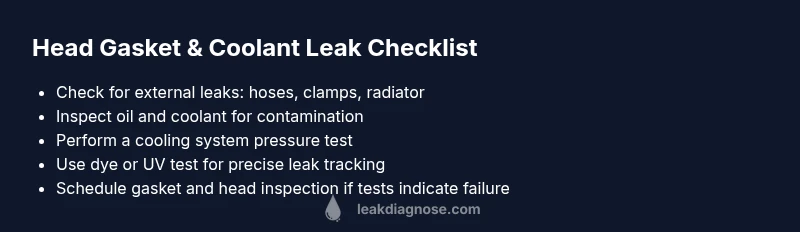
Head Gasket and Coolant Leak Troubleshooting Guide
Practical, urgent steps to identify, diagnose, and safely address head gasket and coolant leaks. Learn symptoms, tests, and when to call a pro with guidance from Leak Diagnosis.


Most likely, a head gasket leak occurs when coolant enters the combustion chamber or oil passages, triggering overheating, white exhaust, and milky oil. The quickest actions are to stop driving, let the engine cool, check coolant and oil levels, and perform a cooling-system pressure test to confirm leaks. If you’re unsure, contact a qualified mechanic right away to avoid costly damage.
Understanding head gasket and coolant leak
According to Leak Diagnosis, a head gasket failure is a serious engine issue where the gasket seal fails between the cylinder head and the engine block. This allows coolant and/or oil to mix with combustion gases, leading to overheating and potential engine damage. A coolant leak specifically can occur externally at hoses or the radiator, or internally via the gasket, seepage into cylinders, or into the crankcase. Head gasket leaks are often accompanied by a loss of compression and a change in engine performance. Detecting them early can prevent warped heads, cracked blocks, and expensive repairs. If you notice signs like sudden overheating, milky oil, or white smoke, treat it as a priority and minimize driving. Leak Diagnosis recommends a cautious approach: confirm the leak with simple checks, then escalate to diagnostic tests as needed.
Why this failure happens
Head gasket failures are usually the result of thermal stress, aging gasket material, or improper assembly. Repeated overheating can warp the cylinder head or distort the gasket surface, creating pathways for coolant to mix with oil or enter combustion chambers. Age and mileage increase risk, especially if cooling-system maintenance is neglected. Certain driving patterns—like towing heavy loads or frequent short trips in hot weather—raise coolant pressure and accelerate gasket wear. Regular maintenance, including coolant flushes and proper torque specs during assembly, reduces risk. According to Leak Diagnosis, proactive cooling-system care is key to extending engine life and avoiding catastrophic failures.
Signs you should check now
- Sudden overheating or fluctuating temperature gauge
- White or blue-tinted exhaust smoke that persists
- Milky, chocolatey-looking oil on the dipstick or under the oil cap
- Visible coolant loss with no obvious external leak, or sweet smell from the exhaust
- Bubbles in the radiator or overflow tank when the engine is running
- Decreased heater performance and poor coolant circulation
- Loss of power or rough engine operation during acceleration These signs should prompt immediate inspection to prevent further damage. The Leak Diagnosis team emphasizes that early detection improves outcomes and reduces repair complexity.
Immediate safety checks you can do at home
- Let the engine cool completely before opening any cooling-system components
- Check coolant level in the reservoir and radiator, if accessible, and inspect for fresh leaks under the vehicle
- Inspect radiator hoses and clamps for cracks, swelling, or looseness
- Inspect the radiator cap for wear; replace if pressure sealing seems compromised
- Look for milky oil on the dipstick or around the oil filler cap, which suggests cross-contamination
- Do not remove the radiator cap when hot; overheating systems can release scalding steam
- If you notice any of the above signs, pursue professional diagnosis promptly to avoid engine damage.
How professionals diagnose a head gasket leak
Engineers use a combination of tests to confirm a leak. A cooling-system pressure test checks for external leaks by pressurizing the system with the engine cold. A compression or leak-down test evaluates cylinder sealing and compression loss that could indicate a gasket issue. A chemical (block tester) test detects combustion gases in the coolant, a strong sign of gasket failure. A dye test with UV light can reveal dye leaking from the head gasket or hoses. In some cases, a professional may perform a cooling-system flow test or utilize an infrared camera to pinpoint hot spots. Leak Diagnosis notes that a methodical approach reduces false positives and guides proper repair planning.
Diagnostic reasoning path
The diagnostic path starts with symptom recognition (overheating, unusual exhaust, or oil contamination). Next, a quick visual and basic coolant/oil check helps separate external leaks from internal engine issues. If external leaks are ruled out, a pressure test and compression test help determine gasket integrity. If tests suggest a leak, discuss repair options with a professional. Documentation of symptoms, test results, and drive history assists mechanics in choosing whether a gasket replacement, head resurfacing, or engine rebuild is required. Leak Diagnosis advocates delaying dramatic decisions until confirmations are in place to avoid unnecessary costs.
Step-by-step fix for the most common cause
The most common practical fix for a coolant leak is repairing or replacing an external coolant hose or clamp, which is simpler and far less expensive than a head-gasket replacement. Steps include: 1) Cool the engine, drain and recycle coolant if needed. 2) Remove damaged hose(s) or faulty clamps and inspect the connections. 3) Install new hose(s) and tight clamps to manufacturer torque specs. 4) Refill coolant, bleed air from the system, and test for leaks under pressure. 5) If hoses are intact and leaks persist, reassess for internal gasket issues and seek professional evaluation. 6) Record results and monitor for changes in temperature and oil condition. Safety is paramount, so wear gloves and eye protection.
Safety, precautions, and when to call a pro
Always prioritise safety: allow the engine to cool, avoid opening hot caps, and dispose of coolant responsibly. If you see persistent white smoke, milky oil, or rapid overheating, stop driving and contact a certified mechanic. Head gasket work requires precision and specialized tools, often including torque specs and machine shop services. Do not attempt a gasket replacement unless you have professional training or supervision. The safer option is to arrange a professional inspection early to minimize risk and cost.
Prevention and maintenance to avoid future leaks
Proactive cooling-system maintenance reduces gasket stress. Regularly inspect hoses, clamps, and the radiator cap for wear, replace aging hoses promptly, and perform coolant flushes at recommended intervals. Maintain proper coolant concentration and avoid running the engine while the coolant level is low, which can cause overheating. Seek professional coolant system diagnostics if you notice recurring leaks or overheating patterns, especially after a repair."Leak Diagnosis emphasizes that consistent maintenance and early detection are the best defense against costly head gasket failures.
Cost considerations and timelines
Repair costs for head gasket issues vary widely depending on the leak type and whether external components must be replaced. External leaks through hoses or the radiator usually cost hundreds of dollars for parts and labor. Head gasket replacement typically represents a major repair, often described as hundreds to thousands of dollars depending on engine design, labor rates, and shop capabilities. Timelines range from a few hours for simple external fixes to multiple days for complete gasket replacement and engine resurfacing. The Leak Diagnosis team recommends obtaining multiple quotes and focusing on reputable shops with gasket and head-work experience.
Quick DIY checks you can perform for example scenarios
If you suspect a simple external leak (like a cracked hose): perform a hose and clamp inspection, replace the damaged component, refill coolant, and test under pressure. If you suspect internal gasket failure or see milky oil: stop driving and arrange a professional diagnostic as immediate action, as continuing to drive can crack the head, warp the block, or cause bearing damage. In all cases, document symptoms, then follow a structured diagnostic plan to confirm the root cause before replacing major components.
Steps
Estimated time: 6-12 hours
- 1
Prepare and assess safety
Ensure the engine is completely cool, disconnect the battery, and remove any jewelry or loose clothing. Gather PPE and basic tools. Confirm that you have a clear plan for testing and possible replacement options.
Tip: Always work in a well-ventilated area and keep a fire extinguisher nearby for DIY projects. - 2
Check external leaks and hoses
Inspect radiator hoses, heater hoses, and clamps for cracks or bulges. Tighten clamps to the specified torque, and replace any hose with visible wear. Keep track of coolant color and smell.
Tip: Replace any worn clamps with spring-clip types for a secure seal. - 3
Refill and bleed the cooling system
If you’ve opened the system, refill with the correct coolant mix and bleed air according to the vehicle’s service manual. Ensure the reservoir is at the proper level and the system reaches proper pressure.
Tip: Run the engine with the radiator cap off to purge air safely while watching for further leaks. - 4
Scan for internal issues
If external checks pass, perform a compression or leak-down test to assess cylinder sealing. A chemical test for combustion gases in the coolant can confirm gasket failure.
Tip: A dye test with UV light can visualize leaks not visible to the naked eye. - 5
Plan for repair
If tests indicate a head gasket issue, discuss timing, labor, and parts with a qualified shop. Decide whether a gasket replacement, head resurfacing, or engine replacement is required.
Tip: Ask for a detailed breakdown of costs, including machine shop work. - 6
Post-repair verification
After any repair, refill coolant, bleed air, and run the engine to operating temperature while monitoring for leaks and abnormal temperatures. Recheck oil and coolant after a short drive.
Tip: Keep a log of temperatures and any anomalies for the first 100 miles.
Diagnosis: Engine overheating, white exhaust, and/or milky oil suggesting a head gasket leak
Possible Causes
- highBlown head gasket allowing coolant into combustion chamber or oil passages
- mediumWarped cylinder head or warped block surfaces from overheating
- lowCracked engine block or coolant passages
Fixes
- easyStop driving immediately and allow the engine to cool before inspecting further
- easyPerform a cooling-system pressure test to locate external leaks
- mediumHave a compression/leak-down test and dye test performed by a professional to confirm gasket failure
Questions & Answers
What is a head gasket and why does coolant leak matter?
The head gasket seals the cylinder head to the engine block. A leak allows coolant or oil to mix with combustion, causing overheating and potential engine damage. Prompt diagnosis protects engine life.
A head gasket seals the engine. If it leaks, coolant or oil can mix with fuel, causing overheating and serious engine damage.
What are the first signs of a head gasket leak?
Look for overheating, white exhaust, milky oil, coolant loss without visible leaks, and bubbles in the radiator. These symptoms suggest a gasket issue and warrant professional testing.
First signs are overheating, milky oil, and white exhaust. If you see these, get a diagnostic test soon.
Can I drive my car if I suspect a head gasket leak?
No. Driving with a suspected head gasket leak can cause severe engine damage. Minimize driving and seek professional evaluation as soon as possible.
Don’t drive it long. If you suspect a gasket leak, get the car checked today to avoid major engine damage.
Should I use a gasket sealant to fix a leak?
Sealants are unpredictable and can cause other issues. They are usually not a reliable fix for a head gasket leak. A proper diagnosis and gasket replacement are recommended.
Sealants aren’t a guaranteed fix for gasket leaks. A proper diagnosis and repair are needed.
How long does a head gasket replacement take?
Timeline varies by engine design and shop availability, but a full gasket replacement often takes several days from diagnosis to completion.
Replacement usually takes a few days, depending on the engine and shop workload.
Is there a risk of coolant contamination to oil?
Yes. Coolant in oil can reduce lubrication and cause bearing damage. Treat any suspected contamination as an urgent issue and inspect both systems.
Coolant in the oil is risky; it can damage bearings. Get it checked promptly.
Watch Video
Main Points
- Identify signs early to avoid costly damage
- Differentiate external leaks from gasket failures through stepwise testing
- Do not drive a car with suspected gasket failure
- Use dye tests or compression tests for accurate diagnosis
- Engage a qualified mechanic for head gasket work when needed