Can a Coolant Leak Happen? Detect, Diagnose, and Fix
Learn how to spot coolant leaks (antifreeze), diagnose the source, and safely fix them at home or know when to call a pro. Practical steps, safety tips, and prevention from Leak Diagnosis.


A coolant leak is most often caused by worn hoses, a cracked radiator, or a loose clamp. For a quick fix, inspect hoses and the radiator cap, check for damp spots and sweet-smelling puddles, and top up only if the system is not pressurized. If unsure, stop driving and call a professional.
Why antifreeze leaks matter
Antifreeze, also known as coolant, travels through your engine to prevent freezing and overheating. If a leak occurs, you can quickly lose cooling capacity, risking overheating, engine damage, and toxic exposure. According to Leak Diagnosis, many homeowners underestimate how quickly a small seep can become a bigger problem—because you cannot always see the leak, and the sweet odor of antifreeze can be hard to locate. The phrase can leak antifreeze reminds you that every cracked hose, loose clamp, or corroded radiator port is a potential hazard. Prompt attention reduces repair costs and downtime, protecting both your vehicle and household safety. In this guide, we’ll cover signs, sources, and practical steps to diagnose and manage a coolant leak safely, with emphasis on early detection and responsible disposal. By following these steps, you’ll know when to tighten, replace, or call a professional.
Common sources of coolant leaks
Leaks can originate from several components, and some are easier to fix than others. The most common sources include worn or damaged hoses and clamps, radiator end tanks, the water pump gasket, the thermostat housing, and the radiator cap. In some cases, a heater core connection or a cracked overflow reservoir can also leak coolant. If you notice staining under the vehicle or a visible puddle of coolant (green, orange, or blue, depending on your coolant type), you’re likely dealing with a leak somewhere along the cooling circuit. When a leak is present, the engine may overheat or the coolant level may drop more quickly than expected.
As a reminder, coolant leaks are a priority repair for vehicle health and safety—don’t ignore signs if the engine temperature rises. The key is to locate the source early and use the right parts for a lasting fix. In our diagnostics, the most reliable approach begins with simple visual checks, then moves to pressure testing and component replacement as needed.
Safety considerations before you start
Safety first: antifreeze is toxic and leaves surfaces very slippery. Always wear gloves and eye protection, and work in a well-ventilated area. Never open the radiator cap when the engine is hot, and never drain the system while it’s warm or pressurized. If the car must be moved, do so with extreme caution and ideally with professional guidance. Keep pets and children away from any spills, and contain leaks with absorbent material. Proper disposal of used coolant is essential—take it to a recycling facility or automotive shop that accepts antifreeze. If you suspect a large or ongoing leak, stop driving and seek professional service immediately. According to Leak Diagnosis analysis, early containment reduces risk and cost dramatically.
Quick checks you can do today
With the engine cool, perform a visual sweep of all visible hoses and clamps for cracks, bulges, or signs of leakage. Check the radiator cap for a poor seal or cracks and inspect the overflow reservoir for cracks or discoloration. Look for damp areas along hoses, around the water pump, and at the heater core connections. Check coolant level in the reservoir and compare it to the marked high/low indicators. If you notice a puddle under the car, try to locate the source from beneath the hood or engine bay without running the engine. Remember: can leak antifreeze can be a sign of several different issues, so a systematic approach helps narrow it down.
Diagnostic flow overview
When you observe a potential coolant leak, start with the simplest checks and progress to more definitive tests. Start by confirming whether the fluid is coolant (color, sweet smell) and locating the exact area of seepage. If a leak is confirmed, assess whether it’s intermittent or continuous. A steady drip points to a failed hose or a seal, while a slow weep may indicate a small crack or gasket issue. Use a cooling-system pressure tester to locate the leak more precisely, and be prepared to replace failing hoses, clamps, or the radiator itself. After repairs, bleed the system and refill coolant to the correct level.
Step-by-step: most common fix (loose hose or clamp)
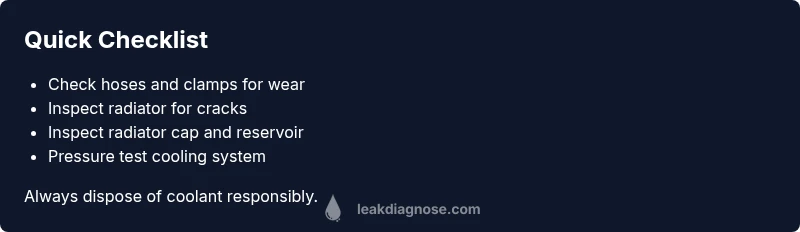
- Gather materials: replacement hoses/clamps, screwdrivers, pliers, coolant, and safety gear. 2) Let the engine cool completely, then inspect all visible hoses for wear. 3) Tighten loose clamps to factory torque values or replace damaged hoses. 4) Refill coolant and bleed the cooling system of any air pockets. 5) Start the engine and check for leaks, then recheck the coolant level once the engine reaches normal operating temperature.
Pro tip: carry a spare hose clamp kit and a bottle of coolant for emergency top-offs on long trips. Warning: do not rely on additives or sealants to fix a significant leak; you need a proper repair.
Preventive maintenance to reduce future leaks
Preventing leaks is easier than repairing them after they become severe. Regularly inspect hoses for aging, cracks, and bulges, and replace hoses every few years as part of preventative maintenance. Check the radiator cap for proper sealing and replace it if pressure is not maintained. Maintain coolant at recommended levels and use the correct type for your vehicle. Schedule a cooling-system pressure test after major service or if you notice a gradual drop in coolant level. Finally, follow the manufacturer’s service intervals for water pump and thermostat checks to minimize the risk of leaks.
Final reminders and professional escalation
If you see a large coolant puddle, steam, or the engine warning light, pull over safely and avoid driving. Contact a professional technician if you are unsure about the leak’s source or its severity. For complex leaks, such as a heater core or cracked radiator, professional replacement is often required. The goal is to prevent engine damage, expensive repairs, and safety hazards from antifreeze exposure. The Leak Diagnosis team recommends scheduling professional service for major leaks or if you are uncomfortable performing the inspection yourself.
Steps
Estimated time: 1-3 hours
- 1
Gather tools and safety gear
Assemble replacement hoses, clamps, coolant, a pressure tester, rags, and PPE. Ensure you have a clean workspace and access to a safe disposal method for old coolant.
Tip: Keep pets away from the work area; antifreeze is highly toxic. - 2
Cool down and locate the leak
Let the engine cool completely, then visually inspect the hoses, radiator, and clamps. Use a flashlight to follow any damp trails to their source and note the exact location.
Tip: Do not open the radiator cap on a hot engine. - 3
Perform a pressure test
Attach a cooling-system pressure tester and pressurize the system to the recommended value. Watch for drops in pressure and follow the leak to its source.
Tip: If you don’t own a tester, many auto parts stores loan them for a small fee. - 4
Repair or replace damaged parts
Replace worn hoses or a faulty radiator cap. For a cracked radiator or failed water pump seal, plan for a more extensive repair.
Tip: Replace any failed clamps with stainless steel units for durability. - 5
Refill and bleed the cooling system
Refill coolant to the proper level and bleed air from the system to prevent air pockets. Run the engine and monitor temperature while checking for additional leaks.
Tip: Use the correct coolant type specified in the owner's manual. - 6
Test drive and re-check
Test drive briefly, then re-check for leaks and confirm the level after the system cools. If leaks persist, escalate to a professional.
Tip: Document any leaks with photos to aid the service visit.
Diagnosis: Visible coolant puddle under vehicle or rising engine temperature warning
Possible Causes
- highWorn or damaged hoses or loose clamps
- highCracked radiator or leaking radiator end tank
- mediumFaulty radiator cap causing pressure loss
- lowHeater core leak or gasket failure
Fixes
- easyInspect hoses for wear; tighten clamps or replace damaged hoses
- mediumReplace cracked radiator components or radiator cap as needed
- mediumPressure-test cooling system to locate leaks around radiator and hoses
- hardReplace radiator, water pump gasket, or heater core if required
Questions & Answers
What are the most common signs of a coolant leak?
Common signs include a visible puddle of coolant, sweet smell under the hood, a steadily dropping coolant level, and occasional engine overheating. If you notice any of these, inspect hoses and the radiator. Remember, can leak antifreeze may involve multiple components.
Look for a puddle under the car, a sweet smell, or rising engine temperature. Check hoses and the radiator for leaks.
Is a coolant leak dangerous?
Yes. Coolant is toxic and can cause slips and exposure risks to pets and children. It can also lead to engine damage if not addressed promptly. Seek professional help for large or persistent leaks.
Yes—antifreeze is toxic and can harm people and pets. Address leaks promptly or call a professional.
Can I fix a coolant leak at home?
Some small hose or clamp leaks can be managed at home if you have basic tools and safety precautions. However, more serious leaks, radiator failures, or coolant system repairs should be handled by a professional.
Some small hose leaks you might fix at home, but bigger problems should be left to a pro.
What should I do if I see coolant on the ground?
Pull over safely, turn off the engine, and inspect the source. Do not drive if the leak is large or the engine is overheating. Contain the spill and arrange professional service as needed.
If you see coolant on the ground, stop safely and inspect. Don’t drive if the leak is serious.
How can I prevent future coolant leaks?
Regular inspection of hoses, clamps, and the radiator cap helps. Maintain proper coolant levels, use the recommended coolant type, and consider scheduled tests after major service to catch wear early.
Regularly inspect hoses and caps, keep coolant levels up, and use the correct coolant.
Are there safety steps I should follow with antifreeze?
Always wear protective gear, never open a hot cooling system, and dispose of old coolant at approved facilities. If in doubt, contact a professional for safe handling.
Wear gloves and eye protection, don’t open a hot system, and dispose coolant properly.
Watch Video
Main Points
- Inspect hoses and clamps first
- Do not open hot radiator caps
- Use a pressure test to locate leaks
- Bleed and refill properly after repairs
- Call a pro for major leaks or complex components