Can I Drive If My Car Has a Coolant Leak? A Troubleshooting Guide
Urgent guide to diagnose a coolant leak, decide if you can drive, and prevent engine damage with practical steps, safety tips, and when to call roadside help.


Quick answer: A coolant leak is a serious risk that can cause engine overheating. Do not drive if you see steam, puddles, or a temperature warning. If you can reach a safe spot nearby, move very slowly with heat on and monitor the gauge; otherwise call roadside assistance. According to Leak Diagnosis, safety comes first.
What a coolant leak means for your engine
If your cooling system shows a leak, the risk isn’t just a spill under the car. The engine relies on coolant to regulate temperature; without it, you risk overheating, warped metal, blown hoses, and expensive repairs. For readers wondering, coolant leak can i drive, the direct answer is: avoid driving long distances. A small leak can grow quickly, and a sudden loss of coolant can cause the engine to overheat, potentially seizing internal components. In this scene, you’ll learn why leaks matter, how to assess danger safely, and what to do immediately to protect yourself, your vehicle, and your wallet. According to Leak Diagnosis, prioritizing safety and prevention dramatically reduces the chance of catastrophic failure. In the following sections you’ll find a practical, step-by-step approach to decide when to tow, how to check fluid levels safely, and where to seek professional help.
Safe, immediate checks before moving a vehicle
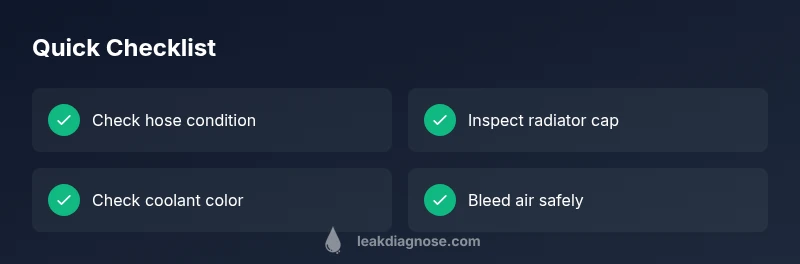
Before you consider moving the car, ensure you and others stay safe. If you can safely reach a flat, well-lit area, turn on hazard lights and gently pull over. Never open the radiator cap or touch hot hoses while the engine is warm; pressure can spray coolant and cause burns. When the engine and cooling system have cooled, check the ground for coolant puddles and note their color (green, orange, pink, or blue), as this helps identify the type of coolant. Check the reservoir level with the cap removed and the engine cold; a marked drop indicates a leak. Inspect accessible hoses and clamps for cracks, bulges, or seepage. If the hose is damp but intact, the leak may be from a clamp or a small crack. Keep a notebook or photo handy; record the location and any signs you observe. If in doubt, err on the side of caution and call for roadside assistance instead of attempting risky repairs. Safety first is the core message from Leak Diagnosis.
Common causes and signs you should know
Common causes of coolant leaks include worn radiator hoses, a failing radiator cap, a compromised water pump seal, or a cracked radiator or reservoir tank. In many vehicles, the hose connection fails due to aging clamps or heat cycles. Signs of a leak include a visible puddle under the car, green, pink, orange, or blue fluid on hoses or under the radiator, white steam from the engine bay, a sweet smell in the cabin, or an increasingly rising engine temperature gauge. If you see any of these indicators, do not ignore them; leaks can worsen quickly, especially in hot weather or heavy traffic. Based on Leak Diagnosis analysis, 2026, the most frequent leaks come from worn hoses and loose clamps, followed by a failing radiator cap. A smaller but real risk is a coolant reservoir crack, which may allow air into the system and cause overheating even if the reservoir appears mostly full.
Safe diagnostic checks you can perform if the engine is cool
Once the engine is cold, perform a calm, methodical inspection. First, verify the coolant level in the reservoir; if it’s significantly lower than the fill line, note the amount and look for fresh wetness around hoses and the radiator. With a flashlight, inspect hoses for cracks, bulges, or leaks at the clamps, and check the radiator cap for cracks or a compromised seal. If you can access the top of the radiator safely, feel for dampness around hose connections. Look for white crusty residue at leak sites, which indicates dried coolant. If you notice a steady drip from a hose or a loose clamp, tighten or replace as needed. After any adjustment, recheck the reservoir and follow the air-bleed procedure recommended in your vehicle’s service manual to ensure the system isn’t trapped with air. If the leak persists or you cannot locate the source, refrain from driving and arrange professional service. In all cases, avoid mixing different coolant types and use the correct 50/50 mix for your vehicle. The goal is to identify the leak while minimizing risk to you and the engine.
Prevention and maintenance to avoid future leaks
Prevention is easier than repair. Schedule regular coolant flushes at intervals recommended by the vehicle manufacturer, and use the right coolant type and color for your engine. Inspect hoses, clamps, and the radiator every 6–12 months or during major service, replacing aging parts before they fail. Keep an eye on the coolant level and temperature gauge between services, especially after hot trips or towing. If you notice loss of coolant or a sudden rise in temperature, stop immediately and diagnose the source rather than continuing to drive. A simple misted spray test with a UV dye can help you locate hard-to-see leaks in hoses, heater cores, or the radiator. For homeowners and DIYers, invest in basic leak tools: a flashlight, a mirror, a clean catch basin, and spare coolant. The Leak Diagnosis team recommends keeping a roadside emergency kit with coolant and water and having a trusted shop scheduled for annual checks to prevent leaks from becoming emergencies.
Steps
Estimated time: 1-2 hours
- 1
Ensure safety and assess severity
If you can safely pull over, activate hazards and park on level ground. Turn off the engine and allow it to cool before touching anything in the engine bay. Do not drive further if you detect steam or bright warning lights.
Tip: Always prioritize personal safety over attempting a fix. - 2
Check coolant level when cold
Open the coolant reservoir cap only after the engine has cooled for at least 1–2 hours. Check the level against the marks and note any significant drop. If the level is critically low, do not attempt a drive to a shop.
Tip: Document the level with a photo for reference when seeking help. - 3
Inspect hoses, clamps, and reservoir
With a flashlight, look for dampness, crust, or cracks on hoses and around clamps. Check the reservoir for cracks or a displaced cap. A small damp spot or a loose clamp is often easy to fix.
Tip: Tighten clamps only to snug; overtightening can damage hoses. - 4
Test radiator cap and pressure
Only test when the system is cool. Inspect the cap for cracks and verify it seals properly. Replacing a faulty cap is a common, easy fix that often resolves slow leaks.
Tip: Use the correct cap size and pressure rating for your vehicle. - 5
Bleed, refill, and verify
If you add coolant, follow the bleed procedure in your manual to remove air. Refill to the proper level and recheck after a short drive and cooling period. If the leak continues, stop and seek professional service.
Tip: Never mix old and new coolant; flush if needed before refilling. - 6
Plan next steps and seek help
If signs persist, arrange towing to a qualified shop. Engine damage from a coolant leak is expensive and avoidable with prompt professional care.
Tip: Keep a roadside emergency kit with coolant and water.
Diagnosis: Vehicle coolant leak with overheating risk or warning lights
Possible Causes
- highLeaking radiator hose or hose clamp
- highFaulty radiator cap allowing coolant evaporation
- mediumWater pump seal failure
- mediumCracked radiator or reservoir tank
- lowHeater core leak
Fixes
- easyTighten or replace leaking hose/clamp, check for cracks
- easyReplace radiator cap with correct pressure rating
- mediumAddress water pump seal via replacement; flush system if needed
- hardRepair or replace cracked radiator/reservoir
- mediumInspect for heater core leaks and consult pro
Questions & Answers
Can I drive with a coolant leak?
No. A coolant leak can cause overheating and severe engine damage. If coolant is leaking, tow the vehicle to a repair shop unless you are in a safe, nearby location and can reach it without driving far.
No. Don’t drive with a leak. Tow to a shop or call roadside help unless you’re already in a safe spot nearby.
What are the signs of a coolant leak?
Common signs include a puddle under the vehicle, colored coolant on hoses or the ground, a rising or abnormal temperature gauge, steam from the engine bay, and a sweet smell inside or near the engine.
Look for puddles, color fluid, steam, and rising temperature; those point to a leak.
How long can you drive after adding coolant?
Even after topping off coolant, you should avoid long drives. A leak means the system will continue to lose coolant, risking overheating. Schedule a tow or visit a shop as soon as possible.
Only short moves to a safe spot; don’t rely on topping off for long trips.
Are stop-leak products safe to use?
Stop-leak products can clog passages and create more problems. They are not a substitute for proper diagnosis and repair. Seek professional advice before using them.
They can cause more clogs; get a proper fix instead.
Should I flush the cooling system after a leak?
Flushing may be necessary if corrosion or debris is present, but it should be done by someone familiar with your vehicle’s cooling system. Do not flush repeatedly without diagnosing the source.
Sometimes yes, but only after professional guidance.
Can a coolant leak be fixed at home?
Some minor hose or clamp leaks can be addressed at home, but many leaks involve the radiator, water pump, or core. If you’re unsure, don’t attempt risky repairs; contact a professional.
If you’re not sure, it’s safer to call a pro.
Watch Video
Main Points
- Stop safely and assess coolant leaks.
- Do not drive with active leaks or heat warning.
- Check levels, locate the source, and document observations.
- Call for tow or roadside assistance if unsure.
- Schedule professional maintenance to prevent future leaks.