Can You Drive with a Coolant Leak? Safe Driving Guide
Discover whether you can drive with a coolant leak, the risks involved, and a practical step-by-step plan to diagnose safely and get your car back on the road without causing engine damage.


No. If you notice a coolant leak, do not drive long distances. A leaking cooling system can quickly overheat, warp engine components, and leave you stranded. Safely pull over, turn off the engine, and call for roadside assistance or arrange a tow to a repair shop. Use this guide to diagnose safely and avoid costly damage.
Why coolant leaks are a red flag
A coolant leak signals a malfunction in the cooling system, which is essential for preventing the engine from overheating. When coolant escapes, the engine loses its ability to shed heat efficiently, increasing the risk of warped heads, blown gaskets, and seizing components. The Leak Diagnosis team emphasizes that even small leaks can escalate quickly under driving conditions, especially in hot weather or during a hard pull. According to Leak Diagnosis, maintaining a intact cooling system is a cornerstone of reliable vehicle operation in 2026, and neglecting a leak can turn a minor repair into a major engine rebuild. Early detection and careful handling save money, time, and mood while protecting your family. Expect symptoms like a sweet-smelling mist, a visible puddle under the vehicle, or rising temperature gauges during hot days. If you see any of these signs, stop safely and avoid continuing the drive.
- Key concepts: pressure, flow, and heat exchange in the cooling system
- Common warning signs worth noting during every drive
- Why coolant color and odor help pinpoint leaks
Common sources of coolant leaks
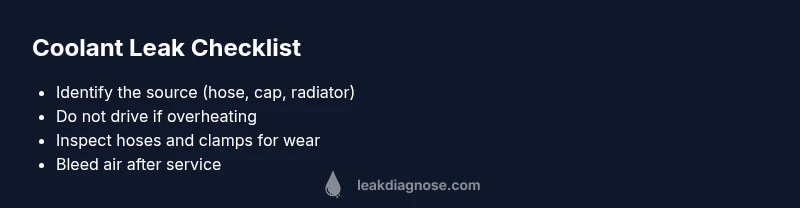
Coolant leaks can originate from a variety of components, and identifying the exact source is the first step in a safe repair. The most frequent culprits include worn radiator hoses, cracked radiator tanks, a failing radiator cap, a damaged water pump seal, and loose clamps. Sometimes a small pinhole in a hose looks minor but releases enough coolant to reduce capacity quickly. The reservoir tank may crack or crack at the seams, causing the system to draw air and lose pressure. In vehicles with aluminum radiators, corrosion can create slow leaks that worsen with heat cycles. The Leak Diagnosis team notes that most leaks stem from hoses and connections, but the exact source always benefits from a careful visual inspection and a pressure test. Plan for thorough checks and prepare to replace worn parts.
- Inspect hoses for cracks, bulges, or soft spots
- Check clamps and fittings for looseness
- Look for damp patches around the radiator and reservoir
Can you drive with a coolant leak? Practical reality
In practice, driving with a known coolant leak is unsafe and ill-advised. The risk of overheating can damage critical engine components, lead to coolant loss mid-journey, and leave you stranded. If the radiator, hoses, or water pump fail while you’re on the road, the engine can seize quickly. The safest action is to pull over as soon as it’s safe, turn off the engine, and arrange roadside assistance. If you absolutely must move a short distance to a safe location, drive slowly with the temperature gauge watched closely, keep speed low, and avoid heavy loads. This is a temporary measure and should not substitute for a proper repair. For a safe diagnostic plan, follow our structured steps and obtain a professional assessment whenever you’re unsure.
- Overheating risks increase with ambient temperature and engine load
- A temporary move is only for safety, not a fix
- Always ensure you’re not leaving vulnerable in a hot environment
Immediate safety steps if you suspect a leak
Act quickly but calmly to minimize risk. First, pull over to a safe, level location and switch off the engine. Do not drive with the cap removed or while the system is hot. If you can see a visible leak, note the location and avoid contact with hot components. Open the hood only after the engine has cooled, and check for obvious sources such as hoses, clamps, and the radiator cap. If you have a roadside assistance plan, call them before attempting a temporary fix. Maintain a safe distance from any steam or sprayed coolant. If you must add coolant, use the correct type and mix, and never run the engine with an empty system.
- Never open the radiator cap while hot
- Use the correct coolant type and mix
- If unsure, wait for professional help
Diagnostic flow at a glance
The diagnostic flow helps you identify the source and avoid unnecessary risk. Start with symptoms you observe: puddles, odor, steam, or gauge readings. Move to simple checks: inspect hoses and the reservoir, verify clamps, and inspect the radiator cap for wear. If basic checks don’t reveal the source, schedule a pressure test or leak-detection service. Throughout, prioritize safety: do not continue to drive if the temperature rises, and don’t ignore the warning signs. The goal is to prevent engine damage, avoid roadside breakdowns, and ensure you have the right parts and coolant for a proper repair.
Maintenance and prevention to avoid future leaks
Preventing leaks is easier than repairing them after failure. Regularly inspect hoses for cracks and swelling, replace aging clamps, and use the correct coolant mixture. Schedule periodic cooling-system flushes and pressure tests as part of routine maintenance, especially with high-mileage vehicles. Keep the reservoir cap in good condition and replace it at the first sign of wear. If you notice the radiator fins are bent or corroded, seek professional help before a leak worsens. Light, routine maintenance helps you catch small issues before they become major problems. The Leak Diagnosis team recommends a proactive approach to prevent disruptions and protect your engine.
- Establish a coolant maintenance schedule
- Replace worn hoses and caps promptly
- Bleed air after service to avoid trapped air pockets
Steps
Estimated time: 1.5-2 hours
- 1
Pull over safely and let the engine cool
Find a safe spot, turn on hazards, and stop. Do not open the hood until the engine has cooled to avoid burns. If there is a visible leak, note its location for later inspection.
Tip: Turn off the engine and take a photo of any puddles for reference. - 2
Check coolant level and visible leaks
With the engine cooled, check the reservoir level and inspect hoses for cracks or wet spots. Look for dampness around clamps and the radiator. Note color and smell to help identify the coolant type.
Tip: Use gloves and avoid skin contact with any leaked fluid. - 3
Inspect the radiator cap and hoses
Examine the radiator cap for cracks or a warped seal. Run your fingers along hoses for brittleness or soft spots. If you see damage, do not drive—arrange for towing.
Tip: A faulty cap can cause pressure loss even if the hoses look fine. - 4
Decide on immediate transport needs
If the vehicle is overheating or leaking steadily, do not drive. Call roadside assistance or a tow to a repair shop. If you must move the car, keep speeds low and monitor the gauge closely.
Tip: Never ignore an overheating gauge; it’s a sign of a critical condition. - 5
Plan for repairs
Identify likely fixes based on the source (hose, cap, radiator). If DIY, gather replacements, tools, and a coolant type compatible with your engine. If uncertain, contact a professional.
Tip: Only perform DIY fixes within your skill level and safety limits. - 6
Refill coolant and bleed air if needed
After repairs, refill with the correct coolant concentration and bleed any trapped air. Recheck for leaks after the system has warmed and cooled once.
Tip: Never mix incompatible coolants; use the recommended brand and type. - 7
Test drive and verify
Take a short test drive and watch the temperature gauge. Check for new leaks and inspect hoses again after cooling.
Tip: Have a flashlight handy to inspect the area where you saw leaks. - 8
Document and follow up
Record what you found and the steps you took. If the leak persists, schedule a thorough diagnostic at a shop and consider a cooling-system flush.
Tip: Keep receipts for parts and services for future reference.
Diagnosis: Visible coolant leak, overheating signs, or sweet-smelling coolant vapors
Possible Causes
- highLeaking hose or clamp
- mediumCracked radiator or reservoir
- lowFaulty radiator cap or pressure system
Fixes
- easyTighten or replace leaking hose/clamp
- hardReplace cracked radiator or reservoir and perform a coolant flush
- easyReplace radiator cap and re-pressurize system
Questions & Answers
Can you drive with a coolant leak?
Driving with a coolant leak is not advised. Overheating can cause severe engine damage, and a tow is often the safer option. If you must move, do so only a short distance to a safe location and monitor temperature closely.
No, it's not safe to drive with a coolant leak. It can overheat the engine; arrange roadside help or a tow.
What are the signs of a coolant leak?
Common signs include puddles under the vehicle, a sweet odor, foggy windows from steam, and rising engine temperature gauges. Early detection helps prevent expensive repairs.
Look for puddles, sweet smell, steam, and overheating gauges.
Is a small leak repairable at home?
Minor leaks from hoses or clamps can sometimes be fixed at home, but leaks from the radiator, water pump, or core usually require a professional.
Some hose fixes are doable at home; bigger leaks usually need a pro.
How long can I drive after noticing a leak?
There is no safe universal time. If you must travel, keep it brief, watch the temperature, and stop if it starts to climb. Prefer towing to a repair shop.
It's best not to drive far; if you must, drive very short distances and get help asap.
How can I prevent coolant leaks?
Regular inspections, timely hose and clamp replacements, using the correct coolant, and ensuring the system is properly bled will reduce leak risk.
Regular checks and proper coolant use help prevent leaks.
What should I expect at a shop for a coolant leak repair?
A shop will diagnose the source, pressure-test the system, replace failed parts, and refill with fresh coolant. They may also perform a system flush if needed.
A mechanic will locate the leak, replace parts, and refill coolant.
Watch Video
Main Points
- Do not drive far with a coolant leak.
- Identify the source safely before attempting fixes.
- If in doubt, call for professional help promptly.
- Regular maintenance reduces the risk of leaks.
- Bleed air after service to prevent air pockets.