Is leaking coolant dangerous? A DIY guide for homeowners
Discover why a coolant leak matters, how to assess risk, and practical steps to diagnose and fix leaks safely. Learn common causes, safety precautions, and when to call a professional.


If your car or appliance shows signs of coolant loss, treat it as a potential hazard and investigate promptly. Most leaks originate from worn hoses, a loose radiator clamp, or a faulty cap. Stop driving if you see coolant puddles, allow the system to cool, then inspect accessible components and call a professional for a full diagnostic and repair.
Understanding the risk: is leaking coolant dangerous?
Is leaking coolant dangerous? Yes, in many cases it is. Engine coolant contains toxic or irritant additives and circulating coolant around hot engine parts can cause burns. More importantly, any leak reduces the cooling capacity of the system, raising the risk of overheating, warped cylinders, and expensive damage. For homeowners and DIYers, the immediate concern is personal safety and preventing environmental contamination while assessing the leak source. Early identification lowers risk and costs. This guide speaks directly to the question is leaking coolant dangerous by outlining the signs, the most common failure points, the steps you can take safely, and when to call a pro. Throughout, remember that quick action helps protect you, your family, and your vehicle. The key is to treat any visible coolant leak as a potential hazard and to proceed with caution.
Key takeaway: coolant leaks demand respect and prompt action
- Treat any sign of a coolant leak as potentially dangerous and address it immediately.
- Prioritize safety: let the system cool, wear gloves, and avoid skin contact with coolant.
- Early diagnosis lowers repair costs and reduces the risk of engine damage.
- Use the correct coolant type and follow the manufacturer’s guidance to prevent future leaks.
- If you’re unsure, seek professional help promptly.
This section helps answer the question is leaking coolant dangerous by framing safety first, then moving to practical checks.
Why the coolant system leaks happen: typical failure points
Leaks most often originate from worn hoses, loose clamps, a faulty radiator cap, a cracked radiator, or a failing water pump. A hose with hardened or swollen sections is a red flag. A cap that fails to seal can allow pressure to escape and coolant to leak even at normal engine temperatures. Radiator corrosion or cracks, heater core leaks, or a faulty thermostat housing can also manifest as a leak. If you repeatedly see fresh coolant under the vehicle or a persistent sweet smell near the engine bay, the issue is likely one of these common failure points. Understanding these sources is essential to determine if the situation is dangerous and to guide your diagnostic approach. The question is leaking coolant dangerous because it signals you to start a targeted inspection.
Immediate steps you can take (before you drive to shop)
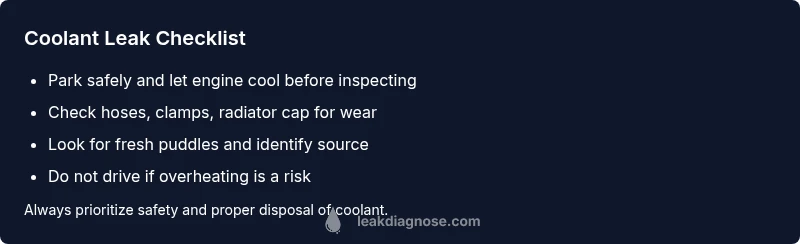
- Safety first: park on a flat surface, turn off the engine, and allow it to cool for at least 15-30 minutes before touching anything.
- Check for visible puddles or wet spots around hoses, clamps, reservoir, and radiator.
- If you can safely reach it, tighten any loose clamps and inspect hoses for cracks or bulges.
- Do not open a hot radiator cap; the system is pressurized and scalding steam can cause serious burns.
- If you notice rapid coolant loss or signs of overheating, avoid driving and arrange towing or roadside service. The core message is is leaking coolant dangerous and urgent—address it before continuing to drive.
This section translates the general guidance into actionable steps you can take while considering safety and risk, reinforcing the idea that is leaking coolant dangerous requires careful handling.
How to assess severity at home
Begin with a quick visual check: is there a fresh puddle under the vehicle, and is the ground showing a consistent wet pattern? Check the coolant level in the reservoir and note the color (green, orange, red, or blue) which can indicate the type of coolant used. Look for signs of clear fluid on hoses and at joints, and inspect the radiator cap’s seal for cracks or wear. If you observe white steam or a sweet odor, treat this as a potential overheating event and stop driving. To answer the question is leaking coolant dangerous in a practical sense, assess the rate of loss and the temperature gauge behavior. A slow drip from a hose joint is less urgent than a sudden loss of coolant and rising temperature gauge. When in doubt, err on the side of caution and seek professional inspection to avoid engine damage and exposure risks.
When to call a professional right away
If you detect a significant coolant leak, if the engine overheats, or if you’re unsure about the leak source, contact a professional immediately. Do not rely on temporary fixes like sealants, which can cause further harm or mask a larger issue. A certified mechanic can perform a pressure test, inspect all potential leak points, and verify the integrity of the cooling system. If signs of a leak persist after basic checks, it’s a strong signal that is leaking coolant dangerous enough to require professional intervention. The sooner you bring in an expert, the better your odds of preventing engine damage and expensive repairs.
Prevention and maintenance to avoid future leaks
Preventing coolant leaks starts with regular maintenance: replace worn hoses before they fail, replace radiator clamps as needed, ensure the radiator cap seals correctly, and flush the cooling system according to the manufacturer’s schedule. Using the correct coolant type and maintaining proper coolant-to-water ratio helps prevent corrosion and buildup that can lead to leaks. A clean, well-maintained cooling system is less prone to leaks and safer for your family. The question is leaking coolant dangerous today is answered by adopting a proactive maintenance plan and a careful diagnostic routine.
Diagnostic flow summary (for quick reference)
- Symptom check: look for puddles, sweet odor, overheating gauge, steam.
- Source narrowing: hoses/clamps, radiator cap, radiator, water pump, heater core.
- Immediate action: safety stop, allow cooling, tighten obvious clamps, avoid driving if overheating.
- Professional path: pressure test, leak tracing, component replacement.
Steps
Estimated time: 30-60 minutes
- 1
Turn off engine and ensure safety
Power down the vehicle and allow the engine to cool before inspection. Never loosen a hot radiator cap or touch hot components. Wear gloves and eye protection when handling coolant.
Tip: Allow at least 15-30 minutes for cooling before starting inspection. - 2
Locate the source of the leak
Check hoses, clamps, radiator, reservoir, and water pump for visible signs of seepage or wetness. Use a flashlight to spot small drips and follow any damp trail to the origin.
Tip: Make a note of where you see the first damp area to guide your diagnosis. - 3
Inspect hoses and clamps
Carefully examine all hoses for cracks, bulges, or swelling. Look at clamp tightness around every hose connection. Replacing a worn hose or tightening a loose clamp often stops a leak.
Tip: Do not overtighten clamps; you can damage hoses or threads. - 4
Check the radiator cap and reservoir
Inspect the radiator cap for cracks or a compromised seal. If the cap looks damaged, replace it. Check the reservoir cap if present. A faulty cap can cause pressure loss and leaks.
Tip: Only replace with the correct cap type and pressure rating. - 5
Assess the cooling system pressure
If you have the tools, perform a cooling system pressure test to detect leaks under pressure. This step confirms the leak source and whether the system holds pressure.
Tip: Follow the tool’s instructions; never pressurize a system you’re not comfortable with. - 6
Decide on immediate action
If the leak is minor and you can safely drive to a shop without overheating, proceed with caution. If you notice rapid loss of coolant or overheating, do not drive and arrange towing.
Tip: Keep a roadside emergency kit handy for such situations. - 7
Plan for repair options
Based on the identified source, decide whether to replace hoses, caps, or more substantial components like the radiator or water pump. For complex leaks, a professional repair is usually best.
Tip: Ask for an inspection and a written estimate before repairs. - 8
Test after repair and reset maintenance
After repair, refill coolant to the proper level, bleed air if required, and test for leaks. Monitor temperature and look for new wet spots over the next few days.
Tip: Dispose of old coolant responsibly; it’s hazardous.
Diagnosis: Vehicle shows coolant puddle, sweet odor, or overheating gauge
Possible Causes
- highPunctured or worn radiator hose
- highLoose or damaged hose clamps
- mediumFaulty radiator cap
- lowCracked radiator or reservoir
- mediumWater pump seal leak
Fixes
- easyInspect hoses and clamps; replace worn hoses or tighten clamps as needed
- easyTest or replace radiator cap to ensure proper seal
- mediumPerform a cooling system pressure test to locate hidden leaks
- hardReplace cracked radiator or reservoir if pressure test confirms
- hardAddress water pump seals or gasket leaks; may require professional service
Questions & Answers
What are the common signs of a coolant leak?
Common signs include puddles under the vehicle, a sweet odor near the engine bay, frosted coolant residue, and an overheating gauge. If you notice these, stop and inspect promptly.
Common signs are puddles under the car, a sweet smell, and overheating; stop and inspect.
Can a coolant leak cause engine damage?
Yes. Low coolant can cause overheating, which may warp metal, blow gaskets, or damage the water pump. Address leaks quickly to minimize repair costs.
Yes, leaks can damage the engine if not addressed quickly.
Is it safe to drive with a coolant leak?
Only if the temperature stays normal and coolant loss is minimal. If you see rising heat or rapid loss, tow the vehicle instead of driving.
If safe, drive slowly; otherwise tow.
What can I use to temporarily seal a coolant leak?
Temporary sealants exist but are not reliable and can trap air or worsen flow. They are not a substitute for professional repairs.
Sealants aren’t a real fix; seek professional help.
How often should coolant be replaced?
Follow the vehicle manufacturer’s maintenance schedule for coolant replacement; this helps prevent corrosion and leaks in the cooling system.
Follow the manufacturer’s cooling system maintenance schedule.
Watch Video
Main Points
- Is leaking coolant dangerous? Yes, treat it as urgent.
- Inspect hoses, clamps, and caps first for quick fixes.
- Do not ignore overheating—address leaks promptly.
- Use the correct coolant type and follow manufacturer guidelines.
- Schedule professional help if the leak persists or the source is unclear.