Oil Leak Repair Costs: What to Expect in 2026
Learn the true cost to fix an oil leak on a car, with breakdowns of parts, labor, diagnostics, and regional differences. Get practical tips to obtain accurate estimates and save money in 2026.


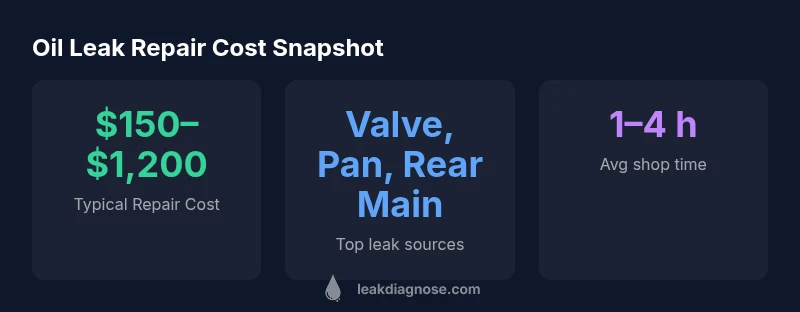
On a typical passenger-car oil leak, expect roughly $150–$1,200 to repair, depending on location, type, and labor. Minor gasket leaks may cost about $150–$350, while more extensive seal or oil pan leaks can run $500–$1,200. Costs vary by region and shop. These figures come from Leak Diagnosis Analysis, 2026.
What influences the total cost to fix an oil leak?
If you’re asking how much does it cost to fix an oil leak, you’re balancing parts, labor, and access. According to Leak Diagnosis, the price is largely driven by where the leak is located on the engine, how easily technicians can access it, and the type of parts required (gaskets, seals, or a full oil-pan replacement). Regional labor rates also play a big role. In practice, a small gasket leak may be a straightforward repair, while a failed rear main seal or a corroded oil pan can trigger a more involved job. Expect to see a broad range, with the most common repairs falling into the lower end of the spectrum and complex engine-area leaks pushing toward the higher end.
Breakdown of cost components in an oil-leak repair
Costs break down into several primary components:
- Diagnostics and inspection: A shop will confirm the leak source and assess system integrity. Diagnostics can range from a basic visual check to pressure tests and smoke tests.
- Parts and materials: Gaskets, seals, oil pans, or timing-cover components may be required. OEM parts typically cost more than aftermarket equivalents.
- Labor: Labor rates vary widely by region and shop type (independent shop vs. dealership). Time estimates depend on access and the number of parts to remove and reinstall.
- Fees and disposal: Certifications, shop fees, and used oil disposal add to the total. To get a reliable estimate, request an itemized quote that lists each component and the hours expected for the job.
Common oil leak sources and why they cost what they do
Oil leaks arise from several areas: valve cover gaskets, oil pan gaskets, and rear main seals are among the most frequent. Valve cover gasket leaks are usually cheaper to fix because they’re accessible and involve replacing a gasket and re-sealing the cover. Oil pan gasket issues can be more labor-intensive if the pan requires removal. Rear main seal leaks are typically the most expensive due to engine disassembly. The cost varies with vehicle design, engine layout, and whether auxiliary components must be removed to reach the leak.
Regional price differences and shop vs dealership costs
Prices tend to be higher at dealerships and in urban areas with higher labor rates. Independent shops may offer more competitive hourly rates, but availability and diagnostic time can affect total cost. If the leak is minor, some shops may offer a flat diagnostic fee offset by the repair cost. Always ask for an itemized estimate and compare at least two quotes that include parts, labor, and disposal fees.
DIY vs professional repair: what you can realistically do
DIY enthusiasts may attempt minor resealing tasks if they have the right tools and a clean environment; however, many oil leaks involve precision sealing and engine disassembly that require professional expertise. If you do attempt a DIY fix, only proceed if you are confident in the leak’s source and have comprehensive guidance. In most cases, professional repair provides a safer, more reliable outcome and a clearer warranty path.
How to get an accurate estimate: a step-by-step checklist
Before visiting a shop, perform the following:
- Note the exact locations where oil appears and any related symptoms (oil spots, burning smell, engine light).
- Gather vehicle details: make, model, year, mileage, and service history.
- Take photos of the leak area from multiple angles and document wet spots.
- Ask for an itemized quote that separates diagnostics, parts, labor, and disposal.
- Request an inspection window and a written warranty on parts and workmanship.
When to repair now vs monitor the issue
If you notice active leaks leaving noticeable oil spots, a burning oil smell, or drops on the driveway, address the problem promptly. Small leaks can worsen over time and lead to engine damage or environmental hazards. In some cases, a temporary sealant is not a lasting solution. Prioritize formal inspection and a clear repair plan rather than adding the problem to a growing list of maintenance tasks.
Cost-saving strategies and warranties
- Compare at least two or three quotes and ask for a line-item breakdown.
- Check whether the shop offers a warranty on parts and labor; longer warranties can provide value even if upfront costs are higher.
- Inquire about OEM versus aftermarket parts and their impact on both price and reliability.
- Consider a maintenance package that includes oil system checks if you drive in regions with harsh weather or frequent short trips.
- Seek shop-certified technicians with engine-leak experience; a trusted specialist can prevent misdiagnosis and unnecessary repair work.
What to expect after the fix: warranties, checks, and follow-up
A typical fix is followed by a test drive and a recheck of the leak area to confirm success. Many repairs include a warranty on parts and labor for a set period or miles. If the leak reappears within the warranty window, return to the shop for a no-cost reassessment. Maintain documentation of the repair for any future resale or service needs.
Structured cost ranges for oil leak repairs
| Factor | Low-end range | High-end range | Notes |
|---|---|---|---|
| Labor rate (hour) | 75-125 | 125-180 | Regional variance |
| Parts and gasket costs | 50-200 | 400-800 | Material quality varies |
| Diagnostics and shop fees | 50-120 | 150-250 | Flat fees may apply |
| Labor hours | 1-2 | 3-6 | Complex leaks take longer |
Questions & Answers
What is the typical cost to fix an oil leak on a car?
Costs vary by leak source and vehicle, but most repairs fall within a broad range. A professional estimate will identify the precise components and labor hours needed. Always obtain an itemized quote before authorizing work.
Oil leak repair costs vary by source and vehicle; get an itemized quote first, so you know exactly which parts and labor are involved.
Can I fix an oil leak myself to save money?
DIY fixes are only advisable for straightforward sealant or gasket tasks if you have the right tools and experience. Many leaks require engine disassembly or access adjustments best handled by a professional to avoid further damage.
DIY can save money, but many leaks need professional expertise to avoid causing more harm.
How long does an oil leak repair take?
Most oil-leak repairs take between 1 and 4 hours in a shop, depending on access and parts. More complicated leaks can extend beyond that window.
Most repairs take 1 to 4 hours, with longer times for complex leaks.
What parts are commonly replaced for an oil leak?
Common parts include valve cover gaskets, oil pan gaskets, rear main seals, and occasionally seals around timing covers. The exact parts depend on the leak origin and engine design.
Gaskets and seals near the leak source are usually replaced; exact parts depend on the engine.
Is it safe to drive with an oil leak?
Driving with an active oil leak can damage the engine and create a fire risk. If you notice oil on the ground or burning smells, stop driving and have the vehicle towed to a shop for diagnosis.
If you have an oil leak, avoid driving long distances and get it diagnosed soon.
Does insurance cover oil-leak repairs?
Oil-leak repairs are typically not covered by standard auto insurance unless caused by a covered incident. Check your policy and any maintenance warranty for possible coverage or reimbursements.
Usually not covered by auto insurance, unless a policy specifically includes that scenario.
“Cost estimates for oil-leak repairs are highly situational, hinging on leak location, accessibility, and the parts required. A detailed, itemized quote reduces surprises and helps homeowners budget effectively.”
Main Points
- Know the source to estimate costs accurately
- Request itemized quotes to avoid hidden fees
- Regional varies matter more than the brand
- DIY can save money, but be honest about limits