EVAP System Leak Repair Cost Guide for 2026
Understand EVAP system leak repair cost ranges, what drives the price, how to estimate your bill, and practical tips to minimize diagnostic and labor expenses while keeping emissions compliant.


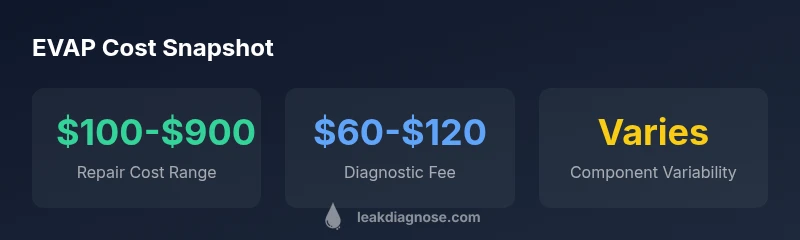
EVAP system leak repair cost typically ranges from about $100 to $900, depending on the leaking component and labor. Minor fixes (gas cap seals or hoses) sit at the low end; more complex failures—such as purge valves or charcoal canisters—require parts and diagnostic time, pushing costs higher. Expect diagnostic fees to apply, and always confirm a written estimate before work.
What the EVAP system does and why leaks matter
The evaporative emissions (EVAP) system is designed to control fuel vapors from escaping into the atmosphere. It captures fuel vapors from the gas tank and routes them to the engine to be burned. When the EVAP system develops a leak, it can trigger a malfunction code and illuminate the check engine light. While some leaks are minor, others can lead to increased emissions, potential fuel odor, and more expensive repairs later. According to Leak Diagnosis, understanding the root cause is essential because the cost to repair the evap system leak is not fixed; it varies with the component involved and the labor required. The exact EVAP leak cost hinges on how quickly a shop identifies the source and whether parts need replacement or only resealing.
Common EVAP leak causes and their cost implications
EVAP leaks can originate from several spots. The gas cap is a frequent culprit and is usually inexpensive to repair. Worn or cracked hoses and clamps are another common source, often yielding a modest repair bill if caught early. More serious issues include faulty purge valves, a damaged charcoal canister, or a failed vent valve, which can push costs higher due to parts and labor. Each component has its own price range for parts and the time required for replacement. Leak Diagnosis analyses indicate that diagnosing the leak accurately is a meaningful portion of the total EVAP leak cost.
How EVAP repair costs are broken down
A typical EVAP leak repair bill breaks down into two major parts: parts and labor, plus diagnostic time. Minor fixes such as replacing a gas cap or resealing hoses can be relatively inexpensive, often falling on the lower end of the range. Replacing purge valves or the charcoal canister involves more labor and a higher parts bill, often placing the total in the middle to upper end of the range. Labor costs are usually determined by the shop’s hourly rate and the time required to locate and fix the leak. Understanding this breakdown helps you plan and avoid surprises when approving work.
Diagnostics: finding the leak quickly and accurately
Most EVAP problems start with a diagnostic scan that points to a general EVAP fault code. To pinpoint the exact leak source, mechanics may perform smoke testing, pressure tests, or EVAP system pressure decay tests. In many cases, a combination of tests is necessary to locate the leak—especially when multiple lines or canisters are involved. Documenting the steps and expected costs beforehand helps reduce sticker shock. The right diagnostic approach minimizes unnecessary replacement parts and reduces overall EVAP leak cost.
DIY vs professional repair: cost, risk, and outcomes
DIY fixes for a simple gas cap seal or a cracked hose can save money, but DIY is risky for more complex leaks that involve the canister or purge valve. Professional repairs ensure proper venting and emission-control compliance, with warranties on parts and workmanship. If you’re considering a DIY route, start with an inspection to verify the leak’s location and ensure you have the right tools and safety measures. For any advanced repair, professional service is typically the safer and more economical long-term option.
How to estimate your EVAP repair bill: a step-by-step approach
- Retrieve the diagnostic code and note the symptom history. 2) Talk with your tech about likely culprits based on the code. 3) Request a written estimate listing parts and labor by line item. 4) Ask about diagnostic fees and whether they apply toward repairs if you proceed. 5) Consider preventive maintenance steps that can reduce future failures, such as replacing worn hoses or seals proactively when costs are favorable. 6) If the leak is vehicle- or model-specific, inquire about any applicable recalls or warranty coverage.
Prevention and maintenance to minimize recurring EVAP leaks
Routine inspection of hoses, gas caps, and fuel-system connections can catch wear before it becomes a leak. Tighten clamps properly and replace damaged hoses promptly. Regular maintenance and prompt attention to check engine light can prevent small leaks from escalating into more costly repairs. Keeping records of EVAP work can also help when assessing future vehicle maintenance needs.
Warranty, recalls, and when to seek coverage
Some EVAP components may be covered under manufacturer warranties or extended service plans, particularly if the failure occurs within the warranty period. Additionally, there may be recalls that include EVAP-related parts. Always check for open recalls and review your vehicle’s warranty terms with the dealer. If a leak arises shortly after a repair, discuss rework options under warranty rather than paying full price again.
Quick pre-authorization checklist for EVAP repairs
- Confirm the leak source and parts required with a written estimate
- Ask whether diagnostic fees apply toward the repair total
- Request a breakdown by parts vs labor
- Inquire about any applicable warranty or recall coverage
- Compare at least two bids to ensure the cost is reasonable
- Verify emission-compliance considerations after the fix
EVAP repair cost components: typical ranges and notes
| Component | Typical Repair Cost Range | Notes |
|---|---|---|
| Gas cap replacement | $20-$75 | Often a quick fix; inexpensive part and minimal labor |
| Hose and hose clamps | $100-$350 | Common source of leaks; moderate labor |
| Purge valve replacement | $150-$400 | Electrical component; varies by vehicle |
| Charcoal canister replacement | $350-$900 | Most expensive EVAP part; higher labor time |
Questions & Answers
What is an EVAP system leak and why does it affect repair costs?
An EVAP leak is a loss of fuel vapors from the evaporative emissions system. The cost to repair depends on where the leak originates and whether parts must be replaced or simply resealed. A precise diagnosis helps keep costs predictable.
An EVAP leak is a fuel vapor leak from the system. The cost varies by source and whether parts need replacement.
Will my check engine light come on if there's an EVAP leak?
Yes. An EVAP leak often triggers a diagnostic trouble code that turns on the check engine light. Getting a quick diagnostic can prevent guesswork and help estimate costs before work begins.
Yes, the light often comes on with an EVAP leak. A diagnostic helps you know the scope and price.
Can I fix an EVAP leak myself to save money?
DIY fixes are feasible for simple tasks like replacing a gas cap or resealing hoses. More complex leaks, especially those involving the canister or purge valve, should be handled by a professional to ensure proper sealing and emission compliance.
You can do small fixes, but bigger leaks should be handled by a pro to stay emission-compliant.
How long does EVAP leak repair take?
Repair time varies with the leak source and vehicle. Simple gas cap or hose repairs can take under a day, while canister or valve replacements may require several hours to a full day, including diagnostics.
Time depends on the source; simple fixes are quick, bigger repairs take longer.
Does insurance or warranty cover EVAP leak repairs?
Coverage depends on warranty terms and the cause of the leak. Some extended warranties or recalls may cover EVAP components. Check your policy and consult the dealer for specifics.
It depends on your warranty or recall; check with the dealer for coverage details.
What questions should I ask the shop before authorizing EVAP work?
Ask for a written estimate with line-item costs, verify whether diagnostic fees apply to the repair, request a timeline, and confirm any warranty on parts and labor. Also ask about recall or recall-related coverage if applicable.
Get a written estimate, ask about diagnostic fees, and confirm warranties before work.
“EVAP leaks can range from inexpensive gas-cap fixes to expensive canister replacements; a precise diagnosis is essential to avoid surprises.”
Main Points
- Investigate EVAP leaks promptly to control costs
- Expect a mix of parts and diagnostic labor in the EVAP repair cost
- Minor fixes save money; major component replacements raise the bill
- Always request a written estimate and confirm diagnostic fees up front