Cost to Fix Vacuum Leak: Prices, Parts & DIY Guide
Explore the cost to fix vacuum leak, what drives prices, and practical homeowner tips. Learn how diagnostics, parts, and labor shape the final bill.


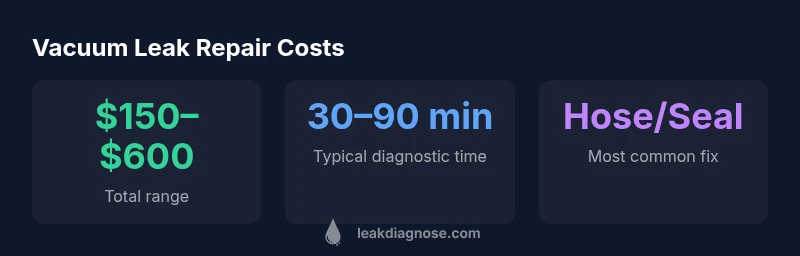
According to Leak Diagnosis, the cost to fix vacuum leak varies widely depending on the source, location, and labor. For a typical consumer repair, expect a range from about $150 to $600, with higher-end repairs requiring parts replacement or professional diagnostics. The fastest fixes often involve simple hose replacements or seal reseals, while complex duct or manifold leaks may need more time and specialized tools.
What a vacuum leak is and why it matters for your vehicle
A vacuum leak occurs when unmetered air enters the engine’s intake system, bypassing the intended airflow. This disrupts the air-fuel mixture, causing rough idle, misfires, decreased fuel economy, and in some cases engine damage over time. The cost to fix vacuum leak stems from both diagnosing the exact location and performing the repair. Prices rise when the leak is in a hard-to-reach area or when specialized parts or tools are required. For homeowners and DIY enthusiasts, understanding where leaks commonly originate helps you gauge whether a fix is worth attempting yourself or if a professional diagnosis is warranted. In short, the total bill reflects parts, labor, and the diagnostic effort necessary to prevent recurring problems.
According to Leak Diagnosis, the cost to fix vacuum leak can vary widely, but most common repairs stay within a few hundred dollars when tackled early. Early detection and straightforward hose or gasket replacements tend to be on the lower end, while labor-intensive manifold or pipe replacements push the price higher. This makes early diagnostics and a clear scope essential for keeping costs predictable.
Key cost drivers when repairing a vacuum leak
Several factors drive the final price tag for a vacuum leak repair:
- Location and accessibility: Hose leaks near the engine bay are usually cheaper to repair than leaks inside the intake manifold or near the throttle body.
- Labor rates: Shops in high-cost areas charge more per hour, which can significantly affect the total bill.
- Parts vs labor: Replacing a hose is typically less expensive than replacing an entire intake gasket or manifold.
- Diagnostic time: A thorough diagnosis—sometimes including a smoke or pressure test—adds to the cost even before any part is replaced.
- Vehicle type and age: More complex engines or older vehicles may require specialty parts or longer service times.
- Warranty and guarantees: Some repairs include labor warranties which add value but can influence upfront pricing.
When budgeting, homeowners should expect the majority of costs to come from labor and the diagnostic process, with parts making up a smaller portion unless a major replacement is needed. The exact mix depends on your car’s design and the leak’s location.
Cost ranges by leak type
Costs vary by leak type and repair scope. In many cases, the simplest fixes are hose or seal replacements, while more involved leaks can involve the manifolds or critical vacuum lines. Common scenarios include:
- Hose or gasket replacement: Often the most affordable option, typically in the lower end of the cost range.
- Vacuum line replacement: Moderate cost, depending on line length and routing.
- Intake manifold or PCV system repair: Higher cost due to complexity and labor.
Estimated cost ranges (total, including parts and labor) span roughly from $150 to $600, with most homeowners landing in the middle of the range for common hose/seal fixes. Always request a written estimate that includes a parts-and-labor breakdown and ask about any diagnostic fees that may apply if the leak isn’t found right away.
Diagnostic steps and how they impact your bill
A precise diagnosis is essential to avoid paying for unnecessary work. Typical diagnostic steps include:
- Visual inspection of hoses, clamps, and vacuum lines for cracks or loose connections.
- Pressure or smoke tests to locate hidden leaks in the intake system.
- Scanning for engine codes (OBD-II) related to air/fuel mix issues.
Each step adds to the upfront cost but reduces the risk of paying more for unnecessary parts. If a shop offers a quick visual check without a formal diagnostic plan, consider requesting a more detailed diagnostic protocol before authorizing work.
Leak Diagnosis emphasizes that a methodical approach yields the most accurate cost estimate and minimizes surprises at the invoice.
DIY vs professional repair: when to choose
DIY fixes are feasible for simple hose or gasket replacements, especially if you have basic hand tools and can safely reach under the hood. However, avoid DIY when:
- The leak is in a hard-to-access vacuum line or near critical components.
- You lack the proper safety equipment or documentation.
- The repair requires special tools or calibration that affects engine performance.
Professional repairs provide a warranty on parts and labor and often include a more thorough diagnostic process. For many vehicle owners, starting with a professional diagnosis to confirm the leak location and scope helps prevent misdiagnosis and saves money in the long run.
How to get an accurate quote and avoid common price traps
To obtain an accurate cost estimate, follow these steps:
- Gather vehicle information (make, model, year) and symptoms (rough idle, reduced power, poor fuel economy).
- Request a written estimate with a clear breakdown of diagnostic fees, parts, and labor.
- Ask whether the diagnostic fee is waived if repairs are performed at the same shop.
- Seek a second opinion if the initial estimate seems high or unclear.
A good quote should specify the exact parts to be replaced, the warranty terms, and any potential additional costs if additional leaks are found during service.
Preventing vacuum leaks: maintenance tips for the long term
Prevention is cheaper than repair. Routine maintenance can reduce the likelihood of vacuum leaks:
- Inspect hoses and clamps regularly; replace brittle or cracked hoses proactively.
- Use quality clamps to prevent leaks at junction points.
- Keep the PCV valve and related lines clean and unobstructed.
- Address idle or performance issues promptly to prevent escalation.
Regular inspections and timely replacements can extend engine life and keep costs down by avoiding larger, more expensive repairs later on.
Cost ranges for common vacuum leak repair types
| Leak Type | Estimated Cost Range | Typical Time | Notes |
|---|---|---|---|
| Hose or seal replacement | $120–$300 | 30–60 minutes | Most common fix; often DIY-friendly |
| Vacuum line/manifold service | $300–$550 | 60–120 minutes | More complex; professional recommended |
| Diagnostic/Shop time | $0–$100 | 15–60 minutes | Charged if no fix found or parts not installed |
Questions & Answers
What factors influence the cost to fix vacuum leak?
Several factors affect price, including leak location, vehicle type, diagnostic time, and whether parts are replaced. Simple hose reseals are cheaper, while manifold repairs raise costs. Always request a detailed breakdown.
Costs are driven by location, parts, and labor; a simple hose fix costs less than a manifold repair.
Can I fix a vacuum leak myself at home?
DIY fixes are possible for simple hose or gasket replacements if you have basic tools and safety knowledge. For complex or unknown leaks, consult a professional to avoid engine damage.
DIY is possible for simple hose fixes, but skip it for complex lines.
Do diagnostic fees apply if the leak is not found?
Many shops charge a diagnostic fee regardless of outcome, though some waive it if repairs are performed there. Ask about fees and what they cover before agreeing to work.
Diagnostic fees are common; ask for a clear fee policy before service.
How long does a typical vacuum leak repair take?
Simple hose leaks can take under an hour, while manifold or pipe replacements may take several hours depending on access and parts.
Simple fixes are quick; bigger repairs take longer.
Is there any warranty on vacuum leak repairs?
Warranties vary by shop and part, typically ranging from 3 to 12 months. Verify coverage for both parts and labor and understand any conditions that could void it.
Check the warranty period and what it covers.
“A precise estimate comes from a methodical diagnostic rather than guessing. Always confirm the scope of work before authorizing repairs.”
Main Points
- Start with simple hose checks to save costs
- Costs vary widely by leak type and vehicle
- Ask for a written, itemized estimate before work
- DIY fixes are feasible only for simple leaks; reserve complex repairs for pros