Who to Call for Ceiling Water Leaks: A Practical Guide
A practical, safety-focused guide for homeowners on ceiling leaks: who to call, what to do first, and how professionals diagnose and repair. From quick actions to prevention—Leak Diagnosis.


To stop water damage fast, start by turning off the water supply if the leak is manageable and protect belongings. For ceiling leaks, call a licensed plumber or a water-damage restoration specialist first, especially if you suspect plumbing or roof issues. If water is actively leaking, consider emergency services. Document visible damage and avoid electrical hazards.
Understanding the problem: why ceilings leak
Ceiling leaks are a warning sign that water is entering your home from above. The most common sources are roof problems during storms, plumbing lines or fixtures above the ceiling (such as bathrooms or laundry connections), and HVAC-related condensation or drain lines. In older homes, aging pipes or compromised joints can slowly drip, while a sudden torrent may come from a burst pipe or a roof collapse.
Visible signs include stains that darken or spread, bubbling or peeling paint, soft or sagging drywall, and an unmistakable musty odor that suggests moisture and possible mold growth. The timing of the leak can hint at its source: a leak that worsens with rain points to the roof; a leak that worsens with water use points to plumbing. For the question who to call for water leak in ceiling, the answer depends on the suspected source. According to Leak Diagnosis, many ceiling leaks stem from hidden plumbing or roof issues, and the right first step is to prevent further damage while identifying the source.
Addressing leaks quickly protects your insulation, structure, and belongings. Even a small drip can lead to warped ceilings, ruined drywall, and mold growth if left unchecked. The goal is to stop water from spreading while you arrange professional help.
Immediate actions to take before help arrives
Your safety and belongings come first. If you can reach the shut-off valve cleanly, turn off the water supply to the affected area or the whole house if you cannot locate the valve quickly. If water is near electrical outlets or lights, avoid touching switches and power at the main panel. Move furniture and valuables away, place a bucket or towels to catch drips, and lay down drop cloths to protect flooring.
Document the damage with clear photos and short videos from multiple angles. This not only helps insurance claims but also helps the contractor assess the scope before arrival. If the leak is actively dripping, consider contacting emergency services or a restoration company that provides 24/7 response. Do not use electrical appliances in the area and avoid standing water, which could pose an electrocution risk. After you’ve stabilized the area, you can call a professional; having photos ready speeds up the process.
This step-by-step approach buys time for proper assessment and reduces the chance that the problem will escalate while you wait for help.
Who to call first: professionals to consider
The first call after discovering a ceiling leak should be to a licensed professional who can locate the source, stop the water, and begin the drying process. In most cases, a licensed plumber or plumbing contractor is your primary contact, especially if you suspect a hidden pipe or fixture above the ceiling. If the moisture is extensive or mold is suspected, a licensed water-damage restoration contractor or a general contractor with restoration capabilities can coordinate drying, repairs, and drywall replacement.
If you’re uncertain about the source or if the leak stems from the roof, a licensed roofing contractor can assess roof leaks and flashing. In some cases, a restoration company will handle both water extraction and structural drying. If you rent, notify the landlord or property manager, who may have required vendors.
When choosing a contractor, verify licensure, insurance, and references. Ask for a written assessment of the source, a moisture map, and a dry-out plan. For many homeowners, a single firm that can coordinate plumbing, roofing, and drywall repair is convenient, but it can be more expensive than hiring specialists separately. The Leak Diagnosis team notes that timely intervention by qualified pros reduces damage and speeds up restoration.
How leaks are diagnosed and sources identified
To determine the source, professionals use a mix of visual inspection, moisture meters, and sometimes thermal imaging. A ceiling inspection will examine the ceiling surface, attic space, and any fixtures above to locate damp areas. For roof leaks, technicians look at shingles, flashing, and the roof deck and may check gutters for drainage issues. For plumbing leaks, they inspect supply lines, joists, and pipes for visible cracks or loose connections.
Moisture readings help distinguish a mere stain from active moisture intrusion. Diagnostic steps include isolating the suspected line (shutoff valve, if safe), performing a flow test on fixtures above the ceiling, and looking for places where water travels along the structure to your ceiling. In many cases, a moisture meter on drywall or insulation will reveal elevated readings even if the surface looks dry. If mold appears or if dampness persists after drainage, remediation becomes urgent, and professional guidance is essential. The goal is accurate identification so repairs address the correct source rather than treating symptoms.
Containment and drying: halting the damage
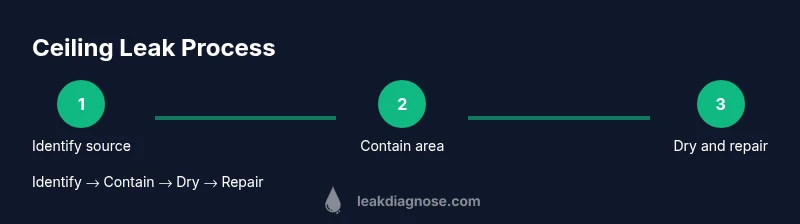
Once a source is identified, containment prevents further spread. Use plastic sheeting to block airflow to the affected area, create a dry zone, and seal off adjacent rooms if needed. Portable dehumidifiers and air movers accelerate moisture removal from drywall, insulation, and studs. Keep doors closed and furniture moved away from damp areas. If possible, remove damp insulation from the affected area to reduce mold risk.
A professional drying plan may require continuous operation for 24-72 hours depending on humidity and materials. Measure progress with moisture meters and moisture maps to verify that levels return to normal before closing up walls or reinstalling drywall. Do not reoccupy spaces until the area has dried to acceptable moisture levels. Early and thorough drying reduces the risk of mold growth and structural damage.
What to expect from repairs and follow-up
After drying, repairs proceed in stages: fixing the water source, repairing damaged ceilings, replacing insulation if needed, and restoring finishes (paint, wallpaper, trim). A good contractor will provide a written plan with a timeline, permit considerations if required, and a clear cost breakdown. Expect a multi-step process: source repair, drying verification, drywall replacement, and finishing touches.
During this phase, ask for documentation of the work, warranties on materials and labor, and a final moisture reading to confirm the area is dry. If mold was present, a mold remediation protocol may be required before finishing surfaces. Understand what’s expected for repainting and reattachment of fixtures, and whether any structural elements (joists or studs) were compromised. A clear, written agreement protects you from scope creep and ensures you know when to expect closure.
Prevention, documentation, and insurance considerations
Prevention starts with routine roof and plumbing maintenance, gutter cleaning, and attic inspections to catch issues before they reach the ceiling. Regularly check for small drips, condensation, or damp spots, especially after storms or heavy use of upstairs fixtures. A simple plan—inspections twice a year, seasonal roof checks, and prompt repairs—can save thousands in damage.
Documentation matters for insurance claims. Keep dated photos and videos, note the date of the incident, and preserve damaged materials for adjusters. Check your policy for flood or mold exclusions, coverage for temporary housing if needed, and required mitigation steps. The faster you respond and document, the more smoothly a claim will proceed. The Leak Diagnosis team emphasizes proactive maintenance and prompt reporting as the best defense against costly water damage.
Authority sources
- https://www.epa.gov/mold/mold-guide
- https://www.cdc.gov/mold/dampness_growth.html
- https://www.nist.gov/topics/building-standards-and-guidelines
Tools & Materials
- flashlight or headlamp(Bright, inspected battery-powered light)
- bucket or large container(To catch drips and prevent spread)
- absorbent towels or rags(Contain moisture and protect surfaces)
- plastic sheeting or drop cloths(Block airflow and protect floors)
- portable dehumidifier or air mover(Assist faster drying; place near damp area)
- screwdriver/adjustable pliers for shutoffs(Access and operate shut-off valves safely)
- camera or smartphone for documentation(Take dated photos/videos of damage)
- ladder (if needed)(Access ceiling area safely)
Steps
Estimated time: 2-4 hours
- 1
Stop the water and assess safety
If safe to reach the valve, shut off the water supply to the affected area or the whole house. Check for exposed electrical hazards and avoid standing water near outlets. This first action limits further damage and reduces risk.
Tip: Know your home's valve locations beforehand; a quick shut-off saves minutes during emergencies. - 2
Contain and protect belongings
Seal off the affected area with plastic sheeting, move furniture away, and place towels or a bucket to catch drips. This step prevents water migration to other rooms and helps keep the space safe for responders.
Tip: Create a dry zone, especially around electrical outlets and electronics. - 3
Document the damage
Take clear, dated photos from multiple angles and video the ceiling and any stains. Document visible damage and surrounding areas to support claims and contractor assessments.
Tip: Keep your documentation organized by date and location in a dedicated folder. - 4
Call the right professionals
Reach out to a licensed plumber or restoration contractor who can locate the source, stop the leak, and start drying. If roof or mold concerns exist, consider a roofer or mold remediation specialist.
Tip: Ask for written estimates and verify licenses before agreeing to work. - 5
Initiate drying and inspection
Set up dehumidifiers and air movers, and keep the area sealed while professionals assess the source. Monitor humidity levels and moisture readings to determine when the space is dry.
Tip: Document moisture readings to track progress over time. - 6
Plan for repair and prevention
After drying, plan the repair scope (ceiling, insulation, drywall, paint) and implement preventive measures (roof maintenance, pipe insulation, leak detection).
Tip: Ask for a written prevention plan to reduce future leaks.
Questions & Answers
Who should I call first when I discover a ceiling leak?
Call a licensed plumber or restoration contractor to locate the source and begin mitigation. If you suspect roof failure, consult a roofer as well.
Start with a licensed plumber or restoration specialist to locate the source and begin mitigation. If you suspect roof problems, call a roofer too.
Can I fix a ceiling leak myself?
Temporary containment and safety steps are possible, but most ceiling leaks require a licensed professional to identify the source and perform safe repairs.
Temporary steps are okay, but fixes usually require a licensed professional to identify the source and perform the repair safely.
How do I tell if the leak is roof-related or plumbing-related?
If the leak worsens with rain, it’s likely roof-related. If it worsens with water use in the home, plumbing is the likely source. A professional inspection confirms.
Leaks that worsen with rain point to the roof; leaks that worsen with use point to plumbing. A pro will confirm the source.
How long does it take to dry and complete repairs?
Drying typically takes 24-72 hours depending on materials and humidity. Repairs follow drying and may extend over several days to weeks.
Drying usually takes a day or two, then repairs follow for several days to weeks depending on scope.
Does homeowner's insurance cover ceiling water damage?
Coverage depends on policy specifics and cause. Sudden and accidental leaks are commonly covered; slow drips may be excluded or require endorsements.
Coverage depends on your policy. Sudden leaks are often covered; slow leaks may need endorsements.
What can I do to prevent ceiling leaks in the future?
Regular roof and plumbing maintenance, attic inspections, and prompt repairs after storms reduce risk. Install leak detection and insulate pipes to prevent condensation.
Keep up with roof and plumbing maintenance and install leak detectors to prevent future issues.
Watch Video
Main Points
- Act quickly to contain and dry the area.
- Call the right professionals for source identification.
- Document damage for insurance and repairs.
- Plan for prevention to avoid future ceiling leaks.