Water Leak Repairs Nearby: A Practical Guide for Homeowners
Find reliable water leak repairs nearby with a practical, data-driven guide. Learn how to assess, compare contractors, estimate costs, and prevent future leaks—all from Leak Diagnosis.


The best approach to water leak repairs nearby is to prioritize licensed professionals who can assess, isolate, and fix leaks safely. Look for local plumbers with emergency availability, transparent estimates, and written guarantees. According to Leak Diagnosis, start with a rapid home leak check, then compare service areas, response times, and warranty terms to choose the right contractor.
Understanding Water Leaks in Homes
Understanding water leaks begins with recognizing what counts as a leak and why the search for nearby repair services matters. A leak isn't only a visible drip; it can be a slow, hidden loss behind walls or under slabs. Common culprits include worn fixtures, corroded supply lines, faulty valves, and leaking appliances like dishwashers or washing machines. Left unchecked, even small leaks waste water, drive up utility costs, and threaten structural integrity through rot and mold. Therefore, when homeowners notice damp spots, musty smells, or a sudden spike in water bills, it's wise to act quickly. The goal of a nearby repair team isn't just to stop the flow but to identify the source and prevent repeat incidents. According to Leak Diagnosis, proximity matters because local crews can respond faster, provide on-site assessments, and offer warranties tailored to your area's plumbing codes. In this article, we'll walk through finding reliable water leak repairs nearby, what to expect from a professional inspection, and practical steps you can take to minimize risk while you wait.
How to Find Water Leak Repairs Nearby
Locating reliable water leak repairs nearby begins with a structured search and verification process. Start by searching for local plumbers and plumbing companies that advertise emergency services and 24/7 support. Check licensing and insurance status, verify they are in good standing with your state or local authority, and request proof of certification. Read multiple reviews from homeowners in your area and seek recent referrals. Ask about service areas, travel minimums, and response times. Craft a short list of 4-6 candidates, compare itemized estimates, and confirm warranty terms before committing. If the leak is urgent, prioritize providers that offer same-day or next-day service and transparent triage fees. Leak Diagnosis recommends prioritizing proximity, transparent pricing, and written guarantees to minimize surprises when the work begins, especially for urgent leaks that threaten water damage.
What Happens During a Professional Assessment
During a professional assessment, a licensed plumber will first secure the property by turning off the water at a safe point to limit further damage. They perform a visual inspection of visible fixtures, walls, and ceilings and then use tools such as moisture meters and sometimes thermal imaging to locate hidden leaks. Pressure tests and dye testing help confirm the leak's location. The contractor should explain the suspected source, outline a scope of work, and provide a written estimate with a clear breakdown of labor, parts, and any necessary permits. Expect documentation of findings and a plan for containment and repair, with a realistic timeline. This phase is critical; missing a hidden leak can lead to recurring damage and higher costs, so insist on thorough testing and written results.
Common Repair Methods and Their Costs (Ranges)
Repair methods vary by leak type and location. Minor fixture leaks may require simple cartridge or washer replacements. Pinholes in copper or galvanized steel may need patching or replacement of a short pipe run. In-wall leaks behind cabinets or under slabs often require more extensive work, possibly rerouting lines or replacing sections. Whole-house repipes are rare but necessary in older homes with widespread corrosion. Cost ranges are broad: minor fixes starting around a few hundred dollars, mid-range repairs typically in the low thousands, and major pipe replacements or repiping projects can rise quickly. Always obtain multiple quotes and ask for a line-item breakdown to understand what you’re paying for. The goal is to balance a durable fix with reasonable upfront costs and a clear warranty.
DIY First Steps You Can Take Before Calling a Pro
While most leak repairs should be left to professionals, you can take several prudent steps to limit damage before a contractor arrives. Immediately shut off the main water supply if you detect a significant leak. Place towels or buckets to catch dripping water and protect floors and electronics. Document visible damage with photos, notes, and timestamps. If a leak is at a fixture, stop using that fixture and isolate the supply valve if safe to do so. Avoid applying heat or attempting to solder pipes yourself, which can create dangerous hazards. By preparing the space and collecting information, you help the contractor diagnose and fix the issue faster, which can reduce both damage and costs.
Questions to Ask Local Contractors
When you call or meet with a local contractor, bring a consistent set of questions to compare apples to apples. Ask about licensing, insurance, and any warranties or guarantees on parts and labor. Request a written, itemized estimate with a clear scope of work, terms for change orders, and a projected timeline. Inquire about their process for leak detection, test methods, and post-repair verification. Check references, look for certifications (e.g., trade associations), and confirm that permits will be obtained if required by your city. Finally, discuss aftercare: how issues are tracked and how long repairs are covered under warranty.
Maintenance to Prevent Future Leaks
Prevention is more cost-effective than repeated repairs. Regularly inspect exposed pipes, fittings, hoses, and appliances for signs of wear or corrosion. Consider installing a pressure regulator to reduce stress on supply lines and a leak-detection system or smart water shutoff for early warning. Schedule annual professional inspections, especially after major renovations or if your home is older. Replace worn-out supply hoses on appliances every few years. By building a routine of proactive checks and timely replacements, you can dramatically reduce the frequency of leaks and unnecessary disruption to daily life.
Insurance, Warranties, and Documentation
Understand how your policy treats water leaks by reviewing the terms for sudden vs. gradual leaks and what constitutes coverage. Many homeowners' policies cover sudden leaks caused by appliances or plumbing failures, while wear and tear may be excluded. Keep every invoice, contract, and warranty in a dedicated file, and photograph before, during, and after repairs. Maintain a post-repair test showing the system's status and any guarantees offered by the contractor. Some warranties cover only certain components or require annual maintenance. If damage has occurred, document the extent of water damage for insurance claims, and note the mitigation steps you took to minimize losses. For added confidence, request a final test or moisture readings confirming the leak is resolved.
The Right Expectation: Verified Work and Quality
Through careful selection, you can ensure water leak repairs nearby are durable and verifiable. Expect licensed professionals to provide a written estimate, a clear scope, and a warranty that covers both parts and labor. After completion, ask for post-repair testing results, moisture readings, and a follow-up check within the warranty period. Verify that any permits were obtained and that the work complies with local plumbing codes. If you have ongoing concerns, document them and request a formal closeout report. The Leak Diagnosis team recommends maintaining a short post-work review and keeping a log of all future maintenance to prevent repeat leaks. A verified repair reduces damage risk and protects your home's value over time.
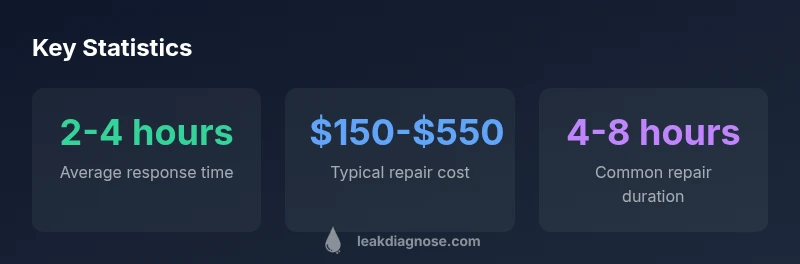
Overview of leak assessment and repair timelines (Source: Leak Diagnosis Analysis, 2026)
| Aspect | Description | Typical Range |
|---|---|---|
| Assessment steps | Inspection, leak testing, shut-off, scope | Varies by home |
| Common repair methods | Patching, pipe replacement, fixture repair | $100-$1,000 |
| Typical timeline | Same-day to 2 days | N/A |
Questions & Answers
How do I find water leak repairs nearby?
Start with local plumbers who advertise leak repair services and check for licenses and insurance. Read recent homeowner reviews and request written estimates. Compare warranty terms before selecting a contractor.
To find local leak repair pros, start with licensed plumbers nearby, compare estimates, and read reviews.
What should I ask before hiring a contractor?
Ask about licensing, insurance, warranties, and a written scope of work with a price breakdown. Request references and verify permits if required by your city.
Ask for licenses, insurance, warranties, and a written estimate with references.
How long does a typical leak repair take?
Most small leaks are resolved in a day or two, while major pipe work may take longer. The contractor should provide a realistic timeline after inspection.
Most leaks can be fixed in a day or two; bigger jobs may take longer.
Are DIY leak repairs safe?
DIY repairs can be risky and may void warranties or cause further damage. For major leaks, rely on licensed plumbers to prevent electrical hazards and water damage.
DIY repairs can be risky; better to hire a licensed pro for major leaks.
How can I estimate repair costs?
Ask for a written, itemized estimate detailing labor, parts, and any permits. Compare several quotes and ask about potential extra charges for hidden issues.
Get a written, itemized estimate and compare quotes.
Will insurance cover water leaks?
Coverage depends on the policy and cause. Sudden leaks from appliances are often covered, while wear and tear usually isn’t. Check with your insurer for specifics.
Insurance may cover sudden leaks; check your policy for details.
“A thorough assessment upfront reduces risk and cost by catching hidden leaks early.”
Main Points
- Hire licensed professionals with written guarantees.
- Start with a rapid home leak check.
- Request a written estimate and scope of work.
- Compare service areas and response times.
- Verify repairs with post-work tests.