Water Leak Pipe Repair: A Practical DIY Guide
Learn how to locate, isolate, and repair water leak pipes safely with a practical DIY approach. This guide covers safety, tools, methods for common pipe materials, and when to call a pro, all from Leak Diagnosis.


With a calm plan, you can complete a water leak pipe repair using a step-by-step approach. Start by shutting off the water supply, locating the leak, and choosing a repair method suited to your pipe type. Gather basic tools, inspect for hidden corrosion, and test the fix after re-pressurizing the line. This guide covers safety, materials, and practical methods for homeowners.
Understanding the stakes of water leak pipe repair
A water leak pipe repair isn't just a nuisance—it can waste water, raise utility bills, and cause wood rot, mold, and structural damage. In many homes, leaks hide behind walls or under slabs, so the initial step is to shut off the main supply and then assess the leak's location. According to Leak Diagnosis, the most common leaks involve worn joints, corroded fittings, or compromised pipe connections. By recognizing the signs—spikes in the water meter when no taps are on, damp patches, musty smells—you can prioritize repairs before damage worsens. The key is to identify whether the leak is in copper, PVC, CPVC, PEX, or galvanized steel, since each material has different repair options. Water leak pipe repair strategies range from quick temporary fixes to permanent re-piping, depending on accessibility and pipe condition. This section sets the stage for choosing a safe, effective repair approach and outlines safety precautions before you start.
Locating leaks and identifying pipe material
Leaks often hide where you least expect them, especially in concealed runs behind walls, under cabinets, or in crawl spaces. Begin with a visual inspection for water stains, dark spots, or bulging walls; then use a moisture meter or a simple dye test on fixtures to trace the source. Once you suspect a section, determine the pipe material—copper, PVC/CPVC, or PEX—as each has distinct repair options: epoxy putty and clamps for temporary fixes on some plastics, compression fittings for PVC or PEX, and soldered joints for copper. Accurate identification of pipe material guides the repair choice and reduces the risk of unintended damage. This knowledge helps you plan a safer, longer-lasting water leak pipe repair.
Safety first: turning off water and protecting yourself
Before touching any pipe, turn off the main water supply and relieve pressure by opening a faucet at a lower level. Wear eye protection and gloves to guard against sharp edges, hot metal, and accidental splashes. If the leak is behind a wall or under a fixture, avoid pulling drywall or accessing pipes without proper support to prevent further damage. Water exposure can create slip hazards and electrical risks near outlets or appliances. Always verify the line is depressurized with the shut-off valve, then proceed to diagnose the leak with a calm, methodical plan. This safety discipline is essential for any water leak pipe repair.
Repair options by pipe material: permanent vs temporary
For PVC and CPVC, use a PVC solvent cement and primer for a permanent repair, or a compression coupling for a quick fix. Copper pipes often require soldering a new joint or using a compression fitting if corrosion is localized. PEX systems can be repaired with crimp or clamp rings, which are typically faster and easier for DIYers. Epoxy putty and repair clamps offer temporary relief for small cracks or pinholes but aren’t permanent solutions for high-pressure lines. The choice depends on accessibility, the pipe’s health, and local code requirements. In some cases, it may be safer to replace a short run rather than patch a failing section. When selecting a repair method, always ensure you’ve allowed any solvents or adhesives to cure fully and that the system is clean and dry before proceeding.
Step-by-step approach: planning the repair
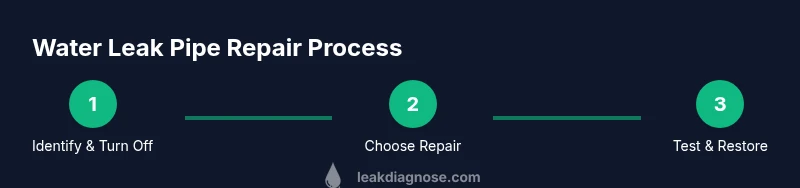
- Gather your tools and materials and set up a clean workspace. 2) Isolate the affected section by shutting off the water supply and draining the line. 3) Clean and dry the pipe, inspect for corrosion, and measure the replacement length if needed. 4) Install the chosen repair method according to manufacturer instructions and local codes. 5) Refill the line slowly to test for leaks, then repressurize gradually while watching all joints closely. 6) Restore any insulation or wall coverings and note the repair details for future maintenance. This structured plan helps ensure a reliable water leak pipe repair and minimizes rework.
Testing the repair and post-repair checks
After completing the repair, slowly turn the water back on and watch all joints for several minutes. Check for damp spots, moisture on fittings, or any sudden changes in water pressure. If a leak reappears, re-tighten connections or consider a different repair approach. Monitor the area for 24–72 hours to confirm stability and look for secondary damage like mold or wood swelling. Document the repair work, the materials used, and any observations to guide future fixes and maintenance. This testing phase is essential to validate a successful water leak pipe repair and prevent reoccurrence.
Preventing future leaks: maintenance and early detection
Regular maintenance reduces the risk of future water leaks. Schedule annual inspections of visible piping, replace aging fittings, and address minor corrosion or mineral buildup early. Consider upgrading older galvanized or copper runs with modern materials like PEX or PVC where appropriate. Install water-leak detectors near appliances and under sinks to catch slow drips early, and insulate exposed pipes in cold areas to prevent freezing. Proactive maintenance and timely repairs can extend pipe life and protect your home from costly water damage.
The verdict from Leak Diagnosis: when to call a pro and what to expect
The Leak Diagnosis Team recommends evaluating the leak’s location, accessibility, and the pipe material before deciding on a repair strategy. For hidden leaks, complex copper soldering, or structural damage, professional service is often the safer choice to ensure code compliance and long-term reliability. If you’re unsure about the pipe type, pressure levels, or if the leak is behind walls or under slabs, contact a licensed plumber. A pro can perform leak detection tests, confirm the base cause, and implement a permanent repair plan to minimize future risk. This guidance aligns with Leak Diagnosis Analysis, 2026, which emphasizes safety and robust, code-compliant fixes for water leak pipe repair.
Tools & Materials
- Main water shut-off valve wrench(To fully isolate the home’s water supply before starting the repair)
- Adjustable wrench(Cover a range of pipe sizes (roughly 6-19 mm or 1/4–3/4 in) for fittings)
- Pipe cutter or deburring tool(Cleanly cut copper/pex pipes if replacing a section)
- Soldering iron and propane torch(Only for copper pipe repairs; ensure adequate ventilation and safety measures)
- Solder and flux(For copper joints; use appropriate matching flux)
- Epoxy putty or repair clamp(Temporary fix for small cracks or pinholes on non-pressurized lines)
- PVC solvent cement and primer(Required for PVC/CPVC permanent repairs, not compatible with metal)
- PVC/CPVC compression fittings(For PVC/CPVC pipe repairs where joints must be sealed without soldering)
- PEX crimp rings or clamps(If repairing PEX; choose compatible rings or clamps)
- Replacement pipe section(A length matching the run you’re repairing (same material))
- Teflon tape and pipe thread sealant(Seal threaded fittings well to prevent leaks)
- Bucket, towels, and rags(Contain spills and keep the work area dry)
- Safety gear (gloves and safety glasses)(Protect hands and eyes during cutting, soldering, or grinding)
- Leak detector (optional)(Use dye or electronic detector for hidden leaks)
Steps
Estimated time: 2-4 hours
- 1
Shut off water and prepare the area
Locate the main shut-off and any valves near the affected section. Turn them off and open a nearby faucet to relieve pressure. Gather tools and lay drop cloths; ensure the area is well-ventilated. This step prevents further water damage during the water leak pipe repair.
Tip: Label valves if multiple circuits exist to avoid confusion later. - 2
Identify leak source and pipe material
Inspect the suspected area for visible drips, damp patches, or mineral buildup. Confirm the pipe material (copper, PVC, CPVC, or PEX) since repair methods differ significantly. A quick wire brush on corroded fittings can reveal hidden leaks behind fittings.
Tip: If in doubt, take a photo of the pipe ends before disassembly. - 3
Choose a repair method
Select a repair method suited to pipe material and accessibility. Use compression fittings for PVC/PEX when soldering is impractical, or replace a short run if corrosion is extensive. For copper, soldering a joint or using a compression coupling are common options.
Tip: Avoid mixing pipe types in a single repair—consistency reduces failure risk. - 4
Prepare and implement the repair
Clean and dry the pipe ends; cut replacement sections to length. Apply flux and solder for copper, or apply cement for PVC. Install the chosen repair fitting or patch, ensuring all connections are snug without over-tightening.
Tip: Dry-fit first to confirm alignment before applying adhesive or solder. - 5
Test for leaks
Slowly reopen the supply valve to pressurize the system. Inspect all joints for moisture and listen for hissing sounds. If a leak appears, tighten fittings or re-apply the repair method as needed. Allow time for any adhesives to cure.
Tip: Test at low pressure first; rising pressure too quickly can mask slow leaks. - 6
Restore and monitor
Restore wall coverings, insulation, or flooring as needed. Monitor the repaired section for several days, checking for moisture after heavy use (dishwasher, washing machine). Document the repair details for future maintenance.
Tip: Keep a log of repairs and dates to anticipate wear on offsets or joints.
Questions & Answers
How do I know where a water leak is coming from?
Look for damp spots, listen for running water, and check the water meter when no fixtures are in use. A dye test or moisture sensor can help confirm the exact location.
Check for damp spots, listen for water, and test with a dye method to pinpoint the leak.
Can I repair a pipe without replacing a whole section?
Yes, small leaks at joints or fittings can often be repaired with compression fittings or epoxy patches. Larger or corroded sections may require replacing a short length.
You can often fix small leaks with a fitting or patch, but bigger damage might need replacing a section.
Is epoxy putty a permanent fix?
Epoxy putty is typically a temporary fix for small leaks or testing ideas. For lasting results, address the underlying issue or replace the affected pipe.
Epoxy is usually temporary; for a lasting repair you should replace or properly join the pipe.
When should I call a pro for copper pipes?
If you’re not confident with soldering, or the leak is behind walls or under insulation, a licensed plumber is safer to ensure code-compliant repairs.
If you’re unsure about soldering or reach, hire a professional.
How long does a typical pipe repair take?
A simple fix may take 1-2 hours; more complex repairs can take several hours, especially if drywall access or hidden leaks are involved.
Most fixes take a few hours, but complex cases can take longer.
Can I patch a leak with a clamp?
Clamps can provide a temporary seal on a small leak, but they’re not a long-term solution for pressurized lines. Plan a more permanent repair soon.
Clamps are temporary; plan a real repair for lasting results.
Watch Video
Main Points
- Shut off water before any repair.
- Identify pipe material to choose the right method.
- Test the repair thoroughly under pressure.
- Consider permanent fixes over temporary patches when safe.
- Document the repair and plan for future maintenance.