Leak Detection Water Line: A Practical DIY Guide
A comprehensive DIY guide for detecting leaks in your water line, locating the source, and verifying repairs. Learn practical tests, essential tools, and safety steps from Leak Diagnosis to prevent water waste and structural damage.


Learn how to detect a hidden leak in your water line, locate the source, and verify repairs using simple tests and common tools. This step-by-step approach helps homeowners identify leaks early, minimize damage, and save water. You’ll follow practical checks, a dye test, and safe measurement techniques to confirm a fix.
Why leak detection water line matters for homeowners
Hidden leaks in the water line can drag on for weeks or months, quietly wasting water and risking damage to floors, walls, and foundations. The concept of leak detection water line covers both spotting symptoms and confirming fixes, which is crucial for water conservation and structural safety. According to Leak Diagnosis, many indoor leaks originate from aging supply lines, loose fittings, or compromised joints behind walls or under slabs. Being proactive reduces water waste, lowers utility costs, and prevents mold growth. If you notice damp patches, a musky odor, or a sudden rise in your water bill, treat it as a sign to investigate further rather than ignore it. Early detection also helps prevent pressure fluctuations that can stress fixtures and appliances, extending their life. A methodical, safety-minded approach saves time, money, and headaches. This guide keeps safety at the forefront while providing practical, real-world steps homeowners can perform themselves.
Common places to check in a household water line
Leaks don’t always announce themselves with a puddle. In many homes, the first sign is moisture on ceilings, walls, or floors, especially near joints and appliance connections. Start with the most likely spots:
- Under sinks where supply lines connect to faucets and garbage disposals.
- Behind dishwashers and washing machines where hoses run to the water inlet.
- Around the water heater inlet/outlet and any nearby pipes.
- Outdoor hose bibs, irrigation manifolds, and backflow preventers.
- In basements, crawl spaces, and slab foundations where pipes run through concrete.
Visual cues include staining, corrosion, mineral deposits, warped cabinetry, and soft or damp drywall. Remember that outside lines can be harder to notice—inspect irrigation zones and yard depressions for unusually damp soil. Leakage may be slow, but the cumulative water loss is real, so document any suspicious areas for further testing. For context, Leak Diagnosis emphasizes that systematic checks reduce unnecessary wall-damage exploration and help you plan a targeted repair rather than a full teardown.
Tools and methods for detecting leaks
A practical leak-detection toolkit helps you identify issues before they escalate. Use a combination of non-destructive tests and careful observation:
- Visual inspection: look for moisture, stains, and corrosion around joints and fittings.
- Water meter test: with all taps off, watch the meter for movement over 15–30 minutes to detect hidden leaks.
- Dye test: add food coloring or dye tablets to toilet tanks or suspected lines to see dye appearing where it shouldn’t.
- Pressure testing: use a pressure gauge to monitor drops in line pressure when fixtures are shut off, which indicates a leak.
- Listening devices: a mechanic’s stethoscope or specialized leak detector can help locate the crack or loose connection by sound.
- Infrared/thermal imaging: can reveal hidden moisture behind walls without invasive digging.
- Moisture meters: assess moisture content in wood and drywall to gauge hidden damage.
These techniques work best when you isolate sections and test one area at a time. Always label discovered leaks and note the conditions (time of day, water usage) to identify patterns. From a safety perspective, avoid handling electrical components near damp areas and consider calling a licensed professional if you encounter gas lines or complex piping.
A practical workflow for identifying leaks in hidden spaces
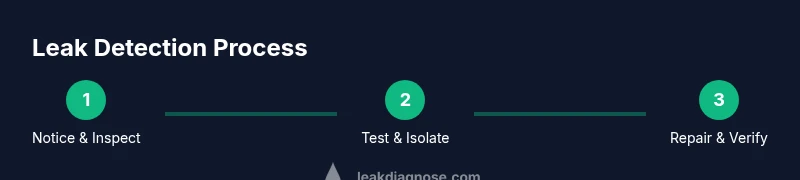
When leaks hide behind walls or under slabs, a methodical approach helps narrow the source without needless demolition. Start by confirming a leak with a meter test, then isolate sections of the system to localize the problem. Use a dye test on toilets and valves to see if residual dye migrates via concealed pipes. If the dye test is inconclusive, employ a moisture meter or infrared camera to detect hidden moisture. Document outcomes as you go and create a map of observed symptoms that points to likely joints, fittings, or segments.
Consistency matters: perform tests at similar times (e.g., in the morning after night use) and compare readings. If you still cannot identify the source after structured testing, consider a professional evaluation that uses acoustic listening devices and pressure testing equipment. A clear plan reduces the risk of unnecessary wall damage and sets you up for a precise repair strategy.
Safety considerations and when to call a pro
Safety always comes first with leak detection work. Before you begin, switch off power to nearby appliances if there’s any risk of electrical contact with water. Do not attempt repairs on gas lines or buried utilities; if you smell gas or suspect a gas line, contact the gas utility or a licensed plumber immediately. For structural concerns—such as cracks in concrete, sagging floors, or persistent dampness that could lead to mold—use professional services. If you cannot confidently isolate the suspected segment or if the leak is behind walls, under floors, or within a slab, a licensed plumber can perform advanced diagnostic tests and safe repairs. When in doubt, err on the side of safety and professional assessment; it protects you, your home, and your family.
Preventative measures after fixing a leak
Once you’ve located and repaired a leak, take steps to prevent reoccurrence and protect your home’s integrity. Re-test the repaired area with dye or a pressure test to confirm the seal. Inspect connected fittings for corrosion and replace worn washers or ferrules as needed. Consider insulating exposed pipes, especially in unheated spaces, to reduce freeze-related failures. Schedule periodic checks of all visible supply lines, particularly in homes with older piping. Finally, update your maintenance routine to include annual or biannual inspections of valves, hose connections, and water-dense appliances to catch issues before they escalate.
Tools & Materials
- Flashlight or headlamp (hands-free preferred)(Bright LED, preferably head-mounted)
- Dry towels or rags(For drying surfaces and wiping up spills)
- Food coloring or dye tablets for dye tests(Use non-toxic dye; test in non-potable lines when possible)
- Dish soap (for bubble test)(Bubble testing can help reveal small leaks)
- Pressure gauge (digital or analog)(Monitor line pressure changes)
- Infrared camera or moisture meter(Non-invasive moisture detection behind walls)
- Sturdy screwdriver set(Access panels or fittings)
- Gloves and protective eyewear(Personal safety gear)
- Marker tape or sticky notes(Label areas tested and findings)
Steps
Estimated time: 60-90 minutes
- 1
Prepare the workspace
Clear the area around suspected pipes and outlets. Ensure you have adequate lighting, access to shut-off valves, and a clear path to a safe exit. Wear gloves and eye protection to guard against sharp edges and debris.
Tip: Label tested zones to avoid repeating tests in the same spot. - 2
Shut off the water supply to the affected area
If you can identify a potential segment, close the local shut-off valve to isolate it from the rest of the system. If unsure which valve controls the area, shut off the main water supply to stop all flow temporarily while tests are performed.
Tip: Shutting off the main supply is a safe fallback if you’re unsure which valve controls the area. - 3
Check the water meter and observe usage
With fixtures off, monitor the water meter for movement over 15–30 minutes. Any activity indicates an active leak somewhere in the system. This helps you decide where to focus subsequent tests.
Tip: Note the starting meter reading for accurate comparison after tests. - 4
Perform a dye test on suspect lines
Introduce color dye into the toilet tank, toilet bowl, or a suspected valve and watch for dye appearing along pipes or fittings outside expected paths. If dye shows up in unintended areas, you’ve likely located a leak.
Tip: Only dye test one suspected line at a time to avoid cross-contamination of observations. - 5
Use a pressure test or infrared moisture scan
If available, use a pressure gauge to track pressure drops as you close valves. Alternatively, use infrared imaging or moisture meters to detect hidden dampness behind walls or under floors without invasive digging.
Tip: Compare readings against baseline measurements from before you started testing. - 6
Document findings and plan repairs
Record all test results, suspected source areas, and any visible damage. Decide whether a simple seal replacement is enough or if a pipe section requires replacement by a professional.
Tip: Take photos and write a short summary to share with a plumber if you hire one.
Questions & Answers
What are early signs of a water line leak?
Early signs include damp spots, moldy odors, an unexplained rise in your water bill, or sounds of running water when all fixtures are off. These clues warrant further inspection of the water line and connected fixtures.
Early signs are damp spots, moldy smell, unusual water bills, or a sound of running water with no usage.
Can I detect leaks without turning off the water supply?
Yes, you can perform non-invasive checks like listening for hissing sounds, inspecting visible pipes, and using dye tests in toilets. For concealed leaks, it’s safer to turn off the main supply and test in steps to avoid water damage.
Yes, you can do some checks non-invasively, but concealed leaks often require shutting off water and careful testing.
Is a dye test safe for all pipes?
Dye tests are generally safe when using non-toxic food coloring and dye tablets. Avoid introducing dye into drinking water lines without ensuring the dye is approved for potable use. Always test in non-potable sections first where applicable.
Dye tests are usually safe if you use non-toxic dye and avoid potables unless approved.
When should I call a plumber?
Call a plumber if you detect a gas line, if the leak is behind walls or foundations, or if you’re unable to localize the source with basic tests. Complex fixes, slab leaks, or pipe replacements require professional equipment and expertise.
Call a plumber if you suspect gas lines or can’t locate the leak safely or if the repair is beyond basic fixes.
What homeowner tools are best for leak detection?
A good set includes a flashlight, towels, a moisture meter or infrared camera, a dye test kit, a pressure gauge, and basic hand tools. These enable safe, non-invasive testing and accurate observations.
Keep a flashlight, moisture meter, dye test kit, and a pressure gauge handy.
Watch Video
Main Points
- Identify signs early to minimize water waste.
- Use dye tests and meters to localize leaks safely.
- Isolate sections before testing to avoid collateral damage.
- Shut off power and gas where applicable for safety.
- Verify repair with follow-up tests and documentation.