How to Find a Water Leak: A Practical Guide
Learn a practical, do-it-yourself approach to locating water leaks. From visual clues to meter checks and dye tests, identify the source before repairs.


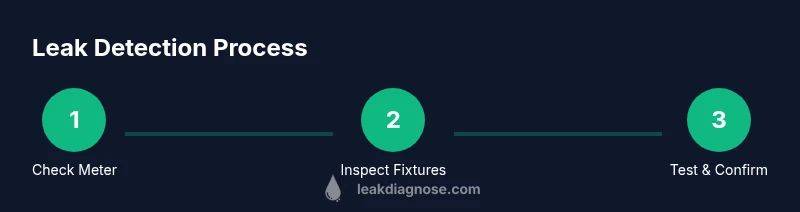
To find a water leak, start with visual clues like damp spots, stains, and high humidity, then check the water meter for unexplained changes. Inspect fixtures for drips, run a toilet dye test, and use a pressure test for hidden leaks. This approach helps you confirm the source before repair.
Understanding Why Leaks Happen
Leaks usually start small, often from a loose fitting, worn gasket, cracked pipe, or hidden behind walls. Knowing how to find a water leak begins with understanding the common failure points in residential plumbing. According to Leak Diagnosis, a large share of indoor leaks originate from toilets, faucet assemblies, and supply lines, and they can grow quickly if ignored. In many homes, leaks travel through walls or ceilings, so the visible damage may be far from the actual source. Start by noting where damp patches appear, any musty odors, or unusually high water bills. These clues guide your investigation and help you prioritize where to check first.
Signs You Might Have a Leak
Look for damp spots on walls or ceilings, staining around fixtures, and musty odors that indicate ongoing moisture. A repeatedly running toilet, a faucet that drips when off, or a soggy lawn with no rain can all signal a leak. Check your water bill and meter usage: a higher-than-normal reading when you’ve used no water recently is a strong hint of hidden leaks behind walls or under slabs.
Techniques for Detecting Hidden Leaks
Hidden leaks are tricky because they don’t show up on the surface. Start with the water meter test: turn off all fixtures and appliances, wait 15 minutes, then check if the meter dial moved. Use a dye test in toilets and dark dye in drains to see if wastewater is entering the bowl or drain. Infrared cameras or acoustic listening devices can help locate leaks behind walls, slabs, or in underground lines where visible signs aren’t present.
Tools and Tests You Can Use
A basic leak-detection kit includes a digital water meter reader, food-grade dye or colored water for toilets, a moisture meter, a flashlight, and a camera or smartphone for documenting locations. For more advanced detection, consider an infrared thermometer or thermal imaging camera to spot temperature differences caused by water intrusion. Always have spare towels, a bucket, and a tarp handy to manage any water and protect floors.
What to Do After You Locate the Source
Once you identify the leak, isolate the water supply to the affected area and document the exact location and severity. If the leak is small and easily accessible, you may be able to repair it yourself with proper fittings. For larger leaks, or if you’re uncomfortable working near electrical outlets or groundwater, The Leak Diagnosis team recommends contacting a licensed plumber for professional assessment and repair to prevent further damage.
Tools & Materials
- Digital water meter reader or portable flow monitor(Use to monitor consumption during a controlled test.)
- Food coloring or toilet dye tablets(For toilet dye tests; avoid staining.)
- Moisture meter or infrared camera(Detect damp areas behind walls or floors.)
- Flashlight and mirror for hard-to-see spots(Shine light around fixtures and behind panels.)
- Camera or smartphone for documentation(Record locations and conditions for repair planning.)
- Adjustable wrench and screwdriver set(Optional for basic isolation or minor fittings.)
- Containers or towels for water management(Contain spills and protect floors.)
Steps
Estimated time: 45-60 minutes
- 1
Record water usage changes
Note your daily water usage and look for unexplained fluctuations. This helps you narrow down potential areas to inspect. If you see a spike, you know to focus on the fixture or area feeding that consumption.
Tip: Compare 7-day averages to identify anomalies. - 2
Inspect visible fixtures for drips
Check all faucets, joints, and valves for drops or dampness. Pay attention to under-sink cabinets and behind toilets where small drips may go unnoticed.
Tip: Run the faucet and observe for 60 seconds after turning off. - 3
Check the main water meter
With all fixtures off, watch the meter for movement over 15 minutes. Any movement indicates a leak somewhere in the system, including hidden lines.
Tip: Consider shutting off the main valve temporarily to confirm. - 4
Perform a toilet dye test
Add dye tablet or colored water to the toilet tank and wait 15-20 minutes. If dye appears in the bowl or drain, the toilet flapper or supply line may be leaky.
Tip: Do not flush during the test to avoid background motion. - 5
Use a dye test in drains
Pour a small amount of dye into the drain trap or P-trap of suspected fixtures and run water. If colored water appears in another area, you’re likely dealing with a drain or trap leak.
Tip: Seal fixtures while testing to prevent cross-mixing. - 6
Apply infrared or listening tests for hidden leaks
Use an infrared camera to spot temperature differences or an acoustic leak detector to listen for dripping behind walls or under slabs.
Tip: Move slowly along walls and floors to identify hotspots. - 7
Document findings and plan repair
Take photos and notes of the suspected leak source, flow rates, and affected areas. If comfortable, plan a staged repair or schedule a pro when needed.
Tip: Label every location to simplify repair tasks.
Questions & Answers
What is the first sign of a water leak?
Common early signs include damp walls or ceilings, a higher water bill, and sounds of running water when no faucet is on. These clues warrant a closer check of fixtures and pipes.
Look for damp spots or a rising water bill as your first clues, then inspect fixtures and pipes nearby.
How do I test for hidden leaks behind walls?
Start with a meter test by turning off fixtures and watching the meter for 15 minutes. Use infrared cameras or listening devices for further confirmation in walls.
Turn off fixtures and watch the meter for 15 minutes; use infrared or listening devices for walls.
Should I call a plumber for leaks?
For large or hard-to-reach leaks, it’s wise to contact a licensed plumber. They can locate and repair the source safely, especially when electrical systems are involved.
For big or tricky leaks, consider a licensed plumber for safe repair.
What tools help find leaks?
Useful tools include a moisture meter, infrared camera, dye tests, and a digital water meter reader to monitor changes over time.
Moisture meters, infrared cameras, dye tests, and a water meter reader help locate leaks.
Are dye tests safe to use around pets?
Dye tests are generally safe when used as directed, but avoid ingesting dye and keep pets away from treated areas until water is clear.
Dye tests are safe when used as directed; keep pets away during testing.
How long does it take to find a leak?
Finding a leak can take 30 minutes to several hours depending on location and complexity. Plan for a careful, methodical search.
It can take from 30 minutes to a few hours depending on the leak.
Watch Video
Main Points
- Identify signs early with visual clues and meter checks
- Hidden leaks require careful testing and proper tools
- Dye tests and infrared tools improve accuracy
- Know when to call a professional for major leaks