How to Know If You Have a Water Leak
Urgent, practical guidance to spot hidden water leaks fast with simple tests, a clear diagnostic flow, and prevention tips from the Leak Diagnosis team.


A water leak is often signaled by a sudden rise in your water bill, damp spots, or sounds of running water. Start with simple checks: inspect visible pipes, fixtures, and appliances; read your water meter when water use is minimal; if you detect movement on the meter or wet areas, follow a systematic diagnostic flow. This quick guide from Leak Diagnosis helps you verify leaks safely and quickly.
Signs you may have a water leak
According to Leak Diagnosis, many homeowners underestimate leaks until damage appears. The first clue is often an unexplained rise in your monthly water bill, sometimes by double or more, even if you’ve reduced usage. Other red flags include damp spots on ceilings or walls, staining, warped wood, or paint peeling around fixtures. You might hear a faint hiss or running water when all taps are off. For hidden leaks, the issue can be behind cabinets, under floors, or in the attic.
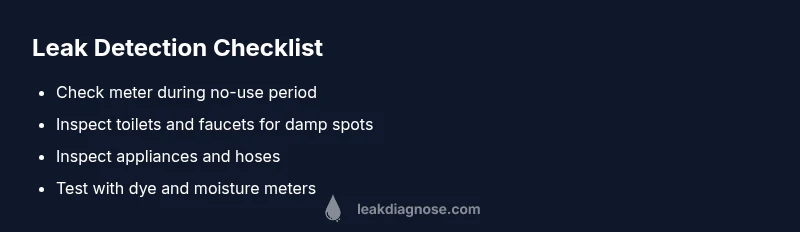
To start, check your water meter: note the reading, wait a couple of hours with no water use, then recheck. If the dial moves, you likely have a leak. Inspect visible pipes for corrosion, dripping, or mineral buildup. Don’t forget outdoor components like irrigation lines, hose bibs, and pool equipment. Document findings with photos for reference when you call a pro.
Common sources of water leaks you might miss
While visible drips are easy to spot, many leaks hide behind walls. The most frequent culprits are toilets with a faulty flapper or fill valve, leaky faucet cartridges, and worn-out supply lines. Pipes under sinks, behind refrigerators, or in the basement can fail due to corrosion, freezing, or shifting foundations. Appliances such as dishwashers and washing machines may leak from hoses or connections. Outdoor leaks around hoses, irrigation valves, or spa lines can also waste water without obvious indoor signs. Regular inspection of joints, seals, and appliance water lines helps prevent costly damage.
How to verify leaks using simple tests
Start with the easy checks: turn off all indoor water use and observe your main meter for movement over 1-2 hours. Use the toilet dye test: add a few drops of food coloring to the tank, wait 15-20 minutes without flushing, and see if colored water appears in the bowl. Inspect under sinks with a dry paper towel—look for moisture on pipes and fittings. If you suspect an indoor wall or ceiling leak, check for hidden moisture with a moisture meter or infrared camera, or hire a plumber with leak-detection gear. For outdoor areas, inspect irrigation lines and hose bibs after a soak, looking for damp soil or air leaks around fittings.
Diagnostic flow: symptom → diagnosis → solutions
This practical flow helps you avoid wasted time. Symptom: rising water bill, damp patches, or sounds of running water. Diagnosis: isolate likely sources (toilet, faucet, pipe, appliance). Solutions: tighten fittings, replace worn components, or schedule a professional leak-detection visit if signs persist after basic fixes. Document each step with notes and photos to track progress.
Prevention and next steps
Even when you fix a leak, new issues can arise if pipes aren’t properly maintained. Regularly inspect exposed plumbing, service appliances with water lines, and monitor your water bill for unusual activity. If you’re unsure about a repair or the leak is behind a wall, postpone invasive work until you’ve consulted a professional. The Leak Diagnosis team recommends keeping a short maintenance cadence: test meters quarterly, inspect connections biannually, and upgrade aging fittings to reduce future leaks.
Steps
Estimated time: 60-120 minutes
- 1
Shut off the main water supply
Locate the main shut-off valve (usually near the street, water meter, or in the basement). Turn it fully clockwise to stop all water flow. This prevents further damage while you inspect, especially if you suspect a major leak.
Tip: Know your valve location and practice using it before an emergency. - 2
Note meter readings and monitor
Record the current meter reading, then avoid using any water for 1-2 hours. Check the meter again; any movement indicates a leak somewhere in the system. If you’re in a multi-story home, check meters on different lines to isolate sections.
Tip: A note with a photo of the meter can help you track changes over time. - 3
Inspect visible fixtures and connections
Look under sinks, around toilets, and behind appliances for dripping, corrosion, or mineral buildup. Wiggle hoses gently to identify loose fittings. Replace worn parts as needed.
Tip: Place a dry towel or paper under joints to catch any small drips for easier detection. - 4
Conduct a toilet dye test
Add a few drops of food coloring to the toilet tank and wait 15-20 minutes without flushing. If colored water appears in the bowl, the flapper or fill valve may be leaking and needs replacement.
Tip: Perform this test with the water off to avoid refilling during the wait period. - 5
Check appliances and outdoor lines
Inspect dishwasher and washing machine hoses, ice-maker lines, and outdoor irrigation connections for moisture or damp soil. Tighten fittings and replace damaged hoses as needed.
Tip: Turn off outdoor water before inspecting irrigation lines to prevent accidental floods. - 6
Use moisture and heat tools if needed
If you suspect hidden leaks, employ a moisture meter or infrared camera to detect hidden dampness behind walls or ceilings. These tools can reveal trouble spots you can’t see.
Tip: If you’re not trained, consider hiring a pro with leak-detection gear. - 7
Decide on next steps
If tests point to a hidden leak or you can’t locate the source, contact a licensed plumber for a precise diagnosis and repair. Do not ignore persistent signs.
Tip: Document all findings and tests to speed up the repair or insurance claim process.
Diagnosis: Visible damp spots, high water bill, or sounds of running water
Possible Causes
- highHidden pipe leak behind wall or under floor
- highToilet flapper or fill valve failure
- mediumLeaking appliance supply line (dishwasher, washing machine, ice maker)
Fixes
- easyShut off main water, then inspect suspect areas; replace faulty valves or damaged sections of pipe as needed
- easyReplace toilet flapper or fill valve and test for persistence with a dye test
- easyTighten or replace appliance hoses and connections; run a test cycle to confirm no leaks
Questions & Answers
What is the quickest way to tell if I have a leak?
The fastest indicators are a sudden water bill spike, damp spots, or sounds of running water when fixtures are off. Confirm with the meter test and visual checks before assuming a leak.
Look for a sharp rise in your bill, damp spots, or a hissing sound near plumbing. Confirm with the meter test.
Can a leak be hidden behind walls?
Yes. Hidden leaks often occur behind walls, under floors, or in crawl spaces. Use moisture meters or infrared cameras to locate them before cutting into walls.
Yes, hidden leaks behind walls are common. Use moisture tools to find them before opening walls.
Should I try to fix leaks myself or hire a pro?
For simple loose fittings or hose replacements, a DIY fix can work. For hidden or complex leaks, call a licensed plumber to avoid further damage.
DIY can fix simple leaks, but call a pro for hidden or complex ones.
What preventive steps reduce future leaks?
Regular inspections, seasonal shut-offs, and timely replacement of aging valves and hoses reduce leak risk. Maintain proper water pressure and insulate exposed pipes.
Do regular checks, shut off water seasonally, and replace aging hoses to prevent leaks.
When should I call a professional for a leak?
Call a professional if you can’t locate the source, if the leak is behind walls, or if there’s suspected water damage or mold growth.
Call a pro if you can’t locate the leak or if there’s water damage or mold.
Watch Video
Main Points
- Identify leaks by meter checks and visual signs
- Prioritize simple, safe tests before invasive fixes
- Document findings to aid repairs and claims
- Call a pro for hidden or persistent leaks