Water Leak from Radiator: A Practical Troubleshooting Guide
Learn how to diagnose and fix a water leak from your radiator quickly and safely with practical steps, safety tips, and when to call a professional. Leak Diagnosis guide for homeowners.


A water leak from a radiator is most often caused by a loose valve, damaged hose, or a worn gasket. Quick fixes include tightening the valve fittings, inspecting clamps and gaskets, and bleeding air from the system if needed. If the leak persists after these checks, plan a more thorough repair or professional service; ongoing leaks can cause water damage and efficiency loss.
What a water leak from radiator means for your home
A water leak from radiator is more than a damp spot on the wall; it can indicate a fault in your heating system or plumbing. In homes, radiators are part of a closed loop that uses hot water or steam to transfer heat. A leak can arise from a loose valve, a damaged hose, corroded fittings, or trapped air causing high pressure. The reader should treat any leak as an emergency risk to floors, ceilings, and electrical components near the unit. According to Leak Diagnosis, addressing leaks early protects property and avoids costly repairs later. Start by assessing the source of moisture and reducing any immediate water exposure to prevent mold and damage to nearby structures. Responsible homeowners should also check that the boiler pressure remains within the recommended range after the fix. Water leaks from radiator systems can escalate quickly if left unchecked, so prioritize safety and swift action.
Quick safety mindset: what to do first
Safety comes first when you notice a水 leak from radiator. Begin by turning off the boiler and powering down any electrical supply to the heating system if accessible. Place towels or a bucket under the leak to catch drips and prevent floor damage. If there’s standing water near electrical outlets or devices, do not attempt to operate or touch them; call a licensed professional immediately. Next, locate the shutoff valve for the radiator or the main supply to stop water flow temporarily. Tighten exposed fittings carefully by hand to see if a loose joint is the culprit, but avoid overtightening that could strip threads.
Common causes you should check
Radiator leaks are usually caused by simple issues that homeowners can verify and sometimes fix themselves. Common causes include: a loose radiator valve connection; worn O-rings or gaskets; corroded or damaged radiator hoses; loose or broken pipe clamps; and air trapped in the system creating pressure that pushes water through joints. In some cases, the leak might be from unsupported pipes or a misaligned radiator valve stem. The Leak Diagnosis team emphasizes starting with the easiest checks and inspecting the area around the valve and hose clamps before moving to more involved replacements. Documenting the location helps you communicate with a technician if you need professional help.
How to identify the exact source of the leak
Pinpointing the source is essential for an effective fix. Look for signs around joints, threads, and valve connections; a slow drip with a steady pattern often indicates a loose connection, while a steady stream could point to a cracked hose or a punctured radiator panel. If the leak appears only when the system is hot, it may be a seal or gasket failing under pressure. Use a flashlight to inspect valve nuts and fittings and check for corrosion along the pipe seams. Remember, even small drips can indicate a growing problem, especially in older homes with aging plumbing.
Diagnostic flow overview you can follow at home
A structured approach helps you avoid overlooking a cause. Start with the most accessible checks (valves and clamps) and then progress to inspecting hoses and radiator panels. If you detect water only after the boiler runs, the issue may involve pressure-related failures or air entrapment. Keep a log of observations: drip rate, time of day, and whether the leak changes with system pressure. This data helps when you consult a professional or contact your heating contractor. The flow should progress from simple checks to more complex repairs, and at any point, if you feel unsafe or the leak is significant, pause and call a pro.
When to call a professional
Some radiator leaks are manageable with a simple tightening or a gasket replacement, but others require specialized tools and parts. If you notice persistent pooling, active sprays, or the leak involves electrical hazards, contact a licensed plumber or heating technician immediately. The core message from Leak Diagnosis is that major leaks, damaged panels, or high-pressure issues demand professional attention to prevent further damage and to ensure the system remains safe and efficient. Always err on the side of caution when water and heating equipment intersect.
Steps
Estimated time: 60-90 minutes
- 1
Shut off the boiler and power
Power down the heating system and, if accessible, switch off the circuit breaker. This prevents scalding and reduces pressure while you inspect. Safety is paramount when dealing with hot water and electrical components.
Tip: Verify the boiler is cool before touching any exposed pipes. - 2
Locate the leak source
Follow the drip or dampness to identify whether the leak originates at the valve, hose, gasket, or panel. Use a flashlight to inspect joints and valve nuts closely.
Tip: Mark the suspected area with a washable marker for later reference. - 3
Tighten simple fittings
Gently tighten exposed nuts and hose clamps by hand or with a proper wrench, avoiding over-tightening. Test for changes by re-pressurizing briefly and observing the joint.
Tip: Never twist hoses beyond their natural bend to avoid kinking. - 4
Bleed air and check pressure
If the system feels stiff or noisy, bleed air from the radiator using the bleed valve on the radiator or manifolds. Monitor the pressure gauge and ensure it sits within the recommended range for your system.
Tip: Have a container ready to catch any returning water during bleeding. - 5
Replace worn parts
If dripping persists at a joint, replace gaskets, washers, or damaged hoses. Refit and reseal, then re-pressurize slowly and watch closely for any new leaks.
Tip: Only use compatible parts designed for your radiator model and system type. - 6
Refill and test system
Refill the loop to the proper level, restart the boiler, and monitor for several hours. Check the area frequently for fresh leaks and recheck the pressure gauge after the system stabilizes.
Tip: Keep a log of pressure changes for the next service visit.
Diagnosis: Visible water pooling or dampness around the radiator, especially when the system is running
Possible Causes
- highLoose valve connections
- highDamaged radiator hose or fittings
- mediumCorrosion or worn seals/gaskets
- lowAir trapped in the heating system
Fixes
- easyTighten valve connections and hose clamps by hand, without forcing threads
- mediumReplace worn gaskets or cracked hoses and reseal joints
- easyBleed air from the system to relieve pressure and recheck for leaks
- hardIf the leak persists after basic fixes, call a licensed professional for assessment and possible components replacement
Questions & Answers
What are the first signs of a water leak from a radiator?
Early signs include damp patches on walls, a visible puddle beneath the radiator, or a hissing sound from a valve. These cues suggest a joint or gasket failure that should be addressed promptly.
Look for damp patches or pools near the radiator, or a hissing valve sound—these indicate a leak that needs attention.
Can I fix radiator leaks myself?
Some minor leaks from hose clamps or loose valves can be addressed by a careful tightening and gasket replacement. If you’re unsure or the leak persists, it’s safer to hire a licensed professional.
You can try simple fixes like tightening and replacing worn gaskets, but if it keeps leaking, call a pro.
Should I drain the entire heating system to repair a leak?
Draining the whole system is usually unnecessary and can require re-bleeding. In many cases you can isolate the radiator, drain just the loop around it, and test for leaks before proceeding.
Often you don’t need to drain the entire system; isolate the radiator and drain just that loop if needed.
How long does a radiator leak repair take?
Minor fixes can take under an hour, while replacing hoses or valves may take a few hours depending on accessibility and parts availability.
Smaller fixes can be quick, but parts replacement may take a few hours.
When should I replace a radiator component rather than repair it?
If joints repeatedly leak after repairs, or corrosion is widespread, replacing the component is usually more reliable and cost-effective long-term.
If leaks persist after fixes or corrosion is extensive, replacement is often the best option.
Watch Video
Main Points
- Identify the leak source before starting work
- Start with simple fixes and safety checks
- Bleed air to prevent pressure-related leaks
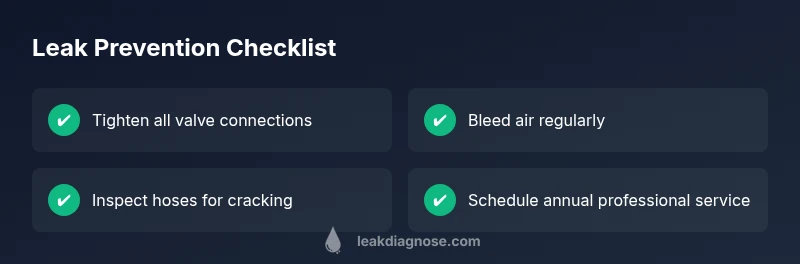
- Call a professional for major leaks or uncertain sources