Leak in Radiator: A Practical Troubleshooting Guide
Urgent guide to diagnose, fix, and prevent leaks in radiators. Learn safe shutoff steps, common causes, at-home checks, and when to call a pro. Includes a step-by-step repair plan from Leak Diagnosis.


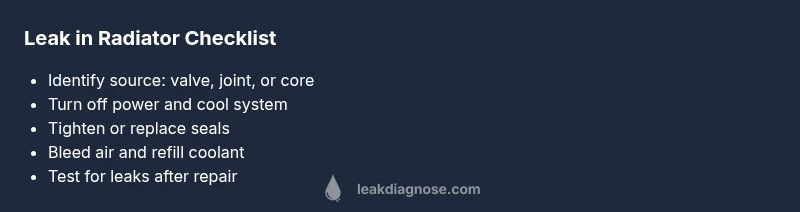
A radiator leak is most often caused by a loose or worn valve, damaged seal, or corrosion at fittings. Start by turning off the heating and allowing the system to cool, then inspect valve connections and seals for looseness or cracks. Tighten fittings, replace damaged seals, and apply non-permanent sealant only if approved for your system. If the leak persists, shut down the boiler and contact a licensed plumber.
Immediate Safety and Shutoff Steps
A leak in radiator scenarios can escalate quickly if not handled safely. The first and most important step is to shut off the heating system and allow all coolant to cool before you touch anything. If you suspect a pressurized radiator, avoid opening bleed valves or radiator caps while the system is hot. Place a sturdy catch pan beneath the radiator to collect any drips, and keep rags or absorbent pads ready. This initial safety pause buys you time to inspect more carefully and reduces the risk of burns or scalding. According to Leak Diagnosis, approaching a potential radiator leak with calm, measured steps dramatically lowers risk. After cooling, check for obvious signs: corrosion around joints, dried mineral deposits, or green/blue staining that points to coolant leaks. If you see active spraying or a rapidly growing puddle, evacuate the area and call a licensed plumber immediately. Some leaks can be small and patchable, but never rely on a temporary fix if the system remains under pressure or you cannot easily locate the source.
Common Causes of a Leak in Radiator
Radiator leaks can be caused by several ordinary issues that DIYers can usually identify with a careful inspection. Loose or corroded valve connections are common culprits near inlet and outlet fittings. Cracked or pinhole leaks in the radiator core are less frequent but serious, often resulting from aging metal, galvanic corrosion, or heat cycles. Damaged gaskets and O-rings at the bleed valve or thermostatic radiator valve (TRV) often show up as damp areas around the seals rather than a fast-flowing leak. Poor installation or improper torque during maintenance can also create stress points where leaks start. The Leak Diagnosis team notes that many radiator leaks arise from aging components rather than a single dramatic failure, and a systematic check helps distinguish between valve leaks, joint leaks, and core leaks. If you notice a pattern of leaks at certain joints after heating cycles, focus on fittings first before moving to the core.
Quick Diagnostics You Can Do At Home
Begin with a visual and tactile inspection of all visible joints and seals. Wiggle inlet/outlet valves gently to test for looseness, and tighten only until snug—do not over-tighten, which can crack fittings. Use a bright flashlight to inspect hard-to-see areas behind the valve and under the radiator; a small flashlight reveals hairline cracks and mineral buildup that may indicate a slow leak. Check for moisture on the floor under the radiator and on surrounding walls or baseboards. If your system uses anti-freeze coolant, look for a sweet smell and greenish staining. Perform a simple pressure check if you have a gauge; a drop in pressure over a short period often signals a leak somewhere in the circuit. For safety, never pressurize a system that you cannot inspect completely; if you suspect a core leak, call a professional. The goal is to localize the source quickly: valve seals, fittings, or the core.
When to Call a Professional
When you find a stubborn leak that persists after tightening fittings, or if you identify a cracked radiator core, it is time to involve a licensed plumber or radiator technician. A professional can perform hydrostatic testing, determine if the radiator must be replaced, and ensure the system is refilled with the correct coolant mixture. If you notice coolant staining on walls, persistent puddling, or a drop in system pressure that you cannot pin down, do not continue DIY attempts. Also, if you operate a high-pressure system or have repeated leaks seasonally, professional assessment may reveal underlying issues like pump faults, pressure regulator problems, or poor radiator mounting. The Leak Diagnosis approach emphasizes safety first and recognizes when a job exceeds typical DIY capabilities.
How to Prepare for a Repair Visit
Before the repair, gather model information, serial numbers, and your last service history so the technician can quickly locate compatible parts and service notes. Take photos of the radiator, valve connections, and nearby fittings to share with a pro, especially if the leak appears at multiple joints. Clear the area around the radiator so the technician can access all valves and lines, and note any patterns—time of day, heating cycle, or weather—that seem to influence the leak. If you decide to request a quote, prepare a list of symptoms, including the observed damp spots, the approximate size of the puddle, and whether the leak worsens with heat. The goal is to minimize delays and ensure the repair plan addresses root causes, not just the symptom. The Leak Diagnosis team recommends scheduling service promptly to prevent water damage and high energy costs.
Preventing Future Leaks and Maintenance Tips
Preventive maintenance reduces the likelihood of future leaks. Regularly inspect valve connections for tightness, corrosion, or mineral buildup and replace worn gaskets or O-rings as needed. Schedule seasonal checks of the heating system to catch issues before the cold season begins. When topping up coolant, use the recommended type and mix; never mix incompatible fluids. Keep an eye on pressure gauges and listen for unusual hissing sounds that may indicate a developing leak. Consider installing drip pans or secondary containment in high-risk areas to protect floors and furniture if a leak occurs. The Leak Diagnosis guidance emphasizes consistent, proactive maintenance and careful handling of antifreeze or coolant to avoid slip hazards and environmental contamination.
Steps
Estimated time: 60-90 minutes
- 1
Power down and cool the system
Turn off the boiler or heating system and allow the radiator to cool completely to avoid scalding and further pressure. Set the thermostat to off and wait at least until the metal is comfortable to touch. This is essential safety groundwork before any inspection or repair.
Tip: Always wear gloves and safety glasses; coolant can irritate skin and eyes. - 2
Inspect and tighten accessible fittings
Check all visible valve connections, bleed valves, and fittings for looseness or obvious damage. Gently tighten fittings by hand first, then with a wrench to the recommended torque. Do not over-tighten, which can crack fittings or damage threads.
Tip: If a fitting feels stiff or seized, do not force it — stop and call a professional. - 3
Identify the leaking source
Look for dampness at joints, valve seals, or the radiator core itself. Use a clean tissue or dry cloth to wipe away grime and better see fresh leaks after a short heat cycle. Mark the suspected area with a removable marker to guide the repair.
Tip: A bright light and a steady hand help you pinpoint pinhole leaks that aren’t obvious. - 4
Seal minor leaks or replace gaskets
For minor gasket or O-ring leaks, replace the seal and reseal the joint. For pinhole leaks in the core, a professional repair or replacement is usually required. Use manufacturer-approved sealants only if recommended by your radiator supplier.
Tip: Only use sealants that are compatible with your coolant system. - 5
Re-fill and bleed the system
Refill the radiator with the correct coolant mixture and gently bleed air from the system using the bleed valve until steady flow of coolant emerges without air pockets. Check for additional leaks during the bleeding process.
Tip: Keep a rag handy to catch any overflow and dispose of old coolant according to local regulations. - 6
Test for leaks
Restore power and run the heating system to operating temperature. Observe all joints and fittings for a period of time to ensure the leak has stopped. If moisture returns or the pressure drops again, you may need a part replacement.
Tip: Monitor the gauge for at least an hour after the system stabilizes. - 7
Document and plan preventive maintenance
Record what was found and what fixed the issue, including part numbers and service dates. Schedule a preventive maintenance check every season to catch potential issues early and extend the radiator’s life.
Tip: Set reminders for seasonal checks to avoid missing important maintenance.
Diagnosis: Visible leak around radiator fittings or under the radiator during heating cycles
Possible Causes
- highLoose or damaged valve connections
- mediumDamaged radiator core or pinhole leak
- lowWorn gaskets or O-rings at bleed valve/TRV
Fixes
- easyTighten valve connections with appropriate tools to the manufacturer’s torque specifications
- hardIf a core leak is suspected, replace the radiator or perform professional core repair
- mediumReplace gaskets/O-rings and reseal bleed valve or TRV
Questions & Answers
What are the signs of a leak in radiator?
Common signs include damp spots on or around the radiator, a puddle beneath it, a sweet coolant smell, and hissing sounds from joints. You may notice mineral buildup around fittings or rust. If you observe these indicators, inspect fittings first and consider professional help for core leaks.
Look for damp spots and puddles near the radiator, and listen for hissing at the joints. If you see staining or smell coolant, check the valves and seals, and call a pro if the leak keeps coming back.
Can I repair a radiator leak myself?
Simple leaks from valve seals or O-rings can sometimes be fixed by replacing seals and tightening fittings. Core leaks or extensive corrosion usually require a professional replacement. If you’re unsure, prioritize safety and seek a licensed plumber.
If the leak is at a valve or seal, you might fix it yourself, but core leaks usually need a pro.
Is radiator coolant dangerous?
Yes. Most radiator coolant contains ethylene glycol or propylene glycol, which is toxic if ingested and can irritate skin or eyes. Handle spilled coolant with gloves and dispose of it according to local regulations. Clean spills promptly to prevent slips and environmental damage.
Coolant is toxic if swallowed and can irritate skin, so wear gloves and clean up spills quickly.
How long does a radiator leak repair take?
Repair time depends on the source. A simple seal replacement can take under an hour, while a core leak may require several hours or a radiator replacement. If parts are on order, plan for additional time.
Most basic fixes take a short while, but core leaks can require more extensive work.
Should I replace the radiator or just the valve?
If the core is intact and only seals or valves are leaking, replacing those parts may suffice. If the radiator core is corroded or cracked, replacement is usually more cost-effective in the long run. A professional can help determine the best option.
If only the valve or seals leak, you can replace those parts; otherwise consider replacing the whole radiator.
Watch Video
Main Points
- Shut off and cool the system before inspection.
- Tighten or replace worn seals to stop most leaks.
- Pinpoint leaks with careful visual checks and pressure tests.
- Call a professional for core leaks or persistent drops in pressure.
- Regular maintenance reduces the risk of future radiator leaks.