Pipe Leak Troubleshooting Guide: Quick Fixes and Safety
Urgent guide to locate and stop a pipe leak at home. Safe, step-by-step checks, practical fixes, and prevention tips for homeowners and DIY enthusiasts.


A common pipe leak starts at a loose fitting or worn joint. Start by turning off the water supply, then inspect exposed pipes for drips, corrosion, or damp spots. Tighten fittings, replace washers, and apply sealant where appropriate. If drips persist, shut down power to nearby appliances and call a professional.
What a pipe leak looks like and why it matters
A pipe leak is not just a nuisance; it can waste significant water, raise utility bills, and cause secondary damage like mold or wood rot. For homeowners, the telltale signs include visible drips, damp spots on walls or ceilings, staining, and sudden swells in walls or floors. A leaking pipe behind a wall may go unnoticed until you notice a musty smell or discoloration. According to Leak Diagnosis, pipe leaks are common but highly fixable with prompt attention. Early detection minimizes water waste and protects your home’s structure. By staying vigilant and addressing small drips quickly, you reduce the risk of costly repairs later. This guide emphasizes practical steps, safety, and prevention to help DIYers tackle a pipe leak confidently.
When you suspect a pipe leak, act fast. Quick action stops water damage, reduces mold growth, and minimizes insurance hassles. Leak Diagnosis’s analysis shows that most homeowners who catch leaks early experience far fewer complications and expenses over time. This article provides calm, actionable steps you can take today to regain control of the situation and protect your property.
Common causes of pipe leaks
Pipe leaks typically spring from a few predictable sources. Loose or damaged fittings at joints, corrosion over time, and thermal expansion can all create tiny holes that worsen with use. Poor soldering or improper repairs can leave weak spots that fail under pressure. Plastic pipes are prone to cracking with temperature swings, while metal pipes may develop pinhole leaks. Depending on the home, hidden leaks behind walls or under floors may be caused by faulty solder joints, aging plumbing, or shifts in the structure that stress pipes. Regular inspection of visible piping, especially in basements, crawlspaces, and utility rooms, helps identify trouble before it becomes a full-blown flood. Proactive maintenance, such as tightening fittings and replacing worn washers, can dramatically reduce the risk of a pipe leak.
Periodic testing, including checks after freezing weather or a major appliance installation, is a wise practice. Leak Diagnosis analysis shows that small leaks are more manageable when detected early, whereas prolonged leaks can escalate into extensive water damage. Keeping an eye on water pressure and ensuring it stays within recommended ranges also reduces stress on joints and pipes.
Note: Older homes with galvanized steel or copper pipes are more susceptible to leaks from corrosion or pinholes. If you notice white mineral deposits around joints or rust along the pipe, plan a professional assessment soon to prevent further damage.
Safety first: shut off water and avoid hazards
Before doing anything, locate your shut-off valve and stop the water flow to prevent further leakage. If you can’t reach the main shut-off quickly, shut off individual valves for the affected area. Always prioritize electrical safety—keep electrical panels and outlets dry, avoid using electrical tools near wet areas, and if you’re in doubt, turn off the main power to prevent shocks. Do not attempt to heat or weld on active piping near water, and avoid solvents or sealants that could damage plumbing materials. Wear protective gloves and goggles to reduce contact with dirty water or rust.
If you must enter a crawlspace or basement, be mindful of slippery floors and hidden hazards. If you smell gas or suspect a gas line nearby, evacuate and contact your gas provider or emergency services immediately. Safety is the first step toward an effective repair, and professional assistance should be sought when you encounter gas lines, structural damage, or complex pipework.
Visual inspection checklist
- Look for damp spots, mineral deposits, or staining along pipes and joints
- Inspect exposed fittings and valve connections for leaks
- Check appliances connected to pipes (dishwashers, washing machines) for drips
- Examine ceiling and wall areas under bathrooms and kitchens for water stains
- Listen for a constant drip or running water sound when areas feel dry
- Check pressure gauges or home water pressure if available
A systematic visual check helps you pinpoint the leak source quickly. Keep notes and photos to track the progression of the issue, which is useful if you eventually call a professional. Remember that even small, slow leaks can contribute to significant water waste over time, so addressing them promptly is essential.
Diagnostic flow at a glance
Start with the simplest checks: is the water off? Is the drip coming from a visible joint? If yes, tighten or reseal and retest. If there’s no obvious source, examine less accessible areas behind walls or under floors. For suspected hidden leaks, use moisture meters, dye tests, or smoke tests to trace pathways. When water tests indicate a leak but you can’t access the pipe, a professional with diagnostic tools (acoustic listening devices or thermal imaging) can locate it without excessive demolition. Maintain a calm plan, document findings, and keep a log of water consumption as you test.
If you’re unsure about gas lines, electrical hazards, or structural integrity, don’t push your luck—call a licensed plumber or a licensed Gas Safe/utility professional as appropriate. Leak Diagnosis emphasizes safe, methodical exploration to protect people and property while determining the best repair path.
Step-by-step overview of most common repairs
This section outlines the typical fixes for the most common leak sources. It’s designed to supplement the detailed STEP-BY-STEP guide and not replace it. Expect to address fittings, gaskets, and age-related pipe wear first, as these are the easiest fixes. If the leak is behind a wall, you may need professional access to the pipe or wall cavity to avoid further damage. Temporary fixes can slow a leak while you arrange a permanent repair, but they should be used with caution and followed by a proper repair plan.
The goal is to restore water service quickly while preventing further damage. Reseating fittings and replacing washers is a frequent first move, followed by testing pressure and monitoring for continued dampness. For corroded sections or damaged pipes, pipe replacement is often the most durable solution.
Important: If you notice mold growth or extensive water damage, escalate quickly to professional assessment, as delayed action can lead to costly remediation.
Prevention and maintenance to avoid future leaks
Preventing leaks starts with regular inspection and proactive maintenance. Schedule periodic checks of joints, valves, and appliance connections. Replace worn washers and aging pipes before failure becomes visible. Consider installing water-shutoff valves at critical points for easier future repairs. Pressure checks help ensure your system operates within safe limits; if you notice sustained high pressure, consult a professional to adjust the domestic water supply.
Seasonal tasks, like inspecting outdoor faucets and irrigation lines before winter, can prevent freezing damage. Transparent labeling of shut-off valves helps households react quickly in emergencies. Consistent maintenance reduces the likelihood of major leaks and saves money over time, aligning with the practical guidance offered by Leak Diagnosis.
Brand note: Ongoing maintenance and prompt attention to small leaks reduce long-term risk and expense, a stance supported by the Leak Diagnosis team and their 2026 analyses.
When to call a professional
Some leaks are straightforward, but others require specialized tools or expertise. If a leak is behind walls, under concrete, involves gas lines, or you’re unsure about the pipe material, contact a licensed plumber immediately. Complex joints, metal pipes with corrosion, or signs of mold and structural damage demand professional assessment. In all cases, professional evaluation is prudent if the leak recurs after simple repairs or if you lack the necessary safety equipment.
A professional assessment can prevent further damage, estimate repair costs, and advise on upgrades to prevent future leaks. The Leak Diagnosis team recommends erring on the side of caution when dealing with uncertain leaks or safety concerns, ensuring your home remains safe and dry.
Steps
Estimated time: 45-90 minutes
- 1
Turn off water and power
Locate the main shut-off valve or the valve nearest the leak and close it to stop the water flow. If any appliances are involved, switch off their power at the breaker to avoid shock. Confirm there is no active water flow before proceeding.
Tip: Label your shut-off valves for quick access in emergencies. - 2
Document and assess the area
Take clear photos of the leak, damp areas, and any damage. Note pipe material and joint types to help you pick the right repair method. This helps when you consult a pro or purchase replacement parts.
Tip: Keep a small notebook to track symptoms and fixes over time. - 3
Gather tools and materials
Prepare wrenches, pliers, replacement washers or gaskets, pipe sealant, and temporary repair clamps if needed. Have towels or a bucket ready for drips. Choose safety gear like gloves and eye protection.
Tip: Always verify you have the correct washer size for the joint before removal. - 4
Tighten or replace fittings
If a joint is leaking, gently tighten the fitting with the appropriate wrench. If the leak persists, replace the washer or gasket and reseal. For metal pipes, ensure threads are clean before reassembling.
Tip: Avoid over-tightening which can crack fittings or strip threads. - 5
Apply temporary repair if needed
For a temporary fix, use a pipe repair clamp or epoxy putty as a stopgap while you arrange a permanent repair. Ensure the area is dry before applying. Temporary fixes are not a substitute for a proper pipe replacement.
Tip: Never rely on epoxy on live, pressurized lines for extended periods. - 6
Test the system and monitor
Turn the water back on slowly and observe the repaired area for any sign of continued leakage. Check other joints to ensure there are no additional leaks. Keep monitoring for the next 24-48 hours.
Tip: Check for hidden leaks by feeling along walls and ceilings after restoration.
Diagnosis: Visible drip from pipe or damp area with increased moisture
Possible Causes
- highLoose or damaged fittings
- mediumCorrosion or pinhole leak in copper/galvanized pipe
- lowDamage from freezing, pressure surge, or accidental impact
Fixes
- easyTighten accessible joints and replace worn washers
- mediumShut off water, dry area, apply epoxy or repair clamp for temporary fix
- hardReplace damaged pipe section or entire run; call a plumber for complex joints
Questions & Answers
What is the most common cause of a pipe leak in a home?
Loose fittings or corroded joints are typical culprits. Start with a visual inspection of exposed pipes, tighten fittings, and replace worn washers. If the leak persists behind walls, plan a professional assessment.
Most home leaks come from loose fittings or corroded joints. Inspect exposed pipes, tighten or replace washers, and call a professional if the leak persists.
Is a pipe leak dangerous?
Yes. Water damage can lead to mold and structural issues, and there’s a risk of electrical hazards if water contacts outlets. Shut off water and seek professional help for significant leaks.
Yes, pipe leaks can be dangerous due to mold and electrical risks—shut off water and call a professional for big leaks.
Can I fix a pipe leak myself?
Yes for simple, accessible leaks with the right tools and parts. Do not attempt complex repairs behind walls or on gas lines without a pro. Follow safety steps and know your limits.
You can fix small, accessible leaks if you have the right tools, but for complex leaks, call a pro.
How long does a pipe leak repair take?
Repair time varies with complexity. Small fixes can be quick, while replacing sections or rerouting lines takes longer. Plan for a careful assessment and avoid rushing to prevent new leaks.
Repair time varies; simple fixes may be quick, but bigger jobs take longer. Don’t rush the repair.
What are signs of a hidden pipe leak behind walls?
Look for damp spots, musty odors, peeling paint, or warped walls. Moisture meters or thermal imaging help locate hidden leaks without excessive demolition.
Watch for damp or musty smells and discolored walls. Hidden leaks can be found with moisture meters or thermal imaging.
Watch Video
Main Points
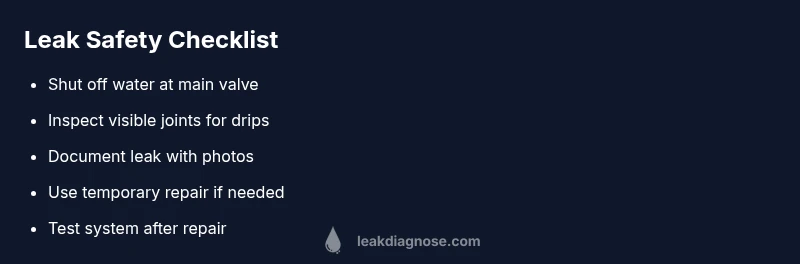
- Shut off water before inspecting leaks
- Prioritize visible joints and fittings for quick fixes
- Use temporary repairs only while planning a permanent fix
- Monitor after repairs for signs of ongoing leakage
- Call a professional for hidden leaks or unsafe conditions