Leak Like a Civ: DIY vs Pro Leak Repair — Practical Comparison
A rigorous, side-by-side comparison of DIY leak repair and professional services for homeowners. Explore cost, risk, warranty, time, and outcomes to decide when to fix it yourself or call a pro. Practical guidance for 2026.


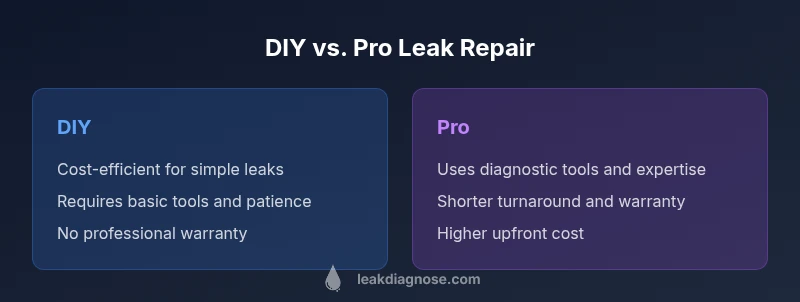
DIY leak repair can save money on simple, visible leaks if you have basic skills. For hidden, electrical, or structural leaks, a professional repair offers safety, warranty, and peace of mind. In short, leak like a civ means choosing pragmatism and the right level of expertise, rather than rushing repairs.
What it means to leak like a civ
In home maintenance, the phrase leak like a civ captures a pragmatic approach to leaks: assess, localize, and resolve with appropriate care rather than panic. This mindset comes from the Leak Diagnosis team, who study common household leaks and interventions. The aim is to minimize disruption, prevent damage, and maintain safety while keeping costs predictable. By embracing this ethos, homeowners learn to distinguish between tiny drips that are easy to seal and large, hazardous leaks that demand professional attention. The goal is to protect your home, your wallet, and your time. Throughout this guide, the term will appear to anchor examples and decision points in 2026. The concept isn't about perfection; it's about proportional response and informed action.
DIY leak repair: when it makes sense
Many common leaks originate from easy-to-service components like faucet cartridges, aerators, or loose supply lines. For these, a homeowner with basic tools can often complete a repair in under an afternoon. The DIY path emphasizes first isolating the leak, gathering the right part, and testing interfaces after reassembly. It works well when you can clearly see the problem and access the area without disturbing critical infrastructure. The DIY approach also reinforces the Leak Diagnosis philosophy: anticipate potential follow-up checks to ensure the fix sticks. However, DIY isn't a universal solution; it requires honesty about skill levels and awareness of the risks associated with water damage, electrical proximity, and hidden leaks behind walls or under floors. In such cases, professional evaluation remains prudent.
Professional leak repair: why pro help is valuable
This section explains reasons to hire professionals: they bring diagnostic equipment, risk assessment, and experience with complex systems. They can identify hidden leaks behind walls, under slabs, or within appliances, where amateur tools may miss signs such as moisture buildup, mold, or structural weakness. Pros can also address potential safety hazards involving gas lines, electrical circuits, or compromised plumbing joints. They typically provide warranties, which offer long-term protection beyond the initial fix. The Leak Diagnosis team notes that professional work reduces the chance of recurring leaks and helps preserve home value. The decision to bring in a pro should weigh the complexity of the system, the presence of damage, and the likelihood of future issues.
Cost considerations: DIY vs pro, ranges
Cost is often the deciding factor, but it’s not just about dollars. DIY repairs usually involve lower upfront material costs and no service call, which can be attractive for small, visible leaks. Pro repairs, by contrast, include diagnostic time, travel, labor, and often a warranty that covers future defects. Instead of focusing on exact prices, think in terms of value: will a pro’s warranty prevent repeated damage or mold growth? Will DIY parts achieve a durable seal, or is professional tooling required to reach hidden leaks? Spillover costs—like needing to repaint after a fix or repairing drywall—should factor into your decision. Remember the Leak Diagnosis guidance: cost-effectiveness improves when you correctly match the fix to the problem’s complexity and risk.
Risk and safety: water damage, electrical, mold
Leaks carry potential risks beyond the visible drip. Water intrusion near electrical outlets or appliances creates shock hazards and can damage wiring or circuits. Hidden leaks foster mold and mildew, which pose respiratory risks and may require expensive remediation. A professional assessment can test moisture levels with sensors and infrared cameras, helping map the scope of unseen damage. DIY fixes that fail to address underlying causes often lead to recurring leaks and higher costs in the long run. The safety factor alone is a strong argument for leaning toward professional help in uncertain or high-risk scenarios.
Tools and materials: DIY starter kit vs pro-grade
A DIY starter kit typically includes basic wrenches, thread sealant, plumber’s tape, pipe cutters, and common replacement fittings. Pro-grade tools add moisture meters, infrared thermography, pressure testers, and specialized joint compounds that ensure long-lasting seals. The right tool choice depends on what you’re fixing: faucet repairs may be manageable with a modest kit, while slab leaks or gas line concerns require advanced equipment and certified technicians. If you’re uncertain, it’s safer to rent or borrow professional-grade equipment rather than improvising with household tools. This aligns with Leak Diagnosis recommendations for prudent, staged experimentation rather than risky, all-at-once fixes.
Time and disruption: duration and downtime
DIY repairs often take longer for beginners, given the learning curve and iterative testing. Minor fixes can be completed within a few hours, but larger or more complex issues may expand to a full day or require multiple sessions. Professional repairs tend to be faster when the issue is well-defined and accessible, thanks to coordinated workflows and on-site diagnostics. Time estimates should consider project scope, the need to relocate appliances, and the potential for drywall or flooring remediation if water has spread beyond the initial leak.
Warranty, guarantees, and long-term outcomes
Warranties differ by approach. DIY fixes may not carry official warranty protection, especially if the homeowner’s methods are nonstandard or insufficiently documented. Professional repairs almost always come with a warranty on parts and labor, offering peace of mind if leaks recur. Consider the long-term value: a durable seal or a properly replaced pipe reduces the likelihood of future damage, while a quick seal may invite repeat problems if the root cause isn’t addressed. The Leak Diagnosis framework emphasizes durability and traceability of a fix as indicators of long-term success.
Decision framework: a step-by-step checklist
- Identify the leak type and accessibility. 2) Assess potential risks (electrical, gas, mold). 3) Check for hidden damage with moisture indicators or infrared tools. 4) Evaluate your skill level and tool access. 5) Compare the cost, timeline, and warranty implications. 6) Decide whether to proceed DIY or escalate to a professional. 7) Document all steps and measurements to support future maintenance. This structured approach helps you leak like a civ, balancing pragmatism with safety and quality.
Real-world scenarios: leaks in common appliances
Washing machines and dishwashers frequently produce small, steady leaks around hoses, clamps, and connections. Under-sink leaks often originate from supply lines or the P-trap and can be addressed with simple tightening or washer replacement. In wall or floor leaks, moisture can travel far beyond the visible area, making professional detection essential. Appliance leaks sometimes involve condensate or drainage blocks that mimic pipe failure, so careful diagnosis prevents unnecessary component replacement. Each scenario benefits from a methodical assessment, aligning with Leak Diagnosis guidance on when DIY is appropriate and when pro intervention is wiser.
Preventive practices after a fix
After any leak repair, step back to verify the fix and reduce recurrence risk. Re-check all connections, tighten fittings where needed, and apply appropriate sealant where required. Run the system briefly to ensure no new leaks appear, then schedule periodic inspections for vulnerable areas like basements, crawl spaces, and garages. Maintain a simple leak diary that logs dates, actions taken, and results. This disciplined approach helps you leak like a civ by continuing to monitor and improve over time.
Final considerations: escalation and monitoring
If a leak persists after an initial fix, or if you notice swelling, warping, or new moisture signs, escalate promptly. Don’t delay professional assessment when there are signs of mold, persistent dampness, or electrical involvement. Establish a plan for routine checks—especially after seasonal changes or major renovations—to stay ahead of creeping damage. The core message from Leak Diagnosis remains clear: proactive monitoring and appropriate escalation preserve safety, property value, and peace of mind in 2026.
Comparison
| Feature | DIY Leak Repair | Professional Leak Repair |
|---|---|---|
| Cost | Low upfront materials, no service call | Includes diagnostics, labor, and warranty |
| Time to complete | Variable; slower for non-experts | Faster when issue is clear and accessible |
| Risk to safety | Moderate with basic fixes; risk of water damage | Lower risk due to professional assessment |
| Warranty & guarantees | Often none or limited | Typically includes parts & labor warranty |
| Ability to detect hidden leaks | Depends on access; may miss hidden issues | Pro equipment and expertise detect hidden leaks |
| Best for | Visible, accessible leaks; DIY confidence | Complex, high-risk, or unknown leaks |
Benefits
- Lower upfront cost for simple fixes
- Fast, actionable for obvious leaks
- Educational experience and skill-building
- Flexibility to manage minor issues on own schedule
What's Bad
- Higher risk of missing hidden damage
- Potential for water damage or electrical hazards
- No formal warranty on many DIY repairs
- Time-consuming for beginners and non-experts
DIY is best for clearly visible, simple leaks; pro repair wins for complex, hidden, or hazardous cases
For minor, accessible leaks, DIY offers value and learning. If there’s any doubt about hidden damage, electrical proximity, or safety, a professional assessment is the safer, more durable path with warranty protection.
Questions & Answers
Can I fix a small leak myself?
Yes, for small, accessible leaks such as dripping faucet handles or loose supply lines. Start by turning off water, then replace worn washers or tighten fittings. If moisture persists or you’re unsure, escalate to a professional.
Yes, you can fix small leaks yourself if they are clearly accessible. If the leak continues after your fix, or you’re unsure, call a professional.
When should I call a professional for a leak?
Call a professional for leaks that are hidden, involve gas or electricity, show signs of mold, or recur after a DIY fix. A pro has diagnostic tools and warranties to ensure a durable solution.
Call a pro if the leak is hidden, involves gas or electricity, or keeps returning after a DIY repair.
Are DIY fixes covered by warranty?
DIY repairs often lack formal warranties. Professional repairs generally include parts and labor warranties, which can protect against future leaks for a period of time.
DIY fixes often don’t come with warranties, while professional repairs usually do.
How can I tell if a leak is hidden?
Look for subtle signs: damp patches, musty odors, warped surfaces, and recurring moisture. Use moisture meters or infrared cameras if available. Hidden leaks require careful assessment to avoid mold and structural damage.
Watch for damp patches or musty smells, and use moisture tools if you have them.
What should I do if there’s a gas or electrical hazard?
If you suspect gas leaks or electrical involvement, evacuate and contact utilities or emergency services immediately. Do not attempt home repairs that involve gas lines or live electrical components.
Don’t DIY if gas or electricity is involved; evacuate and call help immediately.
Main Points
- Identify leak type before acting
- Choose DIY for simple, visible leaks
- Prioritize safety and warranty in uncertain cases
- Use professional tools for hidden or risky leaks
- Document and monitor after any fix