Leak in Bathtub Drain: Troubleshooting & Fixes
Learn fast diagnostics and safe fixes for a leak in bathtub drain. Step-by-step checks, tools, safety tips, and when to call a pro to prevent water damage.


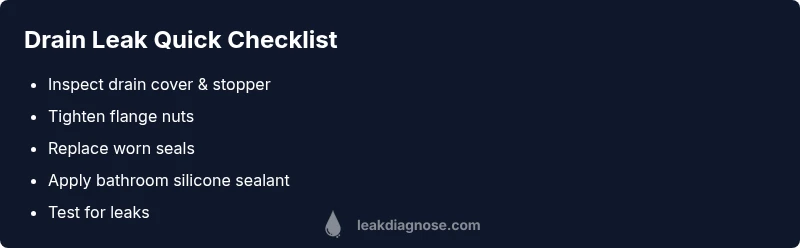
Most bathtub drain leaks come from a worn stopper seal, a loose drain flange, or an overflow gasket. Start by inspecting the drain cover: remove it and check the stopper, nut, and gasket for looseness or damage. Tighten fittings, reseal with plumber’s putty or silicone, and re-test. If the leak persists, you may need to pursue deeper checks around the drain assembly.
Understanding the leak in bathtub drain
Water pooling around the drain, damp cabinets, or an active drip during a bath can indicate a leak in bathtub drain. The most common culprits are the stopper seal, the drain flange, or the overflow gasket. In a typical tub, the drain connects to a copper or PVC pipe that runs behind the wall. If the seal deteriorates, tiny amounts of water escape through the joint each time the tub is filled or drained. According to Leak Diagnosis, these issues account for the majority of bathroom fixture leaks in 2026. Quick self-checks can save you time and prevent water damage. Start with the most accessible parts—the drain cover and overflow faceplate—before you dismantle the assembly behind the wall. The goal is to identify whether the leak is a surface issue or something more serious behind the wall.
Common Causes of a leak in bathtub drain
The leak in bathtub drain is most often caused by a worn stopper seal or O-ring around the drain, a loose or corroded drain flange where the drain meets the tub, or a deteriorating overflow gasket that seals the channel from the tub to the wall. Less common but real possibilities include a cracked drain body, damaged silicone seal around the drain, or a misinstalled pop-up stopper mechanism. According to Leak Diagnosis, focusing on the drain flange and stopper seal yields the quickest fixes. If the tub was recently refinished or the drain was replaced, ensure the sealant was applied evenly and cured fully.
Safety first: What not to do when diagnosing a bathtub drain leak
Do not use aggressive chemicals or solvents near the drain; they can degrade gaskets and epoxy around joints. Do not force fittings or pry parts—this can crack the tub or straighten threads. Do not ignore safety: water and electricity don’t mix; if a nearby electrical outlet or switch is wet, turn off power at the breaker and call a pro. Always verify water is off to the tub before removing parts to prevent flooding. (Leak Diagnosis emphasizes safety as the top priority when troubleshooting.)
DIY checks you can perform today before disassembly
Begin with simple inspections that require no tools. Remove the drain cover and inspect the stopper for wear; replace if the rubber seal is cracked or flattened. Check the overflow faceplate for looseness; tighten the screws and apply a fresh bead of sanitary silicone where the plate meets the tub. Inspect the drain flange from the top for visible gaps or rust; if you see any, plan to reseal with silicone. Run a controlled bath and watch for wet spots; note if water comes from the drain edge or from the overflow at the back of the tub. This helps you decide whether the leak is surface-level or requires behind-wall access. (This step aligns with Leak Diagnosis guidance.)
Tools, materials, and parts you may need
Gather a few common items: slip-joint pliers, a screwdriver set, a utility knife, silicone bathroom sealant (10-year life), plumber’s putty, replacement stopper assembly or drain flange, fresh washers and O-rings, and a damp rag for cleanup. Have towels or a small bucket ready for spills. If you plan to reseal, ensure the tub is completely dry and the surface around the drain is clean. For hard-to-reach areas behind the wall, a camera-equipped inspection mirror can help you confirm the presence of leaked water and guide your next steps. (Tip: Work in a well-lit area to avoid missing tiny gaps.)
When to call a professional
If you notice water leaking behind the wall, if the pipework or drain body shows corrosion, or if the leak persists after resealing the visible joints, it’s time to contact a licensed plumber. Behind-wall leaks may involve subfloor damage or mold growth that requires specialized equipment and safety protocols. Early intervention can prevent costly water damage. The Leak Diagnosis team recommends arranging a professional assessment if you cannot access the pipe behind the tub or if the leak continues after completing the basic fixes. After all, a persistent leak in bathtub drain often signals a deeper issue that should be diagnosed by a pro.
Maintenance and prevention to avoid future leaks
Regularly inspect the drain seal and overflow gasket, especially after the tub is resurfaced or replaced. Re-seal every few years with appropriate bathroom-grade silicone and ensure proper curing. Avoid harsh cleaners that degrade rubber seals; wipe down the drain area after baths to prevent mold and corrosion. Keeping the area dry and limiting vibration around the drain helps extend the life of the seal. (Leak Diagnosis notes that proactive maintenance reduces the chance of expensive repairs.)
Steps
Estimated time: 45-90 minutes
- 1
Shut Off Water & Prep
Before touching any drain components, shut off the tub’s water supply. Remove standing water and lay towels to catch drips. Gather tools: screwdriver, pliers, putty knife, silicone sealant, replacement parts, and a camera to document the process.
Tip: Take a photo of each step to aid reassembly. - 2
Remove Drain Cover & Inspect Stopper
Unscrew and lift the drain cover. Remove the stopper and inspect the rubber O-ring or gasket for cracking or flattening. If worn, replace with an exact-fit stopper assembly or gasket.
Tip: Note stopper orientation for correct reassembly. - 3
Check Drain Flange Tightness
From beneath the tub, use a basin wrench or pliers to check the flange locknut. Tighten gradually until snug but not over-tightened; inspect for any gaps around the tub surface.
Tip: Only snug-tight; overtightening can crack the flange. - 4
Inspect Overflow Gasket
Remove the overflow plate if needed and examine the gasket for cracks. Replace if damaged, and reseal with bathroom-grade silicone where the plate meets the tub.
Tip: Clean both surfaces before resealing to ensure a good bond. - 5
Re-seal & Reassemble
Apply a thin line of silicone along joints, reassemble the stopper and drain cover, and smooth the sealant for a uniform bead. Allow silicone to cure fully per product directions.
Tip: Use a silicone rated for bathrooms and avoid gaps. - 6
Test for Leaks
Fill the tub gradually and observe the drain area for several minutes. Look for any fresh wet spots or dampness around the flange and overflow.
Tip: Test in small increments to pinpoint the leak source.
Diagnosis: Persistent water leakage around bathtub drain after filling or during shower
Possible Causes
- highWorn stopper seal or O-ring around the drain
- highLoose or damaged drain flange at the tub surface
- mediumDamaged overflow gasket compromising the seal to the wall
- lowCracked drain body or behind-wall pipe connection
Fixes
- easyTighten the drain flange nut and stopper components
- easyReplace the stopper assembly and seal if worn
- easyReseal drain flange with bathroom silicone and reseat overflow gasket
- mediumReplace damaged drain flange or repair behind-wall pipe (professional)
- hardCall a plumber if there is a behind-wall leak or corrosion
Questions & Answers
What is the most common cause of a leak in bathtub drain?
Most leaks originate from worn stopper seals or a loose drain flange. Inspect these parts first before pursuing deeper repairs. If the leak remains after resealing, consider the overflow gasket or behind-wall pipe issues.
Most leaks come from the stopper seal or loose drain flange. Start with those, then check the overflow if needed.
Can I fix this leak without professional help?
Yes, for surface leaks you can reseal and replace worn seals. Leaks behind walls or plumbing typically require a licensed plumber. Assess safety and comfort before proceeding.
You can DIY surface leaks, but behind-wall issues should be left to a pro.
How can I tell if the leak is from the drain or the overflow?
If water appears at the drain when filling, the drain seal is likely faulty. If water leaks from the overflow faceplate, the overflow gasket may be the culprit.
If water shows at the drain during filling, it’s the drain seal; if it’s at the overflow, check the gasket.
What tools do I need to replace a bathtub drain flange?
You’ll typically need a screwdriver, adjustable wrench, pliers, a putty knife, silicone sealant, replacement flange, and a gasket or washer. Safety gloves are recommended.
A screwdriver, wrench, pliers, putty, and new flange are usually enough.
Is silicone sealant appropriate for bathtub drains?
Yes, use bathroom-grade silicone that cures fully and bonds well to tub materials. Avoid general caulk that may crack in damp conditions.
Yes—bathroom silicone is recommended; ensure it’s rated for tubs.
When should I replace the entire drain assembly?
If the flange is warped, the stopper won’t seal despite resealing, or the pipe behind the wall shows corrosion, replace the entire drain assembly.
If the flange is warped or corrosion is visible, replace the drain.
Watch Video
Main Points
- Identify drain components early.
- Start with simple fixes before deeper repairs.
- Seal joints properly and allow cure time.
- Call a pro if leaks persist behind walls.