How to Tell If a Leak Is Behind Your Wall
Learn to identify hidden wall leaks quickly with a step-by-step approach, safety tips, and when to call a pro. Includes diagnostic flow, visuals, and prevention tips.


Signs of a hidden wall leak include damp patches, a musty odor, water stains, peeling paint, warped drywall, and surprisingly high water bills. Quick fixes: shut off the water near the suspected area, inspect nearby fixtures for drips, and check for condensation. If sources aren’t obvious, use moisture readings behind the wall and call a professional to prevent mold and structural damage.
Signs that indicate a leak behind a wall
If you're asking how to tell if leak in wall, start by looking for telltale signs: damp patches on wallpaper or paint, musty odors, staining that follows a streak along studs, bulging or soft drywall, and higher water bills that don’t match usage. According to Leak Diagnosis, these early indicators often appear before a visible puddle forms. Quick visual checks can save speaking with multiple plumbers later and help you act fast to minimize mold risk and cosmetic damage.
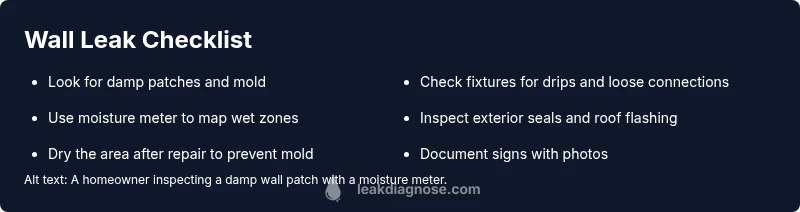
Key cues to watch for: damp patches, discoloration, peeling paint, mold growth, and unusual cold spots on walls. If you notice any of these, record dates and take photos for reference when you seek professional help.
Immediate checks you can perform safely
Before diving behind walls, perform low-risk checks to pinpoint the most probable area without causing further damage:
- Look for signs around adjacent fixtures (under sinks, around toilets, and behind appliances) for dripping, leaks, or loose connections.
- Feel for cold, damp patches on drywall and use a moisture meter if available to measure elevated humidity levels in the wall cavity.
- Check the exterior for obvious water intrusion near the affected wall, such as roof or window leaks, damaged siding, or clogged gutters that could back up water behind the wall.
- Verify if the water bill spiked recently without a change in consumption. Large unexplained increases often point to a hidden leak behind the wall.
If conditions are safe and the area isn’t electrically risky, you can proceed with more thorough checks. Always prioritize safety: turn off power to nearby outlets if you plan to probe behind drywall.
How to locate the source behind the wall
Locating a hidden leak requires a logical, methodical approach rather than random probing. Start by isolating the area:
- Shut off the water supply to the suspected zone and observe if dampness stabilizes or worsens.
- Inspect alternately for leakage around plumbing fixtures tied to that wall, such as sinks, bathtubs, dishwashers, or nearby appliances. Tighten connections cautiously and replace worn washers if visible.
- Use a moisture meter to map wet zones across wall panels and studs. Infrared cameras can reveal temperature differences that indicate moisture migration behind the surface.
- Listen for subtle dripping or running water inside wall cavities with careful listening, especially near bathrooms and kitchens.
Document findings with photos and notes. If you confirm a leak, plan repairs and drywall replacement as needed, keeping in mind that hidden leaks often require professional intervention.
Diagnostic flow overview (quick map)
- Symptom: Damp patch or mold on wall → Diagnosis: Hidden pipe or appliance leak or exterior intrusion → Solution: Isolate area, check fixtures, monitor moisture → If unresolved: call a licensed plumber to locate and repair concealed pipes; consider professional remediation for mold and drywall damage.
- Symptom: Sudden high water bill with no change in usage → Diagnosis: Hidden leak → Solution: Inspect plumbing runs and shut off water; use moisture readings to pinpoint culprits; plan professional repair if needed.
- Symptom: Wet drywall after heavy rain → Diagnosis: Exterior intrusion or roof leak → Solution: Inspect exterior seals, gutters, and roof flashing; seal entry points and dry interior to prevent mold.
Using this framework helps distinguish plumbing leaks from condensation or weather-driven moisture, reducing unnecessary fixes and expediting proper repair.
When to call a professional and what to expect
Hidden leaks behind walls can escalate quickly, risking structural damage and mold. If you identify or suspect a concealed pipe, call a licensed plumber or leak specialist promptly. They will typically:
- Use specialized tools (electronic leak detectors, infrared cameras, moisture meters) to locate concealed pipes without excessive demolition
- Isolate and repair the underlying leak, then assess and repair drywall, insulation, and flooring as needed
- Provide guidance on drying and mold prevention to restore a safe indoor environment
For safety and long-term peace of mind, professional assessment is advised when leaks are behind finished walls or when electrical components are involved.
Prevention tips to minimize future wall leaks
- Schedule regular inspections of plumbing lines behind walls, especially after home renovations or appliance replacements.
- Maintain gutters and downspouts, seal exterior walls, and check roof flashing to prevent water intrusion.
- Use moisture-monitoring devices in kitchens and bathrooms to catch early signs of moisture migration.
- Address condensation by improving ventilation (exhaust fans, dehumidifiers, and air circulation).
- Repair any cracks in masonry or siding promptly to prevent water from seeping into interior walls.
Steps
Estimated time: 2-4 hours
- 1
Prioritize safety
Turn off the water supply to the suspected area and switch off electricity near the wall if there’s any chance of moisture contacting outlets. Wear gloves and a mask when dealing with mold or damp materials and avoid disturbing asbestos-containing materials in older homes.
Tip: Start with the simplest shut-off valve first to quickly stop the leak. - 2
Inspect obvious sources
Check under sinks, behind toilets, and along appliances for visible drips, loose connections, or damaged hoses. Tighten fittings gently; replace worn washers if you see corrosion or cracking.
Tip: Take photos before and after touching fixtures to document changes for the plumber. - 3
Map moisture
Use a handheld moisture meter to identify elevated readings on wall surfaces. If you have access to an infrared camera, scan the wall to reveal hidden wet zones that aren’t visible.
Tip: Mark the highest reading with a sticker to guide repair work. - 4
Isolate and test
If possible, isolate different zones by turning off other fixtures to determine if the leak is plumbing-related or weather-related. Monitor readings over several hours to distinguish a running leak from surface moisture.
Tip: Record time stamps and readings to show a professional the leak’s behavior. - 5
Plan the repair
If a concealed pipe is the culprit, plan drywall removal and proper containment of dust and mold. Arrange for professional repair if you’re unsure about pipe access or structural risk.
Tip: Drying the area promptly after repair prevents mold growth. - 6
Prevent recurrence
After the fix, rerun checks, ensure proper ventilation, and consider moisture barriers or dehumidification to protect adjacent walls in the future.
Tip: Install a moisture sensor in high-risk areas as a future early warning system.
Diagnosis: Visible damp patches, musty odor, mold growth, or high moisture readings on a wall
Possible Causes
- highLeaking pipe behind the wall
- mediumFaulty appliance connection (behind-wall supply line)
- lowExterior water intrusion through wall due to poor sealing
- lowCondensation from high humidity or poor ventilation
Fixes
- easyShut off the water supply to the affected area; inspect nearby fixtures for drips or loose connections
- mediumUse a moisture meter to confirm moisture behind walls and locate the wet zone
- hardCall a licensed plumber to repair concealed pipes or replace drywall and insulation as needed
Questions & Answers
What are the most common signs a leak is behind a wall?
Damp patches, musty odors, mold growth, bubbling paint, and sudden spikes in water bills are common indicators of a hidden wall leak. Quick visual checks paired with moisture readings can confirm the issue before calling a plumber.
Damp patches and a musty smell often point to a hidden wall leak. Check moisture levels and call a pro if signs persist.
Can I fix a hidden wall leak myself?
Minor clogs or loose connections near the wall are sometimes fixable by a homeowner. Hidden pipes require professional access and may involve drywall repair, so proceed with caution and consider a licensed plumber for concealed leaks.
Small leaks by fixtures might be DIY, but concealed pipes usually need a pro.
How can I tell if the moisture is from condensation or a leak behind the wall?
Condensation tends to fluctuate with humidity and temperature, while a leak maintains persistent dampness and may produce visible drips or consistent moisture readings. Use a moisture meter over several hours to differentiate.
Condensation varies with humidity, leaks stay steady. Monitor with a meter to tell the difference.
What safety steps should I take before inspecting behind walls?
Turn off power to affected circuits, wear protective gear, and avoid disturbing mold. If wiring or insulation is involved, contact a professional before proceeding.
Turn off power, wear protection, and avoid moldy areas until a pro assesses it.
When is a drywall removal needed?
Drywall removal is often necessary to access hidden pipes or to repair mold-damaged insulation. A licensed contractor can manage demolition, mold remediation, and reinstallation safely and to code.
If moisture persists behind the wall, drywall removal by a pro is usually required.
Watch Video
Main Points
- Act quickly when you smell mold or see damp patches.
- Shut off water to the area before probing behind walls.
- Use moisture readings to locate hidden leaks, not guesswork.
- Call a pro for concealed leaks or electrical risks.
- Dry and repair promptly to minimize mold and damage.