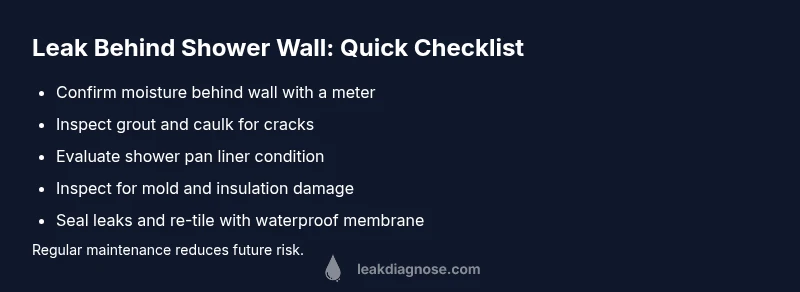
Leak Behind Shower Wall: Quick Diagnosis for Homeowners
Learn to spot, diagnose, and fix a leak behind the shower wall. This practical guide covers common causes, safe testing steps, and when to call a pro.


Most likely, the leak behind the shower wall is caused by a deteriorating shower pan seal or a cracked tile grout that allows water to reach the cavity. Quick fix: shut off water supply briefly, dry visible surfaces, inspect for mold, and reseal the shower pan edge or replace damaged waterproofing. If the leak persists, call a professional.
Understanding the Symptoms and Why They Happen
A leak behind the shower wall is a common headache for homeowners. You may not see a steady drip, but over time water finds its way into the wall cavity, framing, or insulation. Signs include damp or musty odors, water stains on the ceiling or adjacent walls, bubbling or peeling paint, warped drywall, and mold growth in or around the shower enclosure. The keyword here, leak behind shower wall, often appears when moisture hides behind tile or paneling, gradually degrading materials. According to Leak Diagnosis, early indicators are typically hidden moisture rather than an obvious leak, so a careful visual check and moisture testing are essential before tearing into walls. Prompt attention minimizes mold risk, structural damage, and expensive repair bills, so start with a quick, non-destructive inspection of visible caulk, grout joints, and the shower pan edge.
Common Causes When Water Enters Behind the Wall
Water intrusion behind a shower wall usually starts with a failure in the waterproofing system. Common culprits include a degraded or damaged shower pan liner, worn or cracked grout and caulk, and gaps where tiles meet the base. A porous or damaged membrane behind the tile can allow capillary action to pull moisture into studs. Plumbing fixtures behind the wall—such as supply lines or a leak in a valve—can also contribute, especially if the wall has rotating joints or rough plumbing passes. Poor ventilation and high humidity compounds the problem by promoting condensation mold growth. When you hear a creak of damp wood or notice persistent dampness, a leak behind shower wall is often the suspect, and addressing it early saves wall and floor damage.
How to Confirm There’s a Leak Behind the Shower Wall
Confirmation requires a mix of observation and testing. Look for consistent damp patches, paint or wallpaper discoloration, and a musty odor near the shower area. Use a moisture meter on adjacent studs and drywall to measure moisture content; persistent readings above baseline suggest hidden moisture. A dye test behind the shower drain or faucet can reveal concealed leaks; temporarily sealing the drain and running water helps observe if dye appears in unexpected places. An infrared camera or professional moisture mapping can pinpoint leak locations behind tile or board. For homeowners, the goal is to establish that moisture is present behind the wall and identify a probable source without destructive exploration.
Quick Pre-Inspection Checklist (Before You Start)
- Shut off the shower supply at the valve or main if you notice active leakage to prevent further damage.
- Inspect visible caulk and grout around the base, along corners, and at tile transitions.
- Check for soft spots or bulges in the wall behind the tiled area.
- If you have access panels, peek inside for damp insulation or staining.
- Document findings with photos for reference and for any contractor you may hire.
Note that this quick check may reveal obvious issues, but hidden leaks require more invasive testing or wall opening by a professional. The keyword leak behind shower wall should guide you toward the right tests and repairs.
Step-by-Step Fixes for the Most Common Cause
When the culprit is a compromised waterproofing layer or faulty grout, the fix typically involves resealing or replacing components and restoring the wall surface. Start by removing loose grout and failing sealant, then apply a high-quality waterproof sealant in all critical joints. If the shower pan liner is compromised, you may need to replace or upgrade the liner and re-tile. After addressing the waterproofing, repair any damaged drywall, replace insulation if moldy, and reinstall tile or wall panels with proper adhesive and waterproof underlayment. Reseal the edges with a flexible silicone sealant to prevent future water intrusion. Finally, re-test by running water and observing for any signs of renewed dampness.
If you’re unsure about the extent of wall damage, or if you encounter mold growth, stop and call a licensed contractor to prevent health and structural risks. The leak behind shower wall can escalate quickly if left untreated, so timely, methodical work is essential.
Safety, Warnings, and Common Mistakes
Working behind shower walls involves potential hazards: cutting through tiles, exposing electrical nearby, and handling mold. Always power down circuits if you’ll access electrical components, wear respiratory protection when mold is present, and use waterproof gloves. Never rely on temporary patches; waterproofing must be continuous and continuous along the wall-to-tloor interface. A common mistake is skimping on grout and caulk, or failing to replace damaged drywall behind the wall; both allow moisture to persist. If you see significant mold growth or structural damage, stop and contact a professional.
Verdict & Next Steps
The Leak Diagnosis team emphasizes a systematic approach: confirm moisture behind the wall, identify the leakage source, and address waterproofing and wall damage comprehensively rather than applying quick patches. Persistent moisture after resealing indicates a more extensive repair, possibly involving wall removal and reinstallation of waterproofing membranes.
The Leak Diagnosis team recommends scheduling a professional inspection if any of the following apply: visible mold, soft studs or framing, or repeated leaks despite resealing. Early action reduces damage and cost in the long run.
Steps
Estimated time: Estimated total time: 2-4 hours
- 1
Shut off water and assess safety
Turn off the shower valve and, if needed, the main water supply to stop further water intrusion. Remove any standing water and ventilate the area to reduce moisture. This initial step protects your home and health while you plan the fix.
Tip: Document water levels and take photos before starting any removal. - 2
Check visible joints and grout
Inspect grout lines and caulk around the shower. Look for cracks, gaps, or gaps that allow water to bypass the waterproofing layer. Replace cracked grout and reseal with a flexible silicone caulk designed for bathrooms.
Tip: Use a grout saw to remove damaged grout cleanly. - 3
Access the wall behind the tiles
If there is an access panel, inspect the back of tiles and studs for moisture, staining, or mold. If no panel exists, you may need a professional to create a small opening to inspect insulation and wall materials.
Tip: Wear a mask and gloves when mold is present. - 4
Test waterproofing and membrane
Check the integrity of the waterproof membrane. If you see moisture in the wall or damp insulation, the membrane may be compromised and require replacement. Consider replacing the entire pan liner if warranted.
Tip: Use a moisture meter to quantify dampness levels. - 5
Repair wall components
Replace any damaged drywall or insulation, treat mold, and install new waterproofing membrane as needed. Reinstall wall panels or tiles with proper waterproof backer and adhesive.
Tip: Follow manufacturer installation guidelines for waterproofing systems. - 6
Re-test and monitor
Re-seal joints, reassemble, and run the shower for 15–20 minutes to verify there is no leak. Monitor for several days to ensure the area stays dry and no new stains appear.
Tip: Keep an eye on adjacent walls and ceilings for any signs of moisture.
Diagnosis: Leak behind shower wall
Possible Causes
- highFailed waterproofing membrane behind tile
- highDamaged grout/caulk joints
- mediumCracked or compromised shower pan liner
- mediumLeaking plumbing in wall (pipes behind wall)
- lowCondensation and poor ventilation
Fixes
- easyInspect and reseal around the shower base and along tile edges with a high-quality silicone waterproof sealant
- hardReplace damaged waterproofing membrane or shower pan liner if accessible
- mediumRepair or replace damaged drywall and mold remediation if present
- hardIf plumbing behind the wall is leaking, call a licensed plumber
Questions & Answers
What are the early signs of a leak behind the shower wall?
Early signs include damp patches, musty odors, mold growth, staining on adjacent walls, and soft or warped drywall. These symptoms often indicate hidden moisture behind the wall rather than a visible drip.
Look for damp patches and a musty smell near the shower—these hidden moisture signs usually point to a leak behind the wall.
Can I fix a shower wall leak myself?
Minor fixes like resealing grout and caulk or replacing a damaged sealant may be doable for a confident DIYer. More extensive issues, especially a compromised pan liner or mold, should be handled by a licensed professional.
You can handle small grout or caulk issues, but larger problems like a bad pan liner or mold should be done by a pro.
How long does a typical repair take?
Time varies with extent. A simple reseal and dry-out can take a few hours, while replacing a liner and wall materials may span one to two days.
Most repairs take several hours to a couple of days depending on damage.
When should I call a professional?
Call a professional if you notice mold growth, extensive wall damage, ceiling staining, or repeated leaks after minor repairs. A pro can confirm the source and ensure waterproofing is permanently restored.
Call a professional if there’s mold, large damage, or leaks that keep coming back.
Watch Video
Main Points
- Identify moisture behind the wall before tearing out tiles
- Prioritize proper waterproofing to prevent recurrence
- Use mold-safe procedures and wear protection
- Call a professional if you find structural damage or persistent leaks
- Re-test thoroughly after repairs and monitor moisture levels