Ceiling Leak in Apartment: Quick Diagnosis & Safe Fix Guide
Learn to identify, diagnose, and safely fix a ceiling leak in an apartment. Quick checks, safety tips, and prevention to minimize future water damage.


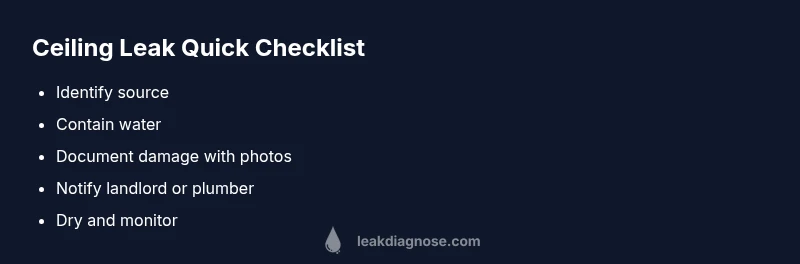
Most likely cause of a ceiling leak in an apartment is water intrusion from an upstairs unit or a failing plumbing pipe. Quick fix steps: safely shut off the water supply to the affected area if you can, place a bucket and towels to catch drips, and contact building maintenance or a licensed plumber immediately. Do not delay if you notice active flooding.
Understanding the urgency of a ceiling leak in apartment
A ceiling leak in apartment is more than an inconvenient drip — it's a sign of water intrusion that can cause structural damage, electrical hazards, and mold if left unchecked. According to Leak Diagnosis, rapid assessment and containment can prevent escalating costs and health risks. Start by assessing whether the leak is active and whether water is moving quickly from above or seeping slowly through the ceiling. Note the area affected and any visible staining, peeling paint, or warped drywall. Document the time and the water source if possible. The sooner you respond, the more options you have for safe containment and cost-effective repairs. In multi-unit buildings, leaks may originate from a neighboring unit, a shared plumbing stack, or a roof issue. Even a small drip can indicate a larger problem, such as a burst pipe, a damaged skylight seal, or a compromised toilet supply line running through the ceiling cavity. The Leak Diagnosis team emphasizes urgency because moisture can rapidly seep into insulation, wiring, and drywall, triggering mold growth or electrical shorts. If the leak is wet and spreading, evacuate nearby rooms and call building maintenance first thing.
Immediate safety steps to take now
If you notice active dripping, prioritize safety first. Do not touch electrical appliances or outlets with wet hands. If possible, switch off power to the affected room at the main breaker or fuse box, but only if you can reach it safely. Move valuables and furniture away from the leak to prevent water damage. Place towels and a shallow container to catch drips, and document the scene with photos. Notify your building management or landlord immediately, and call a licensed plumber if the source seems plumbing-related. Remember that mold and electrical hazards can develop quickly, so act promptly but safely. Leak Diagnosis emphasizes documenting every step you take so you and the landlord have a clear record of events and actions.
Potential sources: plumbing, roof, and HVAC contributions
In apartments, leaks usually originate from three main systems: plumbing, the building envelope, and HVAC. A burst or leaking pipe in the ceiling cavity, a failed toilet supply line, or a damaged water line from above can create ongoing moisture. Roof leaks or failed parapet seals, especially in top-floor units, allow rainwater to seep through ceilings. HVAC condensate lines or evaporator coils can also produce significant moisture if drainage is blocked. Sometimes a leak is a combination of issues, such as a roof leak that worsens during rain or a plumbing line that leaks into a ceiling cavity and travels along joists. By understanding the probable sources, you can guide conversations with professionals and prioritize inspection of the most likely paths.
Quick checks you can perform to pinpoint the source
- Check the ceiling for stains, bubbled paint, or soft drywall that suggests water intrusion from above.
- Look for damp spots on or around visible pipes in the attic or ceiling cavity.
- Inspect the area above the leak in the upstairs unit or the roofline if accessible.
- Review your water bill for unexpected increases that might indicate a hidden leak.
- If safe, scan electrical outlets and switches near the leak for moisture or buzzing sounds.
- Take clear photos from multiple angles to share with a contractor.
If you identify a likely source, stop further intrusion by turning off the relevant valve or shutting off water to the unit if you can do so safely. If you cannot safely identify or access the source, contact professional help immediately.
Documenting damage and coordinating with landlords and insurers
Create a dated log of every incident: times, affected rooms, and actions taken. Take high-resolution photos and videos before you start drying or moving items. Keep all receipts for materials used to mitigate damage, such as towels, plastic sheeting, or rental equipment. Share the documentation with your landlord or property manager and request a written repair plan and timeline. If insurance coverage applies, file a claim promptly and provide a copy of your photos and the contractor estimates. Leak Diagnosis notes that documenting promptly improves the chances of fair reimbursement and quicker resolution, per Leak Diagnosis Analysis, 2026.
Preventing future leaks: maintenance, checks, and monitoring
Prevention is cheaper than repair. Schedule regular inspections of pipes, hoses, and seals in kitchens, bathrooms, and laundry areas. Inspect the roof and attic for signs of wear after storms, and ensure attic access is secure. Replace old supply hoses and install drip pans under water-using appliances where required. Install moisture meters or humidity sensors in ceilings or basements prone to dampness. Finally, maintain a proactive communication line with your building management so leaks are reported and addressed promptly before they cause extensive damage.
Steps
Estimated time: 1-3 hours
- 1
Identify the source of the leak
Scan the ceiling for active water, check for signs upstairs, and note any stains. Gather photos and time stamps before doing any intervention.
Tip: Document where you saw water first and who was nearby. - 2
Shut off the water to the affected area
If you can safely locate the valve for the leaking line, turn it off to stop the flow. If not, contact building maintenance immediately.
Tip: Only operate a valve you can reach without stepping on water. - 3
Contain water and protect belongings
Move furniture away, place plastic sheeting, and set containers under drips. This minimizes damage while you arrange repairs.
Tip: Keep dry towels ready to absorb moisture. - 4
Check electrical safety
Turn off power to the room if safe and inspect outlets for moisture. Do not touch electrical devices with wet hands.
Tip: If you smell burning insulation, evacuate and call emergency services. - 5
Call professionals
Contact your landlord and a licensed plumber or roof specialist to diagnose and repair the source. Request written estimates and timelines.
Tip: Ask about mold remediation if moisture was long-standing. - 6
Verify repair and monitor moisture
After repairs, run water on the affected area to confirm the leak is fixed. Use a dehumidifier and monitor for dampness over the next days.
Tip: Keep a moisture log for future reference.
Diagnosis: Ceiling leak in apartment
Possible Causes
- highWater intrusion from upstairs unit or roof
- mediumFailing interior plumbing in the ceiling cavity
- lowHVAC condensate or hidden moisture
Fixes
- easyContain and isolate the leak safely; shut off water to the affected line if the valve is reachable
- mediumEngage building maintenance or a licensed plumber to pinpoint source and repair piping or roof seals
- hardIf mold or extensive damage is present, arrange professional remediation and insulation replacement
Questions & Answers
What is the most common cause of a ceiling leak in an apartment?
Water intrusion from an upstairs unit or a damaged pipe is most common. Confirm source with a professional before major repairs.
Water from above or a damaged pipe is usually the cause; confirm with a pro before fixing.
Should I shut off water to the whole apartment or just the affected area?
If you can safely locate the valve for the leaking line, isolate it. Otherwise contact building maintenance. Do not attempt to shut off distant lines.
If you can safely reach the valve for the leak, turn it off there; otherwise call for help.
When should I contact building management vs. a plumber?
If the leak involves shared systems or building envelope, inform management first. For persistent or structural leaks, call a licensed plumber.
Tell management if it’s a shared system, otherwise call a licensed plumber.
Is a ceiling leak dangerous?
Yes. It can threaten electrical safety and foster mold. Avoid standing water and seek professional assessment promptly.
Yes, it can be dangerous; avoid water and call a pro.
How long does a typical repair take?
Repair time varies by source and extent. Simple repairs may take a few hours; more extensive work might take longer.
It varies; most fixes take a few hours to a day or two.
What about mold and lingering moisture after a leak?
Moisture can lead to mold growth. Dry the area, remove damp materials, and consider professional remediation if you notice growth.
Moisture can cause mold, so dry and inspect, call a pro if you see mold.
Watch Video
Main Points
- Act quickly to contain leaks and prevent mold.
- Identify source before committing to fixes.
- Document damage with photos and logs.
- Coordinate with landlord and professionals promptly.
- Inspect and maintain plumbing to prevent recurrence.