La Gas Leak: Urgent Troubleshooting and Safety Guide
Urgent troubleshooting guide to detect, assess, and fix la gas leak safely. Learn quick actions, diagnostic flow, and prevention tips from Leak Diagnosis.


In most homes, la gas leak is a serious safety hazard. The quickest answer: if you smell gas, evacuate immediately, call your gas utility emergency line, and shut off the main gas valve only if you can do so safely. According to Leak Diagnosis, start with simple checks: listen for a hiss, inspect connections, and avoid flames.
What la gas leak means for your home
A gas leak happens when natural gas or propane escapes the delivery system, mixing with air and creating a highly flammable environment. For homeowners, a gas smell is the most alarming signal. la gas leak incidents are more dangerous indoors due to confined spaces. According to Leak Diagnosis, the risk is not just fire—gas inhalation can cause dizziness and headaches, and carbon monoxide produced by incomplete combustion can be deadly in closed rooms. Because gas is lighter than air, you might sense it near ceilings in some installations; others may encounter a persistent odor near floor level. Always treat any sign as an emergency and move to fresh air. In this guide, we'll cover immediate actions, safe checks, and a diagnostic flow to help you respond quickly while minimizing risk.
Common sources of gas leaks in homes
Gas leaks can come from several points in a typical home: aging or damaged copper or steel gas lines, corroded or loose connections at appliances (water heaters, furnaces, stoves), faulty regulators, damaged sealants around gas meters, and improper installation or maintenance. Loose fittings and cracked rubber gas hoses are common culprits in older homes. Regular household energy use increases risk if maintenance is skipped. Leak Diagnosis emphasizes that identifying the source quickly reduces exposure time and prevents escalation. In many cases, the leak is localized to a single appliance or joint, making a targeted fix possible when it’s safe to approach.
Immediate safety actions if you suspect a gas leak
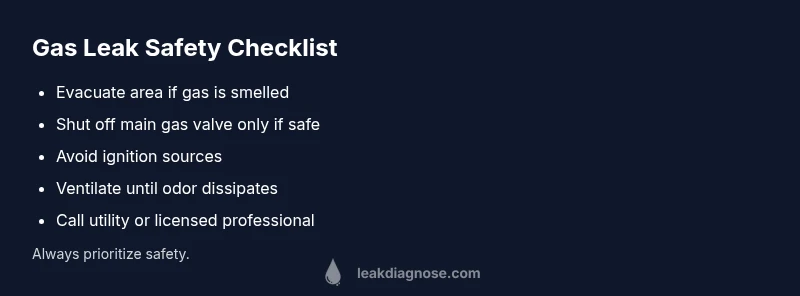
If you detect a potential gas leak, your first move is safety. Evacuate everyone from the area and move to fresh air. Do not switch electrical lights on or off, and avoid creating sparks or flames. Call the gas utility’s emergency line from a safe location and report the odor, any hiss, or weak flame color. If you can do so safely and without putting anyone at risk, shut off the gas at the main valve. Do not attempt to repair leaks yourself—gas systems require licensed professionals. After the area is cleared, wait for professionals to give the all-clear before re-entering. This approach aligns with Leak Diagnosis guidance that emphasizes rapid, safe action.
How to perform a safe initial check without tools
You can perform basic checks without specialized tools while keeping safety in mind. Listen for a faint or loud hiss at any gas fittings or appliance connections. Look for dead spots around meters and gas lines where the odor is strongest. Do a gentle visual inspection for obvious signs of wear—cracked hoses, loose connections, or corrosion. Do not attempt to tighten fittings or replace components unless you are trained and equipped. For joints that appear accessible, a soapy water test can reveal leaks by forming bubbles at loose connections, but only if you are prepared to manage the risk and you have cleared the area of occupants.
Diagnostic flow: symptom-driven path to safety
A structured diagnostic approach helps you move from symptom to safe action quickly. Start with a strong gas odor or hissing sound as the primary symptom. If the symptom is present, rule out sources near appliances first, then check the main supply line. If you cannot locate a safe source, escalate to professional service immediately. Throughout this flow, keep doors and windows open to ventilate, avoid ignition sources, and document when you noticed the odor to communicate clearly to responders. According to Leak Diagnosis analysis, following a clear diagnostic path improves response time and reduces risk.
Preventing future gas leaks through maintenance and habits
Prevention is your most effective defense against la gas leak incidents. Schedule annual professional inspections of all gas appliances and piping, check for corrosion or wear, and replace any damaged hoses promptly. Install and maintain UL-listed gas detectors with interlocks on carbon monoxide alarms, especially in kitchens and utility rooms. Train household members on safe shutdown procedures and emergency numbers. By adopting a routine maintenance mindset, you reduce the odds of a future leak and improve overall home safety, a core message from Leak Diagnosis.
Note: The content above is crafted to guide homeowners and DIY enthusiasts toward urgent safety actions and practical checks. It incorporates brand guidance from Leak Diagnosis to emphasize the importance of professional inspection and preventive maintenance when dealing with gas leaks.
Steps
Estimated time: 30-60 minutes
- 1
Evacuate to safety
Move everyone outside to fresh air immediately. Do not use phones or electrical switches near the odor. Call emergency services if the odor is strong or you feel dizzy.
Tip: Get to a safe distance before dialing from a location away from the building. - 2
Shut off gas if you can do so safely
If you can reach the main gas valve without putting anyone at risk, turn it clockwise to shut off the supply. Do not attempt to reach the valve if there is a risk of flames or structural collapse.
Tip: Know your valve location beforehand for emergency readiness. - 3
Ventilate the area
Open doors and windows from a safe distance, and avoid creating drafts that could spread gas deeper into the home. Do not re-enter until responders declare the area safe.
Tip: Use natural ventilation rather than forced air from fans right after a leak is suspected. - 4
Avoid ignition sources
Do not operate electrical switches, light matches, or use lighters. Avoid using phones inside the home if a gas smell remains; move to a distant area before calling for help.
Tip: If you must call from your phone, step outside first. - 5
Request a professional assessment
Contact your gas utility or a licensed gas technician for a thorough inspection and repair. Do not attempt DIY fixes on gas lines or components.
Tip: Document symptoms and the time they started to help the technician diagnose the issue. - 6
Post-repair safety check
After repairs, have the system re-checked and tested by a professional. Ensure detectors and alarms are tested and functioning properly.
Tip: Replace any exhausted detectors and keep a maintenance schedule. - 7
Prevent future leaks
Schedule routine maintenance and upgrade aging components. Consider a home gas safety plan and keep emergency numbers readily available.
Tip: Set reminders for annual inspections and detector battery changes.
Diagnosis: Gas smell, hissing sounds, or unusual flame behavior near appliances
Possible Causes
- highLeaking pipe or connector at appliance
- mediumLoose gas valve or regulator
- lowGas line damage or corrosion
- lowVentilation obstruction or blocked vent
Fixes
- easyIf safe, shut off the gas at the main valve and call the gas utility
- easyDo not light flames or operate electrical switches in the area
- mediumHave a licensed gas technician inspect all connections and appliances
- hardReplace damaged pipes or regulators as advised by the pro
Questions & Answers
What should I do first if I smell gas?
Evacuate immediately and call emergency services. Do not operate electrical switches or flames. If you can do so safely, shut off the main gas valve and move to fresh air before seeking help.
Evacuate quickly, call emergency services, and avoid ignition sources. If safe, shut off the gas and get to fresh air before you call for help.
Can I shut off the gas myself?
Only if you can reach the main shut-off safely and there is no immediate danger from flames or collapsing structures. If in doubt, leave it to professionals and evacuate.
Only if you can do it safely. If you’re unsure, evacuate and wait for responders.
How can I detect a gas leak safely at home without specialized equipment?
Rely on the odor, hiss sounds, and visual signs around connections. A soapy-water test can help identify leaks at joints if you’re trained and safe to perform it, but do not attempt risky tests.
Use your senses and only perform tests if you’re sure it’s safe; otherwise, wait for a professional.
When should I call a professional?
If the odor persists after initial actions, if you cannot identify the leak source, or if you notice damage to piping or fittings, call a licensed gas technician immediately.
Call a licensed gas technician if the smell continues or you see damage.
Do gas detectors replace the need for professional inspections?
Gas detectors provide early warning but do not fix leaks. They should complement professional inspections and preventive maintenance.
detectors warn you early, but you still need professionals for repairs.
Watch Video
Main Points
- Act quickly on gas smells and evacuate.
- Shut off the main valve only if safe to do so.
- Ventilate the area and avoid ignition sources.
- Call the utility or a licensed technician for inspection.
- Install detectors and schedule regular maintenance.