Gas Leak Symptoms: Detect, Respond, Prevent
Learn to spot gas leak symptoms early with practical checks, immediate actions, and professional guidance. Stay safe with Leak Diagnosis's urgent, practical advice for homeowners.


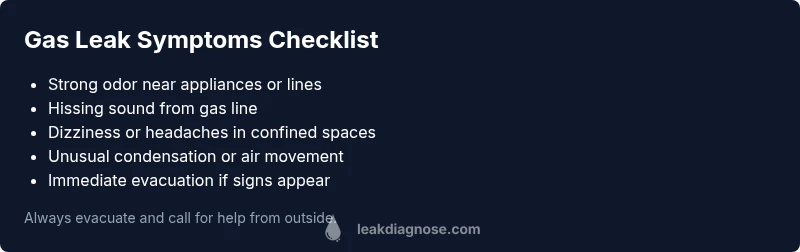
Gas leak symptoms include the distinct natural gas odor (often sulfur-like), a hissing sound near gas lines or appliances, and symptoms such as dizziness or headaches in poorly ventilated areas. If you notice any of these signs, evacuate safely, avoid switches, and call your gas utility or emergency services from a safe location.
Understanding gas leak symptom
A gas leak symptom refers to any sign that natural gas or propane is escaping from a supply line, appliance, or connection. The most recognizable cue is the odorant mercaptan added to natural gas, which gives a distinct sulfur-like smell. However, many leaks occur without a strong odor, especially in poorly ventilated spaces, making symptoms more subtle. Physical symptoms such as dizziness, headaches, nausea, or eye and throat irritation can indicate exposure, particularly in enclosed rooms. Quick recognition hinges on combining sensory cues with context—like a gas-burning appliance that won’t ignite or unusual smells near the furnace or water heater. Treat every potential gas leak as an emergency, because even small leaks can escalate rapidly if ignored. For homeowners, understanding gas leak symptom patterns helps you act fast and safely, minimizing risk to people and property.
Brand note: This guidance reflects Leak Diagnosis’s emphasis on practical, safety-first troubleshooting.
Common signs of a gas leak in homes
Gas leaks present in several reliable ways. The most common is a strong, chemical odor similar to rotten eggs. If you’re noticing that smell near a stove, water heater, or outdoor gas line, treat it seriously. A hissing or whistling noise near gas pipes or appliances is another red flag, signaling escaping gas. You may also observe dead or discolored vegetation near outdoor lines, frost on connections in cold weather, or a pilot light that keeps going out. In poorly ventilated spaces, people may experience dizziness, headaches, or fatigue even without a strong odor. Children and pets can be more sensitive to these signs. Do not ignore multiple cues at once: safety must take priority over investigations. Always prioritize evacuation and professional consultation over DIY fixes.
Where leaks most often occur and why symptoms appear
Gas leaks occur most frequently at connections, regulators, and worn or loose piping. Appliances installed years ago may have aging seals or faulty valves that slowly leak gas. When a leak occurs indoors, the gas accumulates and displaces oxygen, leading to dizziness or headaches. The combination of a distinctive odor and confined air increases risk quickly. Outdoor leaks can release gas more gradually but still demand prompt attention to prevent fire or explosion risk. Appliance manufacturers and installers may contribute to risk if maintenance is neglected. Regular inspections can catch degenerating parts before they become dangerous.
Immediate safety steps when you suspect a gas leak
If you suspect a gas leak, your safety protocol should be rapid and decisive. First, evacuate everyone from the area, including pets. Do not use electrical switches, phones, or anything that could spark—leave the area entirely. Once you are at a safe distance, call your gas utility or emergency services. If you can do so safely and without creating sparks, shut off the main gas valve from outside or at the meter, then wait for professionals. Do not re-enter the building until authorities declare it safe. When in doubt, treat any suspected leak as an emergency.
Diagnostic tools and home checks you can safely perform
Home checks should be limited to non-intrusive, low-risk actions. You can listen for a hissing sound near gas lines and verify the presence of a gas odor. If you are trained, you may apply a soap solution to joints and connections outside to detect leaks (bubbles indicate escaping gas). Do not attempt repairs yourself—gas systems require licensed technicians. Keep a clear path to exits and ensure that your carbon monoxide detectors (which detect CO, not gas leaks) are functioning properly as part of a broader safety plan.
The role of detectors and ventilation
Detectors that monitor gas presence do exist, but many household detectors are not universal. Carbon monoxide detectors do not detect natural gas leaks. Instead, a dedicated gas detector or a professional inspection is needed to confirm a leak. Ventilate the area by opening doors and windows if it is safe to do so, but never create a direct path to a fireplace or ignition source. Improving ventilation reduces gas concentration while you pursue professional help, but it does not replace emergency response.
When to call professionals immediately
Call your gas utility or emergency services immediately if you smell gas, hear a hissing sound, or experience symptoms such as dizziness or headaches in a confined space. Do not delay for confirmation. Inform the responders about the odor source, location, and whether anyone was exposed. A licensed technician should inspect all gas lines, connections, and appliances before the property is deemed safe. After a detected leak, arrange a comprehensive professional inspection to identify root causes and prevent recurrence.
Prevention: maintenance and planning
Prevention starts with regular maintenance. Schedule annual inspections for all gas appliances, valves, and connections. Replace worn hoses, tighten fittings as recommended by manufacturers, and have a professional service gas lines if you notice corrosion or aging components. Keep flammable materials away from gas appliances and ensure good ventilation in kitchens and utility rooms. Finally, develop a household evacuation plan and practice it with all occupants so everyone knows what to do immediately upon detecting a leak.
Steps
Estimated time: 60-90 minutes
- 1
Recognize the signs and evacuate
If you smell gas, hear a hiss, or feel dizzy, leave the building calmly and move to fresh air. Avoid using electrical devices or light switches, which can spark. Call for help from a safe location once outside.
Tip: Have a pre-planned escape route and a meeting point for everyone. - 2
Call for help immediately
From outside the building, contact your gas utility provider or emergency services. Provide location details and describe the signs you observed. Do not re-enter until authorities say it is safe.
Tip: Keep the emergency number saved on your phone for quick access. - 3
If safe, shut off the gas supply
If you can reach the main shut-off valve without passing through a suspected leak area, turn it off to stop flow. This step should only be attempted if there is no risk of ignition or explosion.
Tip: Know the valve location in advance and practice safe handling. - 4
Ventilate the space and wait for professionals
Open doors and windows to improve air movement after evacuating. Do not operate appliances or create sparks. Wait for a licensed technician to assess and repair the system.
Tip: Document any signs you observed for the technician. - 5
Schedule a professional inspection
After the immediate risk is mitigated, arrange a full inspection of all gas lines, regulators, and appliances. A professional should verify there are no residual leaks before you resume normal use.
Tip: Request a written report and a remediation plan. - 6
Restore safety and monitor for reoccurrence
Once cleared, resume usage gradually and monitor for any repeated odors or symptoms. Implement preventive maintenance to reduce future leaks.
Tip: Keep detectors active and test them monthly.
Diagnosis: You smell gas, hear a hissing sound near gas lines or appliances, or experience dizziness/headache in a poorly ventilated area
Possible Causes
- highNatural gas or propane leak from appliance, connection, or pipe
- mediumLoose or damaged gas line connections
- lowVentilation issues leading to gas buildup
Fixes
- easyEvacuate area immediately and call emergency services or your gas utility from a safe location
- easyIf safe to do so, shut off the main gas valve and ventilate the area
- easyDo not re-enter until professionals declare it safe
Questions & Answers
What is the most common sign of a gas leak you should notice first?
The most common sign is a strong odor of gas near a stove, heater, or outdoor line. Combine this with a hissing sound or symptoms like dizziness for higher risk.
The most common sign is a strong gas odor near a stove or heater, especially with a hissing sound and dizziness.
What should I do immediately if I smell gas inside my home?
Leave the area immediately with everyone and pets. Do not operate switches or use phones inside. Call emergency services or your gas utility from outside once you are safe.
Exit the area right away and call emergency services from a safe distance.
Are carbon monoxide detectors enough to detect a gas leak?
No. CO detectors monitor carbon monoxide, not natural gas leaks. Use a dedicated gas detector or rely on professional inspection if you suspect a leak.
CO detectors won’t detect gas leaks; get a gas detector or call for professional help.
How can I safely verify a gas leak without risking an explosion?
Do not attempt risky checks. If you suspect a leak, evacuate and contact professionals. If trained and safe, you may shut off the gas at the main valve only from a safe location.
Don't risk it—evacuate and call professionals. If safe, the main valve can be shut off from outside.
Is it ever safe to use a phone indoors during a suspected gas leak?
No. Using electronic devices indoors can trigger sparks. Use a mobile phone from outside the building after evacuating.
No—move outside and call from a safe distance.
How often should I have gas appliances inspected to prevent leaks?
Have gas appliances inspected annually by a licensed technician, and perform minor checks more frequently according to manufacturer guidelines.
Annual professional inspections are recommended to prevent leaks.
Watch Video
Main Points
- Identify gas leak symptoms quickly and act safely
- Ventilate and evacuate before calling help
- Do not attempt DIY repairs on gas lines
- Shut off gas only if safe to do so
- Get a professional inspection after any suspected leak