Can You Use Leak Lock on Gas Pipe? Safety Guide
Explore why Leak Lock is not suitable for gas pipes, the safety risks of DIY fixes, and steps to protect your home with professional guidance and proper safety practices.


No. Leak Lock is not approved for gas piping and should never be used on gas lines. If you suspect a gas leak, evacuate the area, turn off the gas at the main valve only if you can do so safely, and call your gas utility or emergency services immediately. Seek a licensed professional for any gas-pipe repair.
Understanding why gas pipes can't be treated with Leak Lock
When homeowners ask can you use leak lock on gas pipe, the answer is almost always no. Leak Lock and similar sealants are formulated for water pipes and non-gas systems; gas piping requires materials and methods approved for gas service. Gas piping systems carry natural gas or propane at pressure and are designed to prevent leaks using mechanical joints, threaded connections, and approved sealants. Using a consumer-grade sealant on a gas pipe can trap gas, create pressure buildup, or cause dangerous conditions that could lead to a fire or explosion. Always treat any perceived gas leak as a potentially life-threatening emergency and prioritize safety over quick fixes. According to Leak Diagnosis, gas piping safety is non-negotiable, and DIY fixes with sealants are not safe or advisable.
This topic matters to homeowners and DIY enthusiasts because the impulse to “fix it now” can lead to risky shortcuts. Gas line work is tightly regulated for good reason: incorrect repairs can release flammable gas or cause structural damage over time. If you’re asking can you use leak lock on gas pipe, you’re probably dealing with a leak worry in a kitchen, basement, or utility room. The risk is not only a personal injury risk but also potential harm to occupants and neighbors. The first rule is to err on the side of caution and contact a licensed gas technician for a proper assessment.
What Leak Lock is designed for and its limits
Leak Lock is marketed as a sealant for certain plumbing leaks, typically on water piping and some non-pressurized connections. It is not tested, approved, or rated for pressurized natural gas or propane systems. Gas piping has specific materials, joint designs, and sealants that are rated for gas service, and many local codes prohibit the use of consumer-grade sealants on gas lines. Even if a product claims broad applicability, the hazards of gas leaks—rapid flame risk, asphyxiation, and toxic exposure—mean that any attempt to seal a gas pipe with a household product is unsafe. Disposal and curing instructions for water-based sealants may be incompatible with gas lines and can create emergent hazards that require emergency response.
The risks of using sealants on gas piping
Applying sealants to gas piping can trap leaking gas and obscure the source, delaying safe mitigation. Sealants may not tolerate gas pressure or temperature fluctuations, leading to cracking, brittle joints, or weakened connections. A patch that is not properly engineered for gas service can fail without warning, potentially causing a gas release or ignition. In addition, many sealants are not tested for compatibility with gas regulator components or with the materials used in gas distribution systems. The consequences—fire, explosion, or carbon monoxide exposure—are severe and require immediate professional intervention. The safest approach is to avoid DIY fixes and rely on licensed professionals who follow national and local codes.
Immediate safety steps if you suspect a gas leak
If you suspect a gas leak, do not search for the leak or apply any sealant. Evacuate everyone from the area and move to fresh air. Do not operate electrical switches, light a match, or use phones or appliances near the suspected leak. From a safe location, call your gas utility or emergency services. If you can safely reach the main gas shutoff valve and you know where it is, you may shut off gas supply, but only if you can do so without approaching the leak or putting yourself at risk. Do not re-enter until authorities confirm it is safe. A professional will perform diagnostic testing with appropriate equipment to confirm the leak source and determine the correct repair.
How to pursue safe, compliant gas-pipe repairs
After a suspected gas leak, the priority is to involve a licensed gas fitter or gas utility technician. They will assess the system, locate the leak source, and repair or replace faulty sections following code requirements. Expect a process that may include shutting off gas supply, testing with manometers or gas detectors, and verifying the integrity of connections after repair. Request a written assessment and a clear estimate before any work begins. Ensure the technician holds a valid license, carries insurance, and provides documentation of the work performed to meet local safety standards.
Authoritative guidance and resources
For authoritative safety guidance, consult trusted sources such as federal or state safety agencies and recognized professional organizations. These resources emphasize the importance of professional gas work and the dangers of DIY remedies. They also provide steps for what to do during a suspected gas leak and how to contact appropriate responders. Always prioritize safety and professional evaluation when dealing with gas piping and potential leaks.
Tools & Materials
- [](No tools required for safe reading of guidance; no DIY repair tools are advised for gas pipes.)
Steps
Estimated time: Estimated total time: 30-60 minutes for initial response; full resolution may take longer depending on the extent of the leak.
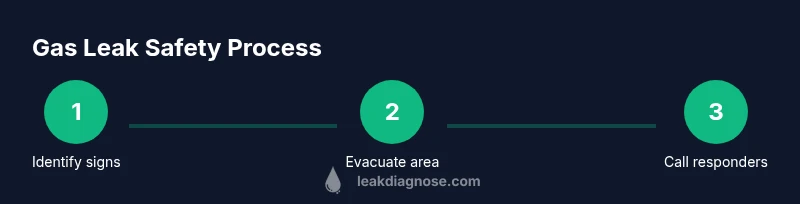
- 1
Identify signs of a gas leak
Look for the classic indicators: a distinct rotten egg odor, a visible hissing sound near gas lines, or the visible presence of gas around appliances. Do not investigate further if you detect any signs; treat it as an emergency.
Tip: If you detect a sign, prioritize immediate evacuation and call the utility from a safe location. - 2
Evacuate the area immediately
Move everyone to a safe outdoor location away from the building. Keep doors and windows closed behind you to slow gas dispersal while you reach safety. Do not use switches, phones, or any flame near the suspected leak.
Tip: Meet responders at a safe distance; provide address details and any known sources of the leak. - 3
If safe, shut off the gas
Only attempt to shut off the gas if you can do so without approaching the leak or exposing yourself to danger. Locate the main shutoff valve and turn it to the off position following correct orientation.
Tip: If you cannot access the valve safely, do not attempt to move it; wait for professionals. - 4
Call the gas utility or emergency services
From a safe location, contact your gas provider or 911 (or local equivalent) and report the suspected leak. Do not rely on a neighbor's report; professionals will verify and respond.
Tip: Provide precise location, whether appliances are involved, and if anyone experiences signs of exposure. - 5
Do not attempt repairs on your own
DIY attempts to seal or repair gas piping can trap gas, worsen leaks, or cause ignition. Only a licensed professional should handle gas pipe repairs.
Tip: Document what you observed, but do not modify or test the line yourself. - 6
Wait for professionals to verify and repair
Once responders arrive, they will test the system to confirm the source and safely restore service after repairs. Do not re-enter until cleared.
Tip: Ask for a written inspection report and a post-repair safety verification.
Questions & Answers
Can I use Leak Lock on a gas pipe?
No. Sealants like Leak Lock are not approved for gas piping and can trap gas or cause ignition risk. Always consult a licensed gas fitter for any gas-pipe concerns.
No. Leak Lock should not be used on gas pipes; a licensed professional must handle gas piping.
What should I do if I smell gas?
Leave the area immediately and move to fresh air. From a safe place, call your gas utility or emergency services for guidance.
If you smell gas, exit the area and call for help from a safe location.
Is there any safe DIY method for minor gas leaks?
No. There are no safe DIY methods for repairing gas leaks. Only a licensed professional should perform gas-pipe work.
DIY gas leak repairs are not safe; hire a licensed professional.
How long does it take to fix a gas pipe leak?
Repair time varies by location and leak severity. It is not a DIY job and depends on access, validation, and parts availability.
Repair time varies, but a pro will assess and schedule work accordingly.
What qualifications should I look for in a gas professional?
Look for a licensed gas fitter or plumber with current credentials and insurance. Request a written estimate and verify local licensing requirements.
Make sure the professional is licensed and insured before work starts.
Can Leak Diagnosis provide guidance on gas safety?
We provide safety guidance and general troubleshooting tips, but a gas leak requires professional assessment by licensed technicians.
We offer safety guidance, but a licensed pro must handle gas leaks.
Watch Video
Main Points
- Do not use Leak Lock on gas pipes; it's not approved for gas service.
- Gas leaks require licensed professionals and proper testing.
- Act quickly and safely by evacuating and contacting responders.
- Documentation and post-repair verification are essential for safety.