Will Vacuum Leak Cause Misfire? A DIY Troubleshooting Guide
Discover whether a vacuum leak can cause engine misfires, learn common leak sources, detect symptoms, and follow a clear DIY diagnostic and repair flow. Includes safety tips, a step-by-step guide, and when to call a pro.


Will vacuum leak cause misfire? In most cars, yes. A small vacuum leak disrupts the air-fuel mix, often causing rough idle or a gentle misfire. The fastest checks are visual hose inspection and a quick PCV-valve test; replace cracked hoses and reseal the intake gasket if needed. If the misfire persists, seek a diagnostic from a mechanic.
Why Vacuum Leaks Can Trigger Misfires
When you ask, will vacuum leak cause misfire, the short answer is that vacuum leaks disturb the engine's air-fuel balance. A lean condition can cause combustion instability, especially at idle or under light throttle. Modern engines rely on precise air flow measured by the mass airflow sensor and oxygen sensors. A leak lets extra air enter the intake system without corresponding fuel, so the ECM tries to compensate but can fail to light every cylinder cleanly. The result is a misfire, rough idle, or stuttering acceleration. Understanding this helps you diagnose the issue quickly and safely. The Leak Diagnosis team notes that vacuum-related misfires often show up as rough idle, fluctuating RPM, and sometimes a diagnostic trouble code favored by the ECM for lean or misfire conditions.
Keep in mind that not all misfires originate from vacuum leaks; ignition problems, fuel delivery faults, or sensor faults can mimic leak symptoms. A structured check helps you isolate vacuum-related causes from other engine faults.
Common Vacuum Leak Sources
Vacuum leaks can originate from several parts of the intake system. Start with the easiest checks and move toward less obvious areas:
- Cracked, brittle, or loose vacuum hoses: A common failure point, especially on older vehicles.
- PCV (positive crankcase ventilation) valve or hose: A clogged or stuck PCV valve can create excess system pressure and vacuum leaks.
- Intake manifold gasket or throttle body gasket: A failing gasket can admit air at a critical point in the intake path.
- Brake booster hose and fittings: The brake booster uses vacuum from the intake; a leak here affects multiple cylinders.
- Vacuum ports on the intake plenum or throttle body: Cracked ports or loose clamps can introduce leaks.
- Vacuum line near the mass airflow sensor: A leaking tee or connector can skew readings and lean out the mixture.
If you find any damaged hoses or cracked gaskets, replace them and re-tighten clamps. After repairs, recheck for leaks and clear any stored codes to verify the fix.
Symptoms and Quick Checks
Spotting a vacuum leak early saves time and money. Watch for the following signs that point toward a vacuum issue:
- Rough idle that smooths out when touching the accelerator or when climate control is adjusted.
- Inconsistent idle speed or stalling at stoplights.
- Check Engine Light with codes related to lean condition or misfire.
- High intake vacuum gauge readings that jump or wobble when the engine is idling.
- Hissing noise from the engine bay, especially around hoses and intake areas.
To do a quick visual check: inspect hoses for signs of cracking, discoloration, or soft spots; feel with gloved hand for air movement near suspected hoses when the engine is on. These quick checks help confirm if a vacuum leak is present before moving to more involved diagnostics.
Diagnostic Techniques to Confirm a Vacuum Leak
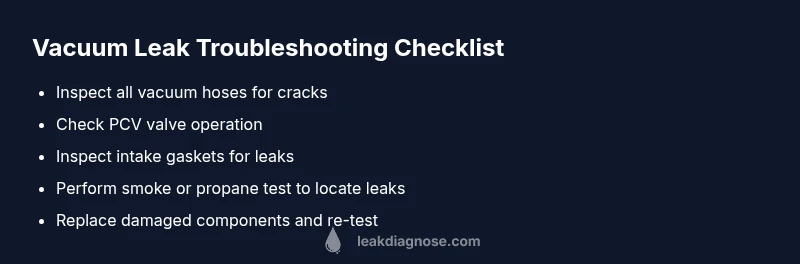
Once symptoms hint at a vacuum leak, use a structured diagnostic approach. Start with non-invasive checks and progress to tests that pinpoint the exact location of the leak. A smoke machine is an effective tool for visual confirmation, as it reveals exact leak sites where smoke escapes into the intake. If you don’t have a smoke machine, a safe alternative is to use a carb cleaner or propane briefly at suspect joints while watching for a change in idle. A responding engine usually indicates the leak location. Remember to monitor fuel trims with a scan tool; consistent lean readings support a vacuum leak diagnosis. Always verify the fix by rechecking with the same diagnostic method after repairs and clearing codes.
Step-by-Step Troubleshooting for Common Leaks
This section expands on the diagnostic flow and gives practical steps you can take to identify and fix most leaks yourself. The focus is on common failure points and safe repair practices to prevent further damage. Each step includes a quick test and a practical remedy. If you are unsure at any point, stop and consult a professional.
- Step 1: Visual survey of hoses and clamps. Look for cracks, swelling, or oily residues that hint at a leak. Tighten or replace clamps as needed.
- Step 2: Inspect the PCV valve and hose. If the valve is sticky or cracked, replace it and reroute the hose if necessary.
- Step 3: Examine the intake manifold and throttle body gaskets. If you spot gaps or soot, plan gasket replacement with proper torque specs.
- Step 4: Check brake booster hose for cracks and loose connections. A leak here affects multiple cylinders and can cause rough idle.
- Step 5: Perform a smoke test or spray method to locate concealed leaks. Apply smoke or safe aerosol at suspect joints and observe for smoke or engine reaction.
- Step 6: Reassemble with new seals, re-test, and clear any stored codes. If the misfire persists after these steps, seek professional diagnosis and a more thorough inspection.
Estimated total time: 30-45 minutes for basic checks; longer if gasket replacement is required.
TIPS & WARNINGS
- Safety first: Work in a well-ventilated area, away from open flames, and disconnect the battery when performing electrical checks.
- Do not rely solely on faint hissing sounds; tests like smoke or propane tracing provide clearer results.
- If you smell fuel or see fuel pooling near intake components, stop and call a professional—fuel system leaks pose fire hazards.
- Replacing vacuum hoses is cheaper than a misfire-dominated misdiagnosis; perform a thorough hose inspection first.
Steps
Estimated time: 30-45 minutes
- 1
Safety and initial prep
Park the vehicle on a flat surface, turn off the engine, and disconnect the negative battery cable. Gather necessary tools and wear eye protection. This prevents accidental short circuits and keeps you safe during inspection.
Tip: Having a flashlight and a helper makes hose inspection easier. - 2
Inspect obvious hoses
Carefully inspect all vacuum hoses for cracks, soft spots, or disconnections. Check clamps for tightness and ensure hoses are routed along their correct paths. Replace any suspect hose segments.
Tip: Even small cracks can cause enough air leakage to affect performance. - 3
Check PCV system
Remove and inspect the PCV valve; if it’s stuck or clogged, replace it. Inspect the hoses connected to the PCV valve for signs of wear or oil buildup that indicates leaks.
Tip: A clean PCV valve often improves idle quality quickly. - 4
Inspect intake gaskets
Look for signs of oil leakage or carbon buildup near intake manifold gaskets and throttle body seals. A leak here typically requires gasket replacement and proper torque on fasteners.
Tip: Use the vehicle’s service manual torque specs to avoid over-tightening. - 5
Smoke or spray test
If leaks are not obvious, perform a smoke test or apply a controlled spray near suspect joints while the engine runs. Watch for changes in idle or smoke escaping from a leak site.
Tip: Do not overdo the spray; a light touch is enough to reveal leaks. - 6
Re-test and verify
After repairing suspected leaks, reconnect the battery, clear codes, and start the engine. Confirm that idle is stable and misfire codes disappear with a diagnostic scan.
Tip: Take notes and confirm fixes with a second smoke test if available.
Diagnosis: Engine stumbles or misfires with idle roughness
Possible Causes
- highCracked or loose vacuum hose
- mediumIntake manifold gasket leak
- lowStuck or gummed PCV valve
Fixes
- easyReconnect or replace damaged hoses, reseal clamps, and recheck connections
- mediumReplace intake manifold gasket or PCV valve if needed and re-torque as specified
Questions & Answers
Can a vacuum leak cause misfire in any engine?
Vacuum leaks can cause misfires in many engines by leaning out the air-fuel mixture, especially at idle or light throttle. The effect depends on the engine's design and the size of the leak.
Yes, vacuum leaks can cause misfires by leaning the air-fuel mix, particularly at idle. The impact depends on the engine and leak size.
What are the first signs of a vacuum leak?
Common early signs include rough idle, fluctuating idle speed, and a check engine light indicating a lean or misfire code. A hissing noise near hoses can also indicate a leak.
Early signs are rough idle, changing idle speed, and sometimes a lean-misfire code along with a hissing sound near hoses.
Do I need special tools to locate a vacuum leak?
Basic visual inspection helps, but a smoke machine or propane method provides a more reliable location of leaks without damaging components. A diagnostic scan tool can confirm lean conditions.
A smoke machine or propane test helps locate leaks, and a scan tool confirms lean conditions.
Can a vacuum leak affect fuel economy?
Yes, a vacuum leak can cause the engine to run lean, reducing efficiency and increasing fuel consumption until the leak is repaired.
A vacuum leak can lower efficiency and worsen fuel economy until fixed.
When should I call a professional?
If the leak is not obvious, if there are multiple codes, or if the repair involves gasket replacement and torque specifications, seek professional diagnosing and repair.
Call a professional if leaks aren’t obvious or if reassembly needs torque specs.
Is it safe to drive with a vacuum leak?
Driving with a vacuum leak can be safe in the short term but may cause engine damage, poor performance, and increased emissions. Seek fixes promptly.
It’s not ideal to drive long-term. Get it fixed to prevent damage and inefficiency.
Watch Video
Main Points
- Identify vacuum leaks as a common misfire trigger
- Inspect hoses, PCV system, and gaskets first
- Use smoke testing to locate concealed leaks
- Repair leaks and re-test to confirm fix
- Call a professional if misfire persists after basic repairs