Can EVAP Leak Cause Misfire? Diagnosis & Fix Guide
Explore whether an EVAP leak can cause misfire, how to test evaporative emissions systems, and practical fixes to prevent engine rough running and misfires.


The most likely cause is an EVAP system leak (gas cap, hose, or charcoal canister) causing vacuum irregularities that trigger misfire codes. Start by inspecting the gas cap, then test EVAP hoses and the purge valve. If the problem persists, perform an EVAP leak test and consult a mechanic.
What EVAP does and how it relates to misfire
The evaporative emissions (EVAP) system is designed to capture fuel vapors from the fuel tank and route them into the engine to be burned cleanly. Its job is not to mix air and fuel under normal running, but to prevent hydrocarbon vapors from escaping. When parts of the EVAP network develop leaks or faults, they can create vacuum irregularities that fool the engine computer into adjusting fuel trims. Those adjustments, especially when combined with a lean condition, can contribute to rough idle, hesitation, or even misfire under certain loads. Understanding how the EVAP system works helps you see why a leak can indirectly trigger misfire codes and trigger the check engine light. Because EVAP leaks often worsen with temperature and fuel level, a symptom that seems to come and go is common and can complicate diagnosis. In a modern vehicle, electrical components such as purge and vent solenoids also interact with the engine’s intake system, amplifying the potential impact of leaks.
Can an EVAP leak cause misfire? The link explained
Yes, in many cases an EVAP leak can contribute to a misfire but not always directly. The phrase 'can evap leak cause misfire' is answered by looking at how vacuum leaks affect air-fuel balance and ignition timing. A leak that draws extra air reduces the fuel mixture's richness, prompting the engine control unit to adjust fuel trims. When adjustments saturate, combustion becomes inconsistent, and a misfire code may appear alongside EVAP-related diagnostics.
Common EVAP failure modes that trigger misfires
- Loose or cracked gas cap creating a vacuum leak that spoofs the intake system and leans the mixture.
- Damaged or pinched EVAP hoses that allow unmetered air to enter the intake.
- Faulty purge valve or vent solenoid that stays open or sticks, pulling vapors into the intake at the wrong time.
- Failing charcoal canister allowing vapor leaks or pressure imbalances.
- Worn connectors and damaged seals around EVAP components that create intermittent leaks.
These failure modes don’t always produce a dedicated EVAP code, but they can destabilize fuel trims and ignition timing enough to contribute to a misfire under certain conditions.
Symptoms to look for besides misfire
- Check engine light with EVAP-related codes (P0440–P0445 range commonly seen with EVAP faults) or misfire codes (P0300 range).
- Rough idle, hesitation, or stumble at light throttle when the engine is warm or under vacuum load.
- Noticeable fuel smell around the fuel filler neck or during pressure changes in the tank.
- Decreased fuel economy and spotty performance during acceleration or cruising.
- Inconsistent fuel trim readings on an OBD-II scanner, especially during warm-up cycles.
If you notice multiple symptoms together, an EVAP issue becomes more likely and deserves a focused diagnostic check.
Diagnostic approach: testing the EVAP system safely
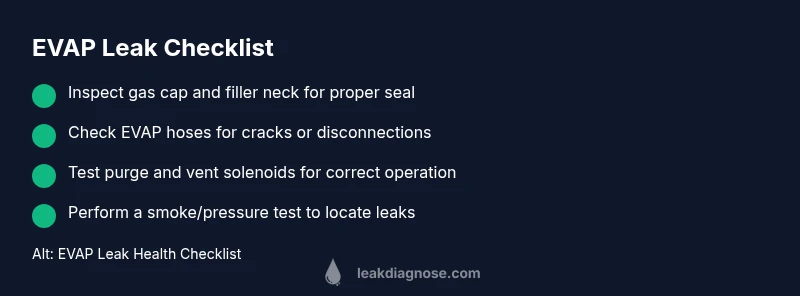
- Start with a visual inspection of the gas cap, filler neck, and accessible hoses for cracks, tears, or disconnections.
- Use a scan tool to read EVAP-related codes and monitor live fuel trim data to spot lean or rich conditions and how they respond to vacuum changes.
- Perform a gas cap test by tightening firmly and observing if the corresponding codes clear after multiple drive cycles.
- If available, conduct a smoke test or EVAP pressure test to locate leaks in hoses, canisters, and valves.
- Verify purge and vent solenoids operate correctly by cycling power and watching for proper opening/closing behavior while monitoring the intake manifold vacuum.
- Document results and decide if professional service is needed for canister replacement or more complex EVAP repairs.
Step-by-step repair scenarios: fixing the most common EVAP leak
- Tighten or replace a loose gas cap and clear EVAP codes with a reset procedure; verify via a drive cycle. Tip: A fresh gas cap is inexpensive and often overlooked.
- Replace cracked or damaged EVAP hoses; inspect connections and clamps; ensure no kinks remain. Tip: Use OEM or high-quality hoses to prevent premature failure.
- Replace faulty purge valve or vent solenoid that malfunctions or sticks closed/open; test valve operation after installation. Tip: Verify electrical connector pins are clean and seated.
- Inspect the charcoal canister for cracks or liquid saturation; replace if compromised and perform a system leak test afterward. Tip: Do not void warranty with aftermarket parts without checking compatibility.
- Reconnect all lines, clear codes, and run a full drive cycle to confirm resolution and monitor for new codes. Tip: Take a long, varied drive to test under different loads and temperatures.
- If codes persist or misfires recur, seek professional diagnosis; the issue may involve the engine’s mechanical or fuel delivery systems beyond EVAP.
Safety, best practices, and when to call a professional
Safety is paramount when dealing with fuel systems. Always work in a well-ventilated area, away from sparks and flames. Wear eye protection and gloves when handling fuel system components. If you smell fuel fumes, stop work and ventilate the area. While EVAP repairs are often within DIY reach, persistent misfires after EVAP work may indicate engine mechanical issues or fuel delivery problems that require a licensed technician.
Prevention: keeping EVAP healthy to prevent misfires
- Perform regular inspections of the gas cap seal, hoses, and valves for signs of aging or damage.
- Use quality fuel and avoid strong fuel additives that can degrade hoses or seals over time.
- Schedule periodic EVAP diagnostic checks during routine maintenance to catch leaks early.
- Address any check engine light promptly to prevent misfires from cascading into more complex problems.
Quick recap: why this matters
Understanding how an EVAP leak can influence engine performance helps you diagnose misfires more efficiently and avoid unnecessary repairs. A methodical approach—visual inspections, leak testing, and careful observation of fuel trims—typically yields a reliable solution without guesswork.
Steps
Estimated time: 45-90 minutes
- 1
Identify symptoms and codes
Record when the misfire occurs, note throttle condition, and read any EVAP or misfire codes with a scan tool. Document temperature, fuel level, and driving conditions to help correlate with potential EVAP leaks.
Tip: Keep a small log; timing of symptoms can reveal a temperature-related leak. - 2
Check the gas cap and filler neck
Tighten the gas cap firmly and inspect the gasket for damage. If needed, replace with a recommended cap and re-test to see if codes clear after several drive cycles.
Tip: A worn cap seal is one of the simplest fixes with a quick payoff. - 3
Inspect EVAP hoses and canister connections
Look for cracks, splits, or loose clamps along the EVAP lines and around the charcoal canister. Replace damaged hoses and secure all fittings to prevent leaks.
Tip: Use the right hose diameter to avoid pinching or loose clamps. - 4
Test purge and vent solenoids
Cycle power to the solenoids and verify they open/close as commanded using a scan tool and vacuum gauge. A stuck valve can trigger leaks or abnormal fuel trims.
Tip: Electrical connections should be clean; corrosion can mimic a faulty valve. - 5
Perform a leak test on EVAP system
If a leak is suspected, perform a smoke test or pressure test to locate the exact leak source. Repair or replace the offending component and re-test.
Tip: Smoke tests are safer for locating small leaks than listening for hissing sounds. - 6
Evaluate results and plan next steps
Clear all codes, perform a drive cycle, and monitor for reoccurrence. If codes return or misfire persists, escalate to a professional for deeper diagnostics.
Tip: Sometimes the fix is simple; other times it reveals a deeper system issue.
Diagnosis: Vehicle experiences rough idle, hesitation, or stalls with a check engine light that may hint at misfire and EVAP issues.
Possible Causes
- highEVAP system leak (gas cap, hoses, canister) causing vacuum irregularities
- mediumLoose vacuum line or cracked hose affecting fuel trim
- lowFuel pressure or injector issue causing misfire independent of EVAP
Fixes
- easyInspect gas cap seal and tighten/replace; clear codes
- easyCheck vacuum hoses for cracks; replace as needed
- mediumRun EVAP diagnostic with scanner, perform leak test; repair canister/line
- hardIf misfire persists, seek professional diagnosis; potential engine mechanical issue
Questions & Answers
Can an EVAP leak directly cause engine misfire?
An EVAP leak may contribute to a misfire by altering air-fuel balance, but it is often an indirect cause. Vacuum leaks impact fuel trims and timing, which can trigger misfire codes under certain conditions.
An EVAP leak can contribute to a misfire indirectly by changing the air-fuel balance and timing. It’s not always the sole cause, but it’s a common contributor.
What are the common signs of EVAP problems?
Common signs include a check engine light with EVAP codes, rough idle, fuel smell near the fuel filler, and reduced fuel economy. Symptoms can vary with temperature and fuel level.
Look for EVAP codes, rough idle, and fuel odors around the filler neck. Symptoms can come and go with temperature and fuel level.
How do I test the EVAP system for leaks?
Start with a visual inspection, test the gas cap, and use a diagnostic scanner to monitor fuel trims. If available, perform a smoke or pressure test to locate leaks precisely.
Begin with a visual check, test the gas cap, and use a scanner. If needed, do a smoke test to find leaks.
Is a loose gas cap a common EVAP issue?
Yes. A loose or damaged gas cap is a frequent source of EVAP codes and vacuum leaks that can affect engine performance and fuel economy.
A loose gas cap is a common EVAP problem and can affect performance and economy.
When should EVAP components be replaced?
Replace components showing visible damage, persistent leaks, or failing diagnostic tests. If misfire continues after EVAP repairs, check fuel delivery and ignition systems as well.
Replace damaged EVAP parts and re-test. If misfires persist, check other engine systems.
Watch Video
Main Points
- Inspect the gas cap first for a quick fix
- EVAP leaks can cause lean conditions that mimic misfires
- Use a systematic leak test to locate the source
- Call a professional if misfire persists after EVAP checks