What Does a Leak in the EVAP System Mean?
Understand what a leak in the EVAP system means for your vehicle, how it impacts emissions, and steps to diagnose and safely fix the issue.


If the EVAP system leaks, the car is losing fuel vapors through a fault in the evaporative emission control system. The most common causes are a loose or faulty gas cap, cracked hoses, or a failed purge valve. Start with the gas cap, then inspect hoses and purge valves, and use an OBD-II scanner or shop diagnostic method to confirm the leak before replacing parts.
What does leak in evap system mean? An EVAP (evaporative emissions) leak occurs when fuel vapors escape from the vehicle's sealed emission-control system. The exact question, what does leak in evap system mean, points to a fault that can trigger a Check Engine Light and may cause a failed emissions test. According to Leak Diagnosis, these leaks undermine fuel efficiency and contribute to air pollution, making timely diagnosis important for both performance and environmental responsibility.
Common EVAP leak symptoms and indicators
- Check Engine Light or emissions codes (P0440–P0446 range) illuminating on the dashboard.
- Unusual fuel odor around the vehicle, especially near the fuel filler area.
- Difficult starting, rough idle, or poor acceleration due to vacuum leaks.
- Increased fuel consumption or noticeable drop in mpg.
- Visible hissing or flow sounds around the gas cap, hoses, or purge valve when the engine is running.
If you notice any of these, don’t ignore them. Early identification helps you avoid more costly repairs later and keeps your car compliant with emission standards.
Where EVAP leaks tend to originate and how to spot them
EVAP leaks come from several common sources:
-
Gas cap issues: a loose, cracked, or worn gas cap is the primary and easiest fix in many cases.
-
Damaged or cracked hoses: vacuum lines and hoses can crack from age, heat, or road debris.
-
Faulty purge valve or vent valve: these valves control fuel vapor flow and can fail open or closed.
-
Charcoal canister damage: the canister stores fuel vapors and can crack or saturate over time.
-
How to spot issues: look for cracked hoses, oil or dirt around connections, and check for a tight gas cap. A handheld vacuum gauge can help, but many leaks require diagnostic tools like a smoke test or OBD-II scanner to confirm.
How professionals diagnose EVAP leaks and why tests matter
Technicians typically perform a diagnostic flow using pressure testing and, if needed, a smoke test to visualize leaks. An OBD-II scanner checks for EVAP-related codes and confirms whether a fault is time-bound or persistent. Smoke testing is particularly effective for finding hidden leaks in hoses, the purge valve, or the charcoal canister. Documentation from the scan helps you understand the exact failure mode and plan the repair with confidence.
At-home checks you can perform safely (before calling a shop)
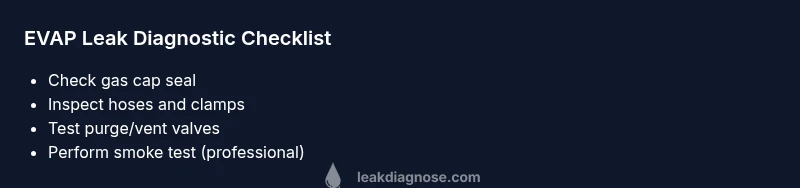
- Inspect the gas cap: tighten to recommended torque, replace if cracked, and ensure the seal is intact.
- Visually inspect hoses and connections for cracks, wear, or loose clamps.
- Check the purge valve operation: with the engine off, gently depressurize lines to feel for leakage and ensure valves click when activated.
- Use an OBD-II scanner if you have one: read EVAP codes and clear if repairs are complete to confirm codes reset after the fix.
Always work in a well-ventilated area and avoid ignition sources when dealing with fuel vapors. If you smell strong fuel vapors or the leak seems persistent, seek professional assistance.
Step-by-step home diagnostic flow (practical approach)
- Confirm the gas cap is snug and seals properly; replace if the gasket is worn. 2. Inspect all visible hoses for cracks; replace damaged lines and reseal clamps. 3. Listen for hissing sounds around the EVAP components with the engine running; note locations for further testing. 4. Use a basic OBD-II scanner to check for EVAP codes; note code numbers for parts-specific guidance. 5. If the codes persist or you cannot locate the leak, schedule a professional smoke test for precise localization. 6. After repairs, reset codes and drive the vehicle to ensure the Check Engine Light remains off. 7. Keep a log of parts replaced and tests performed for future maintenance.
Step-by-step fix: addressing the most common gas-cap related leaks
- Replace a worn gas cap with a new OEM-recommended cap; ensure the seal is intact. 2. Clean the cap threads and sealing surface to remove debris that can compromise seal performance. 3. Re-tighten to the specified torque and test by refueling and monitoring the fuel system for any odor or smell. 4. If the light returns, inspect for secondary leaks in hoses and purge valve with appropriate tests. 5. If you confirm a gas-cap leak is not the issue, move to hoses and valves for further diagnosis.
When to escalate: safety and fuel system considerations
If you smell strong fuel vapors or if there is any sign of a fuel leak, stop driving the vehicle and have it inspected by a professional. Fuel vapors are flammable and can pose a fire risk. Do not attempt to drive long distances while you suspect EVAP leaks. An experienced tech can perform sensitive tests safely and accurately. Remember, working with fuel systems requires proper ventilation and protective equipment.
Prevention tips to reduce EVAP leak risk over time
- Schedule regular maintenance checks for the EVAP system and replace worn hoses on schedule.
- Use a high-quality gas cap and replace gaskets as needed.
- Address any Check Engine Light alerts promptly to prevent extended exposure to leaks.
- Keep the engine bay clean to spot leaks early and prevent dirt from masking issues.
- Use the vehicle according to manufacturer guidelines to minimize wear on EVAP components.
Steps
Estimated time: 30-60 minutes
- 1
Check gas cap condition and tightness
Visually inspect the gas cap for cracks and the seal for wear. Tighten firmly to the specified torque and replace if damaged. After replacement, reset codes and observe whether the Check Engine Light returns.
Tip: If your cap uses a locking mechanism, verify it seals properly to avoid future leaks. - 2
Inspect visible EVAP hoses
Look for cracks, splits, or loose clamps on hoses connected to the purge valve and canister. Replace damaged sections and secure clamps to prevent air leaks.
Tip: Use a flashlight and mirror to inspect hard-to-see areas behind the engine bay components. - 3
Test purge/vent valves
With the engine off, gently manipulate purge/vent valves to confirm they click and hold position. If a valve feels loose or stuck, replace it.
Tip: Avoid attempting to force valves open; faulty valves may cause more leaks. - 4
Perform a diagnostic scan
Connect an OBD-II scanner and read EVAP-related codes. Note the code and any freeze-frame data to guide the repair.
Tip: Clear codes after repairs to verify the fix, and drive the vehicle to recheck the system. - 5
Consider a smoke test for hidden leaks
If the leak isn’t obvious, a professional smoke test can reveal hard-to-see breaches in hoses, canister, and seals.
Tip: A smoke test is especially effective for locating small, persistent leaks. - 6
Repair the identified leak
Replace damaged hoses, canister components, or purge valves as indicated by the diagnostic results. Reassemble and seal all connections.
Tip: Document the part numbers and replacements for warranty or future maintenance. - 7
Reset and verify
Reset EVAP codes with the scanner and take a test drive to ensure the issue is resolved and the light stays off.
Tip: If the light returns, revisit the diagnosis; there may be a secondary leak or a sensor fault.
Diagnosis: Check Engine Light illuminated with EVAP-related codes (e.g., P0440–P0446) or a noticeable fuel vapors smell
Possible Causes
- highGas cap loose or faulty seal
- mediumCracked or disconnected EVAP hoses
- mediumFaulty purge valve or vent valve
- lowDamaged charcoal canister
Fixes
- easyTighten or replace gas cap and test for seal integrity
- mediumInspect and repair/replace EVAP hoses and clamps
- mediumReplace purge or vent valve if operation is faulty
- hardPerform smoke test to locate leaks and repair canister or related components
Questions & Answers
What does EVAP stand for and how does it relate to leaks?
EVAP stands for evaporative emissions control. Leaks occur when vapors escape due to a faulty seal, hose, or valve, triggering the Check Engine Light and potentially failing emissions tests.
EVAP stands for evaporative emissions control. Leaks let fuel vapors escape, which can turn on your check engine light and affect emissions.
Can EVAP leaks cause a noticeable fuel smell inside or around the car?
Yes. A crack or loose connection in the EVAP system can let fuel vapors escape, producing a noticeable odor especially near the filler neck or under the hood.
Yes, leaks can cause fuel vapors to smell around the car.
Is it safe to drive a car with an EVAP leak?
While some EVAP leaks are minor, driving with a suspected leak risks further emissions system damage and possible engine performance issues. Have the vehicle inspected promptly.
It's best to have it checked promptly because leaks can worsen and affect emissions and performance.
How long does an EVAP leak repair typically take?
Repair time varies by source of the leak. Simple gas-cap fixes can be quick, while hose replacements or canister work may require a few hours at a shop.
Repair time depends on the leak source; simple fixes are quick, while hose or canister work may take longer.
What is a smoke test and why is it used for EVAP leaks?
A smoke test introduces smoke into the EVAP system to visibly locate leaks that are not easily seen with the naked eye. It’s highly effective for pinpointing hidden faults.
A smoke test pushes smoke through the system to reveal leaks you can't see, which helps pinpoint the exact fault.
Watch Video
Main Points
- Check gas cap first for quick EVAP fixes
- Use diagnostic tests to locate hard-to-see leaks
- Address EVAP leaks promptly to protect emissions
- Regular maintenance reduces EVAP leak risk