Stop Leak for Power Steering: A Practical DIY Guide
Learn how to stop a power steering leak safely with practical maintenance, temporary stop-leak products, and proven long-term fixes to protect steering performance.


Stop leak for power steering by identifying the leak source and applying a safe, temporary fix while planning a long-term repair. Start with a careful inspection, confirm the hydraulic fluid type, and use a compatible stop-leak additive only if the leak is minor and the system can accept it. This quick guide shows how.
Why Stop Leaks in Power Steering Matter
According to Leak Diagnosis, even small power steering leaks can escalate quickly if left unchecked, potentially reducing steering responsiveness and risking component damage. The Leak Diagnosis team found that leaks undermine manual control and can lead to higher repair costs when ignored. This is especially true for vehicles with hydraulic steering systems, where fluid loss can affect pump pressure and rack integrity. Acting early preserves steering feel, prevents air ingress, and reduces the chance of failure on the road. In this section, we'll outline the core reasons to address leaks promptly and how DIY adjustments can save you time and money while keeping your vehicle safer to drive.
How Power Steering Leaks Happen
Power steering leaks most often originate at rubber seals and flexible hoses that wear with heat cycles and road grime. A failing pump seal can drip near the pulley, while hose clamps loosen over time, letting fluid escape along the line. The reservoir cap and O-rings can also fail, especially if the system is overfilled or contaminated. You may notice reddish or brownish fluid pooling under the front wheels or a whiny steering pump when you turn the wheel. Recognizing these sources helps you target repairs without unnecessary disassembly. Use a clean white cloth to wipe surfaces and trace droplets to the exact component. If you observe gear oil or coolant in the reservoir, that indicates a more serious cross-contamination problem that requires professional service.
Stop-Leak Products: What They Do
Stop-leak products for power steering are mixtures designed to condition seals and lubricate moving parts as the fluid circulates. They are intended as temporary relief for small leaks and to extend the life of the system while you arrange a proper repair. The right product can slow seepage from worn O-rings or hoses and may help quiet a noisy pump, but they do not fix a damaged hose or a broken seal. Always check compatibility with your vehicle’s fluid type and manufacturer guidelines. Read the label for dose instructions, circulation time, and any mixing prohibitions. After adding a stop-leak product, monitor the fluid level closely and recheck for new leaks within 24–72 hours of driving.
Short-Term vs Long-Term Solutions
Temporary stop-leak products should be viewed as a stopgap, not a permanent repair. If a leak persists after a few days of use, or if you notice fluid loss during daily driving, you should plan for a professional diagnosis. A long-term repair might involve replacing worn seals, hoses, the steering rack, or the power steering pump. These components endure high pressure and heat, and repeated leak cycles can indicate a larger problem in the system. Budgeting for a proper repair now can prevent expensive damage later, including possible steering failure. In the meantime, keep your fluid at the recommended level and avoid aggressive driving that strains the system.
Tools and Safety Precautions
Before you begin, turn off the engine and allow the system to cool. Wear gloves and safety glasses to protect from hot fluid and clean spills. Work on a level surface and use a drain pan to catch any drips. Only use products that are compatible with your fluid type and do not mix different additives. When in doubt, consult your owner’s manual or a professional technician, especially if you notice damaged hoses, torn seals, or metallic shavings in the fluid. The goal is to reduce risk while you plan a permanent repair.
Step-By-Step Overview (DIY Quick Reference)
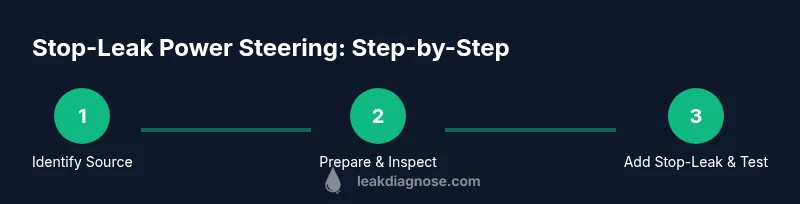
- Locate the source: visually inspect hoses, clamps, rack and pinion, and the power steering pump area. Clean the area to spot drips clearly.
- Prepare the workspace: ensure the vehicle is on level ground, engine cool, and you have a drain pan and rags ready.
- Confirm fluid type: verify the correct power steering fluid specification to avoid compatibility issues.
- Decide on the fix: minor seepage may use a compatible stop-leak product; bigger issues require component replacement.
- Add stop-leak if chosen: pour according to label directions into the reservoir, then run the engine and turn the steering wheel a few times to circulate.
- Recheck: inspect for further leaks and verify fluid levels after driving a short distance.
Safety Warnings and Handling
Handle petroleum-based fluids with care; avoid skin contact and dispose of rags properly. Do not smoke or operate hot machinery near spilled fluid. If you are unsure about the source or the severity of the leak, stop work and seek professional assistance. Safety comes first, especially around pressurized hydraulic systems.
Monitoring After Treatment
After any intervention, monitor the system for new damp spots around hoses and fittings, and regularly check the reservoir level. If you see continuing loss, or if the steering feels suddenly heavy or noisy, stop using the vehicle and arrange a diagnostic with a qualified technician. Keeping a log of when you noticed the leak helps with diagnosing trends and planning repairs.
When to Seek Professional Help
If you notice a large or persistent leak, contaminant ingestion (oil or coolant in the reservoir), or any change in steering feel that affects control, contact a professional mechanic promptly. Persistent leaks can cause low fluid levels, air ingress, and damage to the pump or rack. A certified technician can perform a pressure test, identify the exact source, and recommend a safe, lasting repair.
Tools & Materials
- Power steering fluid(Ensure type matches vehicle manufacturer specification.)
- Stop-leak additive for power steering(Choose a product compatible with your fluid type; read label.)
- Drain pan(To capture old fluid during inspection/maintenance.)
- Rags or shop towels(Clean spills and wipe surfaces for leak tracing.)
- Basic wrench set (metric/SAE)(Loosen hose clamps and fittings as needed.)
- Gloves and safety glasses(Protect hands and eyes from hot fluids and splashes.)
- Flashlight or work light(Improve visibility in tight hose areas.)
- Torque wrench (optional)(Use if explicit torque specs are required for fittings.)
Steps
Estimated time: 30-60 minutes
- 1
Identify leak source
Inspect hoses, connections, pump seals, and the rack area. Clean the suspected spots with a rag to clearly see fresh drips.
Tip: Use a flashlight to chase tiny droplets; mark the source with tape for later reference. - 2
Prepare the workspace
Park on level ground, engine off, and cool. Place a drain pan under the suspected area and gather your tools.
Tip: Wear gloves and keep a clean workspace to avoid contaminating the fluid. - 3
Check fluid type and level
Verify you’re using the correct power steering fluid and note the current level before adding anything.
Tip: Do not mix fluids from different manufacturers or types. - 4
Decide on the fix
If the leak is minor and compatible with your system, consider a stop-leak product. If hoses or seals are visibly damaged, plan a professional repair.
Tip: Follow the product label precisely and stop if you see worsening leaks. - 5
Add stop-leak (if chosen)
Pour the product into the reservoir as directed, then start the engine and rotate the steering wheel to circulate it.
Tip: Do not exceed the recommended dose; replace the cap securely after adding. - 6
Test and recheck
Drive a short distance, recheck for leaks, and verify the fluid level again. Schedule a professional inspection if leaks persist.
Tip: Keep a log of observations to aid diagnosis.
Questions & Answers
Is stop-leak safe for power steering systems?
Stop-leak products can be safe for minor leaks when used as directed and compatible with your fluid. They are not a universal fix and may not suit all systems. Always check the label and vehicle guidelines.
Stop-leak can be safe for small leaks if used exactly as directed and if it matches your steering fluid. It’s not a universal fix, so check the product and vehicle guidelines.
Will stop-leak fix a major power steering leak?
No. Major leaks usually indicate damaged hoses, seals, or components that require replacement or professional repair. Stop-leak is a temporary measure and should not be relied on for major leaks.
No, major leaks need proper repair. Stop-leak is only a temporary measure and should not be trusted as a long-term fix.
Should I flush the system after using stop-leak?
Flushing is not always required, but it may be recommended if the fluid is contaminated or if the manufacturer advises it after a leak. Consult your manual or a mechanic.
Flushing isn’t always necessary, but it can help if the fluid is contaminated or the manual recommends it after a leak. Check with a mechanic.
How long does stop-leak take to work?
Most products circulate quickly with normal driving; you may notice reduced seepage within a few days, depending on leak size and driving conditions.
You’ll usually see some effect after a few days of driving, but it depends on how big the leak is and how you drive.
What are signs stop-leak isn’t working?
If the fluid level continues to drop, or you still see fresh leaks after several days, stop using the product and seek a professional diagnosis.
If fluid keeps dropping or new leaks appear after several days, stop and get a professional check.
When should I seek professional help?
If you notice a large leak, persistent loss of steering assist, or contamination of coolant or oil in the reservoir, arrange a diagnostic with a qualified technician.
Call a professional if there’s a large leak or any contamination in the reservoir.
Watch Video
Main Points
- Identify the leak source before taking action.
- Stop-leak products are temporary and not a substitute for repair.
- Always use compatible fluids and follow manufacturer guidance.
- Safety first: wear PPE and work on a level surface.
- If leaks persist, seek professional diagnosis promptly.