What Can Leak Power Steering Fluid? A DIY Troubleshooting Guide
Urgent, practical troubleshooting guide for homeowners troubleshooting power steering fluid leaks. Learn common sources, safety steps, diagnostic flow, step-by-step fixes, and when to call a pro.


Power steering fluid leaks most often come from worn hoses or clamps, loose connections, or a failing rack seal. Start by inspecting lines, tightening clamps, and checking the reservoir. If the leak persists, refill with the correct fluid and monitor levels. Also look for damaged ends, cracks, or seepage near the pump and rack area.
What can leak power steering fluid? Overview
Power steering systems rely on hydraulic fluid to assist steering effort. When you ask what can leak power steering fluid, the usual culprits are worn hoses, cracked or loose clamps, faulty seals, a failing power steering pump, or leaks at the rack. Leaks might show up as fresh fluid on the driveway, damp spots under the hood, or a consistently low fluid level. Regular checks are essential: catching a leak early prevents steering hardening, noise, and damage to the pump or rack. Throughout this guide you’ll see references to the phrase what can leak power steering fluid; use these signs to guide safe, practical fixes. The Leak Diagnosis team emphasizes safety and methodical checks to avoid unnecessary part replacements and costly mistakes.
Common sources of power steering fluid leaks
Power steering fluid leaks can originate from several parts working together. Common sources include worn or cracked hoses and hose clamps, loose or damaged hose ends, a cracked reservoir, bad or aging seals on the pump, and worn rack-and-pinion seals. Less frequent but possible sources include a faulty power steering pump shaft seal, a damaged reservoir line, or a leaking reservoir cap. Differentiating the source quickly helps you decide whether you can fix it yourself or need a pro. In many cases, the location of fresh fluid will point you toward the failing component. If you’re wondering what can leak power steering fluid in your vehicle, start by visually inspecting the lines and joints for seepage and stains, then trace toward the pump and rack.
Safety first: what to do before you start
Do not drive the car if you notice a significant leak or steering feel changes. Park on a flat, level surface, turn off the engine, and set the parking brake. Wear gloves and eye protection; power steering fluid can stain skin and paint. Let the system cool before handling hoses or the reservoir, and keep rags handy to contain drips. If you must check the reservoir, wipe the cap area first to prevent contamination, then check the fluid color and level with the dipstick or marks on the reservoir. A safe, systematic approach minimizes risk and guarantees you can identify where the leak originates. This way, you can address the issue efficiently and safely without guessing what can leak power steering fluid in your car.
Diagnostic flow: from symptom to source
Start with the symptom: is there a puddle under the car, dampness near the wheel, or a low fluid level? Trace the leak path and check the most common culprits first: hoses and clamps, then pump seals, then rack seals. If the fluid is bright red or amber, it’s likely power steering fluid. If the color is dark, it may be contaminated or mixed with other fluids. Use a clean board or cardboard under the car to isolate the exact leak point. After tightening clamps or replacing hoses, refill the reservoir and run the engine at idle to observe whether seepage recurs. If seepage persists or you notice noise or steering difficulty, escalate to professional inspection. This diagnostic approach aligns with what can leak power steering fluid in real-world scenarios and keeps you safe while you work.
Step-by-step fixes for the most common causes
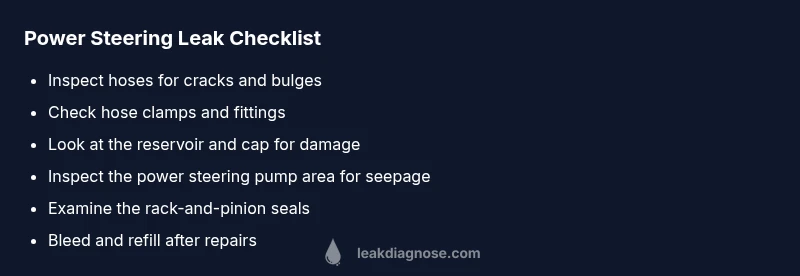
- Tighten or replace loose hose clamps: easy to do, often stops simple leaks. Tip: use new clamps and tighten evenly after a short test drive. 2) Replace worn or cracked hoses: medium difficulty; replace the hose with the correct length and diameter. Tip: route hoses away from heat sources and track any kinks. 3) Replace reservoir cap or damaged reservoir: easy; verify the cap seal is intact and that the reservoir has no cracks. Tip: clean the area before reinstalling. 4) Inspect and replace pump seals if leaking around the pump body: hard; requires draining and replacement of seals or the pump itself. Tip: test pump pressure after installation. 5) Check steering rack seals and connections: hard; often involves removing the rack or replacing seals. Tip: consider a professional alignment after wheel-work. 6) Refill with the correct fluid after repairs and bleed the system if needed: easy to medium; follow the manufacturer’s guidelines. Tip: never mix fluids. 7) Check for leaks after a test drive: easy; observe for new seepage and confirm performance. Tip: monitor levels for several days post-repair.
Prevention tips to avoid future leaks
Maintain proper fluid levels and use the recommended fluid type. Regularly inspect hoses, clamps, and connections for signs of wear or corrosion. Replace aging components before they fail, and keep the power steering belt in good condition to prevent belt-driven pump issues. Clean the engine bay to help you spot new leaks early, and schedule routine checks during maintenance visits. Preventive maintenance reduces the risk of what can leak power steering fluid and keeps steering smooth and responsive.
When to call a professional
If you aren’t confident performing repairs, or if the leak persists after basic fixes, contact a qualified mechanic. Power steering systems are critical to safe driving, and misdiagnosis can lead to steering failure. A professional can perform a pressure test, identify hidden leaks, and replace pivotal components such as pumps or rack seals. The sooner you consult a pro after noticing a leak, the less risk to you and your vehicle.
Steps
Estimated time: 30-45 minutes
- 1
Confirm fluid type and level
Park on a level surface, engine cold. Check the power steering reservoir level and color. If the level is low, refill with the manufacturer-approved fluid and note any rapid drops which indicate a leak. Inspect the cap seal for damage. Pro tip: keep a small funnel and a catch pan to minimize spills.
Tip: Use the correct fluid type to avoid system damage. - 2
Inspect hoses and clamps
With the engine off, visually inspect all hoses for cracks, bulges, or oiling at the fittings. Wiggle each hose and check clamps for looseness. Replace any damaged ends or clamps and ensure clamps are snug but not overtightened. Pro tip: take photos before and after repairs for reference.
Tip: Avoid over-tightening clamps and avoid kinking hoses. - 3
Check the power steering pump and belt
Inspect the pump housing for seepage around seals. If wetness is present, the pump may require seal replacement or full replacement. Check the drive belt for wear—slippage can reduce pump efficiency and cause leaks indirectly. Pro tip: check belt tension when the engine is cool.
Tip: A slipping belt can masquerade as a leak. - 4
Inspect the steering rack seals
Leaking rack seals are more challenging: you may notice seepage around the steering rack or at tie rod connections. If you suspect rack seal failure, a professional valve or pressure test is often needed. Pro tip: have the system bled after any work to remove air from the lines.
Tip: Rack repairs are usually a job for pros. - 5
Bleed and refill the system
After repairs, refill to the correct level and bleed air from the system if your vehicle requires it. Run the engine at idle while steering lock-to-lock to purge air, then recheck levels. Pro tip: never mix different fluids in the reservoir.
Tip: Bleeding prevents air locks and steering noise. - 6
Test drive and verify
Take a short, cautious test drive to ensure the leak has stopped and steering feels normal. Reinspect for fresh seepage and check fluid level again after the test drive. Pro tip: avoid high-speed driving until you’re confident the leak is repaired.
Tip: Proof of repair is a leak-free test drive.
Diagnosis: Power steering fluid leak detected on driveway, under the hood, or accompanied by low fluid level and steering effort changes
Possible Causes
- highWorn or cracked hoses
- highLoose hose clamps or fittings
- mediumLeaking power steering pump seals
- mediumRack-and-pinion seals wear
- lowDamaged reservoir or cap
Fixes
- easyTighten or replace hose clamps
- mediumReplace worn or cracked hoses
- hardReplace power steering pump seals or pump
- hardReplace rack-and-pinion seals
- easyReplace reservoir cap or reservoir if cracked
Questions & Answers
What causes power steering fluid leaks?
Leaks typically stem from worn hoses, loose clamps, or seals on the pump or rack. Other sources include a cracked reservoir and a failing pump. Regular inspection helps catch these issues early.
Leaks are usually from hoses or seals; check hoses and clamps first, then seals if leaks continue.
How can I tell where a power steering leak is coming from?
Look for fresh fluid paths: follow the wet streaks to the highest point of seepage. Start at hoses and clamps, then inspect the pump, reservoir, and rack seals. A UV dye test or pressure test can pinpoint hard-to-see leaks.
Trace the leak path from the fluid trail to pinpoint the source.
Can a minor leak be repaired without full replacement?
Yes, many leaks come from clamps or hoses that can be replaced. If a seal or pump is failing, repair might require component replacement. Always confirm the leak source before buying parts.
Sometimes a hose or clamp is all that’s needed.
Is there a safe way to test for leaks after repair?
Yes. Refill the reservoir, bleed the system if required, and run the engine at idle while turning the steering wheel lock-to-lock. Check under the car after a short drive for fresh seepage.
Test by running and turning the wheel gently to check for drips.
How long can I drive with a leaking power steering fluid?
Driving with a leak can lead to steering failure. If you notice a leak, limit driving and seek professional help to prevent further damage.
It’s best to stop driving and fix the leak soon.
Do I need to replace both hoses and the rack if there is a leak?
Not always. A leak might come from a single component. A professional can confirm whether multiple parts need replacement and ensure proper system bleed and calibration.
Sometimes one part fixes the problem; sometimes more is needed.
Watch Video
Main Points
- Inspect hoses and clamps first to stop simple leaks
- Replace aging components before they fail
- Bleed the system after repairs to remove air
- Only drive safely after confirming a leak is resolved