Does Stop Leak Work for Power Steering? A Practical DIY Guide
Urgent guide evaluating whether power steering stop-leak products actually fix leaks, when to use them, risks, and safer alternatives. Step-by-step troubleshooting for homeowners.


Power steering issues are rarely solved by a bottle. For does stop leak work for power steering, the quick answer is usually: it might seal tiny leaks temporarily, but it can clog passages, damage seals, and void warranties. Start by checking fluid level and leaks, using the correct fluid, and note worn hoses or seals. If the problem continues, seek a professional.
Does stop leak work for power steering? A reality check
When you see a pool of fluid under your car or feel the steering getting stiff, you want a quick fix. The truth behind the question does stop leak work for power steering is that many products promise a miraculous seal, but most root problems require mechanical repair. In many cases a small leak will slow temporarily, but additives cannot repair a worn rack, a cracked hose, or a failing seal. The safest approach is to treat it as a diagnosis task rather than a miracle cure, focusing on the actual source of the leak and using the correct steering fluid. By understanding how these products interact with your system, you can make an informed decision and avoid making the problem worse.
If you are dealing with a suspected steering leak, remember: your safety and vehicle control come first. This guide from Leak Diagnosis blends practical checks with clear steps so you can decide whether to pursue a stop-leak option or a proper repair.
Key takeaway: do not rely on a bottle as a guaranteed fix; begin with a diagnostic mindset and use manufacturer-recommended fluids and parts to preserve steering performance.
How stop-lead additives interact with hydraulic fluid
Power steering systems rely on hydraulic fluid under pressure to transmit force. Stop-leak products are typically solvent-based or polymer-based formulas designed to swell or seal small gaps. In some cases they can temporarily slow a minor seep near a hose connection. However, they can also degrade seals, clog passages, and alter fluid viscosity. When mixed with the factory fluid, these additives can form gummy residues that reduce pump efficiency and can cause noise or failure over time. When combined with newer power steering fluids, additives may reduce lubricity and filtration effectiveness, creating long-term maintenance headaches. For most vehicles, manufacturers warn against adding aftermarket sealants unless explicitly approved. If your goal is a lasting fix, relying on a bottle is rarely the best plan.
Bottom line: stop-leak additives are a temporary stopgap at best and are not a substitute for proper diagnosis and part replacement.
Signs a power steering system is leaking and what to check first
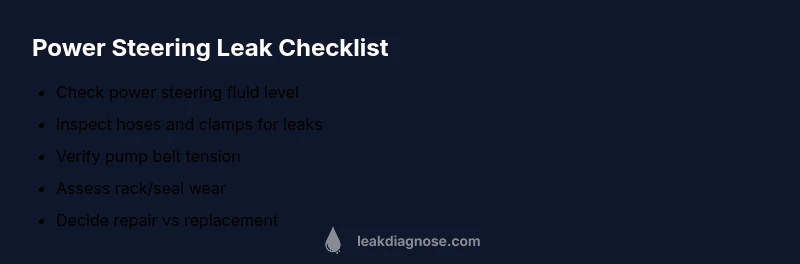
Common signs include a low fluid reservoir with an obvious puddle, a whine or groan from the power steering pump, and unusually stiff or heavy steering. You might also notice dark pink or red fluid near hoses, clamps, or the steering rack. Start by locating the highest point of the leak: reservoir, return hose, or steering rack. Check the fluid level with the engine off and the reservoir cap secured. Inspect hoses for cracks, swelling, or loose clamps. Clean the area and run the engine to see if new leaks appear, noting whether the color and smell match power steering fluid. If the leak is near the pump, the belt or pulley condition could also cause noise and reduced performance.
A systematic check helps prevent misdiagnosis. Keep a log of fluid levels, location, color, and any changes after driving short distances. This data supports a later repair decision and can help a mechanic diagnose more complex issues beyond simple hose leaks.
The risks and tradeoffs of using stop-leak in a steering system
The immediate risk is clogging narrow passages and damaging the pump or rack seals. Stop-leak can swell hoses or soften older seals, pushing the leak to a different location. In some vehicles it can void warranties or complicate future repairs. On top of that, even if the leak slows, the underlying issue remains unaddressed, which can lead to sudden loss of steering in traffic. If the vehicle is under warranty or equipped with a precision steering system, professional service is strongly advised. Some formulations can also corrode metal components or interfere with power assist sensors in newer cars. Consider long-term maintenance costs when choosing to rely on stop-leak products.
Safer alternatives: proper diagnosis, repair, and maintenance
The best strategy is accurate diagnosis and targeted repair. Start by confirming fluid type (power steering fluid only; do not mix with transmission or engine oil). If a hose is damaged, replace it with OEM-spec parts. If rack or pump seals are worn, plan for replacement rather than improvisation. Regular maintenance such as fluid flushes, hose inspections, and listening for pump cavitation will prevent leaks. In the interim, a temporary top-up may be acceptable, but do not rely on additives as a cure. If you detect any steering play, unusual noises, or hard steering, treat it as a red flag and stop driving if necessary.
Steps
Estimated time: 60-90 minutes
- 1
Check fluid level and fluid condition
Park on a level surface and with the engine off, check the power steering reservoir for level and color. If the fluid is low, refill with the manufacturer-specified PS fluid and observe for refills as you operate the steering. A discolored or contaminated fluid can indicate a problem.
Tip: Always wipe the dipstick/marker area clean before checking to avoid misreading the level. - 2
Inspect for leaks and note locations
Look under the vehicle and around the reservoir, hoses, and rack for fresh fluid or damp spots. Trace the dripping path to determine whether it comes from a hose, the reservoir, or the steering rack. Use a flashlight and mirror as needed to see hard-to-reach areas.
Tip: Mark the suspected leak area with chalk or tape to monitor progression over a day. - 3
Check the power steering belt and pulley
A slipping or worn belt can cause reduced steering assist and noise. Inspect belt tension and condition; replace if cracked, glazed, or frayed.
Tip: A loose belt can look fine but still slip under load; test belt tension with a gauge per service manual. - 4
Examine reservoir cap and seals
A damaged cap seal can cause air ingress and fluid loss. Remove the cap, inspect the seal ring, and replace the cap if it shows wear or cracking.
Tip: Avoid over-tightening; a snug, not crushed, cap ensures proper sealing. - 5
Test steering input and listen for pump noise
With the engine running, gently turn the steering wheel from lock to lock and note any whining, groaning, or stuttering. Sudden changes suggest pump, rack, or hose issues rather than a simple fluid top-up.
Tip: If you hear whining after adding fluid, stop and inspect further—noise can indicate a more serious problem. - 6
Decide on repair path and safety
If you find a clear leak in hoses or a failing rack, plan for replacement rather than relying on additives. If you’re unsure, consult a certified mechanic for an accurate diagnosis and safe repair path.
Tip: Do not drive aggressively if steering feels off; steering failure is a safety risk.
Diagnosis: Power steering feels heavy or unresponsive, with possible fluid leaks or noise.
Possible Causes
- highLow power steering fluid due to a leak
- highLeaking hoses or clamps
- mediumWorn steering rack or pump seal
- lowInternal pump failure or air in the system
Fixes
- easyCheck the reservoir fluid level and inspect for cracks or loose clamps; top up with the correct power steering fluid if needed
- easyTighten clamps or replace leaking hoses, then recheck for new leaks
- mediumIf leaks persist or you notice noise or steering play, seek professional inspection for rack/pump
Questions & Answers
Will stop-leak products fix a power steering leak permanently?
No. Stop-leak products may slow a small seep temporarily, but they do not repair worn seals, racks, or pumps. Long-term repair requires identifying the root cause and replacing the faulty component or the fluid path.
Stop-leak might slow a tiny leak briefly, but it’s not a permanent fix; you’ll likely need a proper repair.
Is it safe to use stop-leak in modern power steering systems?
Many manufacturers warn against aftermarket sealants in power steering systems. The additives can cause residue buildup and alter fluid properties, potentially harming performance.
Caution is advised; check your vehicle manual before using any stop-leak products.
Can stop-leak void my warranty or damage the rack?
Yes, some warranties or service agreements may be voided if a third-party stop-leak product is used. It can also lead to damage if it clogs passages or affects seals.
Using stop-leak can void warranties or cause damage if it blocks passages.
What should I do first if I see a leak under the car?
Safely pull over, turn off the engine, and inspect the area for obvious leaks. Check the power steering fluid level and look for wet spots near hoses and the rack.
Safely check for leaks and top up only if needed, then seek evaluation if the leak continues.
When should I replace power steering fluid and flush the system?
If the fluid is dark, smells burnt, or if you’ve had a known leak, a fluid flush and replacement are recommended. This helps ensure proper lubrication after repairs.
Replace the fluid if it’s dark or contaminated and consider a system flush after repairs.
Watch Video
Main Points
- Inspect fluid level before anything else
- Stop-leak is a temporary fix at best
- Replace worn hoses and seals for lasting results
- Consult a professional for rack/pump issues
- Regular maintenance helps prevent future leaks