Rear Diff Leak Troubleshooting Guide
Urgent, practical troubleshooting for a rear diff leak. Learn detection, safe inspection, and step-by-step fixes from Leak Diagnosis to protect your drivetrain.


Most likely, a rear diff leak comes from worn pinion seals, a compromised differential cover gasket, or a loose drain plug. Start by inspecting the undercarriage, verifying fluid level, and tightening or replacing the suspect seal or plug. If the leak persists, follow the diagnostic flow and consider professional inspection to prevent drivetrain damage.
What is a rear diff leak and why it matters
A rear differential contains gear oil that lubricates the gears and bearings during vehicle operation. When a rear diff leak occurs, gear oil can escape from seals, gaskets, or the housing, reducing lubrication and risking overheating and accelerated wear. Left unchecked, a small puddle can grow into a costly failure that leaves you stranded or dealing with expensive repairs. This guide focuses on practical, safe steps you can take as a homeowner or DIY enthusiast to diagnose and address a rear diff leak, while highlighting when professional help is essential. According to Leak Diagnosis, rear diff leaks are commonly caused by worn seals or a loose drain plug, and addressing them early can prevent drivetrain damage.
Common sources of rear differential leaks
Leaks can originate from several components: (1) drain plug and bolts not torqued properly or damaged, (2) differential cover gasket or seal, (3) rear pinion seal at the input shaft, (4) axle seals where half-shafts enter the housing, and (5) cracks or damage to the differential housing. Signs include oil pooling under the rear of the vehicle, oil on the undercarriage, or a strong gear oil scent near the driveline. Based on Leak Diagnosis Analysis, 2026, leaks often originate from seals and mounting hardware, especially on older vehicles. Identifying the exact source requires careful inspection and sometimes dye testing to confirm the origin.
Visual inspection: spotting the leak and locating the source
Work on a level surface with the engine off and the vehicle cool. Clean any existing oil to establish a clear baseline, then inspect the differential cover, drain plug, and pinion seal area for fresh drips or seepage. Look for wisps of oil running along the housing or a damp, darkened patch around seals. Use a flashlight and a mirror to view hard-to-see angles, and wipe down the area after a test drive to see if new drips appear. If you notice metal shavings in the gear oil, that can indicate internal wear and warrants professional evaluation. Tracking the origin precisely can save you time and money during repairs.
Safety and preparation before any work
Safety first: always work on a flat surface and use wheel chocks with the vehicle secured on jack stands rated for the weight. Never crawl under a vehicle supported only by a jack. Gear oil can be hazardous to skin and eyes; wear gloves and eye protection. Disconnect the battery if you expect to drain fluids to minimize ignition risk and accidental starting. Dispose of used oil properly at a recycling facility. If you feel unsure or the leak is significant, stop and seek professional assistance to avoid personal injury or further damage.
Tools and materials you'll need
This practical list helps you plan your work. Socket set, wrenches, torque wrench, jack stands, wheel chocks, drain pan, and rags are essentials. You’ll also want a new drain plug gasket or a replacement drain plug, gear oil that matches your vehicle’s specification, sealant as recommended by the manufacturer, and, if needed, replacement pinion and axle seals. Having the right parts on hand reduces trips to the parts store and lets you work confidently. Confirm part numbers against your vehicle’s manual or parts diagram before buying.
Diagnostic approach: where to start
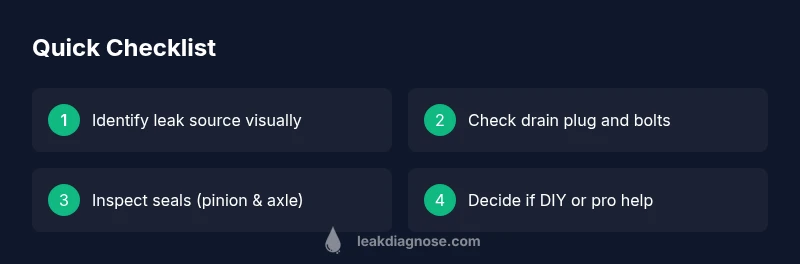
Begin with the simplest fix: ensure the drain plug is tight and the gasket is intact. If the plug is tight but dripping persists, replace the drain plug gasket or the drain plug itself. If leakage continues, shift focus to the differential cover gasket, pinion seal, and axle seals. Optional dye testing can help confirm the source. After performing a test drive, recheck the gear oil level to ensure there’s no excessive loss. If you notice irregular wear patterns or metallic debris in the oil, pause and seek professional inspection to prevent drivetrain failure.
Step-by-step overview of a basic check you can perform
To methodically approach the leak source, start with a visual confirmation, then test for tightness and seal integrity, and finally plan for a seal replacement if needed. This progressive approach helps you avoid unnecessary disassembly. Maintain a rigid safety routine, documenting each step for future reference. If the leak source is a critical seal or the differential housing itself, consult a professional promptly to avoid further damage.
Checking seals: pinion and axle seals
Pinion seals and axle seals are common leak points. Inspect for bright oil sheen around the seam where the seal meets the shaft. If you observe seepage, you may need to replace the seal rather than simply tightening bolts, which can relieve pressure but not cure a worn seal. Replacement requires careful alignment and proper lubrication of the shaft and housing. When in doubt, price out the components and consider professional installation to ensure proper torque and seal seating.
When to call a professional and how to prevent future leaks
If the leak persists after basic tightening or seal checks, or if you detect metal shavings in the gear oil, professional service is advised. A qualified technician can perform a full seal replacement, assess the differential housing, and ensure the correct gear oil specification and torque. Prevention tips include regular fluid level checks, using the correct gear oil grade for your vehicle, avoiding overfilling, ensuring the drain plug gasket is in good condition, and scheduling routine differential inspections as part of maintenance.
Steps
Estimated time: 1-2 hours
- 1
Prepare safely and gather tools
Park on level ground, engage parking brake, and place wheel chocks. Gather a drain pan, rags, correct gear oil, gaskets or plugs, and a torque wrench. Ensure you have jack stands rated for the vehicle and wear protective gear.
Tip: Plan for a clean work area to avoid oil contamination. - 2
Secure vehicle and locate leak source
Use wheel chocks and jack stands to secure the vehicle. Inspect visually around the drain plug, differential cover, and pinion seal area for fresh drips or seepage. Mark the suspected source with chalk so you can verify after work.
Tip: Work with a buddy to stabilize the vehicle. - 3
Tighten drain plug or replace gasket
If the drain plug is loose, tighten to the manufacturer’s torque specification and replace the gasket if it shows wear. Clean the area and wipe the plug surface before reinstallation to prevent debris from entering the differential.
Tip: Do not overtighten; over-torquing can strip threads. - 4
Inspect and replace seals if needed
If leakage persists, inspect the differential cover gasket, pinion seal, and axle seals. Replace worn gaskets or seals using the proper tools and lubricants. Refill gear oil to the recommended level after resealing.
Tip: Use a torque wrench to ensure correct seating of seals. - 5
Refill and test
Refill with the correct gear oil specification and check the level. Start the vehicle carefully and run through a short drive to circulate oil. Reinspect for leaks and ensure there is no new seepage.
Tip: Monitor the scent and color of the oil for signs of contamination. - 6
Document and plan next steps
Document the source and actions taken. If leaks recur, or you notice metallic debris, stop and seek professional evaluation to prevent drivetrain damage.
Tip: Keep receipts and notes for future maintenance.
Diagnosis: Visible gear oil under the vehicle near the rear differential after a drive
Possible Causes
- highPowertrain fluid leak from drain plug not tightened or gasket failed
- highDifferential cover gasket or seal seepage
- highPinion seal leakage at the input shaft
- mediumAxle seal leakage at the half-shaft interfaces
Fixes
- easyTighten drain plug to factory torque and replace gasket if needed
- mediumReplace differential cover gasket and reseal housing as required
- hardReplace pinion seal or axle seals with proper tool and torque
- hardAddress any shaft or housing damage or cracks as appropriate
Questions & Answers
What are the common signs of a rear diff leak?
Common signs include oil pooling beneath the rear of the vehicle, a strong gear oil odor near the driveline, and fresh oil on the undercarriage or wheel area. If you notice these symptoms, inspect the drain plug, differential cover, and seals to locate the source.
Look for fresh gear oil under the car and around the rear differential area; inspect drain plug and seals to locate the leak source.
Can I drive my vehicle after noticing a rear diff leak?
Driving with a visible leak can lead to low gear oil, overheating, and driveline damage. If the leak is minor and you can safely reach a workshop, limit driving and monitor oil levels. For any doubt, avoid driving and seek professional inspection.
Avoid long drives. If unsure, have the vehicle checked before more driving.
How much does it cost to repair a rear diff leak?
Costs vary based on source and extent of the leak. DIY fixes for loose plugs or gaskets are cheaper, while pinion or axle seal replacements require professional service and can be mid-to-high in cost depending on parts and labor.
Cost depends on the leak source; minor fixes are cheaper, major seal work requires a pro.
Is a rear diff leak dangerous?
Yes, a leak can lead to gear oil loss, overheating, and potential drivetrain damage, which may cause failure while driving. Address leaks promptly to protect your vehicle’s integrity and safety.
Yes, leaks can be dangerous if not addressed promptly.
How long does pinion seal replacement take?
Replacement time depends on access and vehicle model. It generally requires disassembly of the driveline and careful resealing, which can take a few hours to a full day with parts and service availability.
It can take several hours depending on access and model; a pro can estimate precisely.
Can I DIY a rear diff leak repair?
Some minor leaks (drain plug or gasket) can be DIY, but seals like pinion or axle seals are more complex and often require special tools. If you lack experience, consider professional help to avoid safety risks and improper sealing.
DIY is possible for simple leaks; complex seals are best handled by a pro.
Watch Video
Main Points
- Inspect early to prevent damage
- Tighten loose drain plugs and replace worn gaskets
- Check pinion and axle seals if leaks persist
- Refill with correct gear oil after work
- Call a professional when unsure or if leaks recur