Oil Filter Leak Troubleshooting Guide
Urgent guide to diagnose and fix an oil filter leak safely. Learn common causes, a practical diagnostic flow, and step-by-step fixes to prevent engine damage.


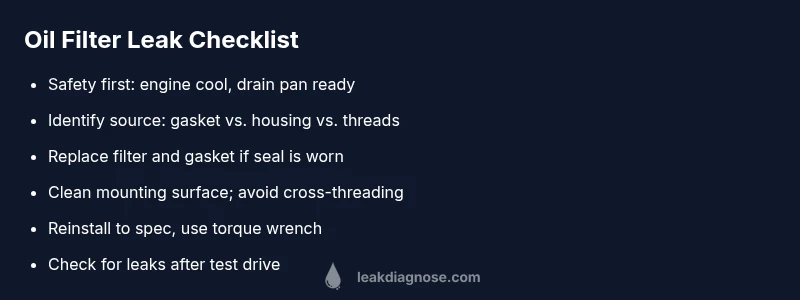
Oil filter leaks are most often caused by a loose or mis-seated filter and a worn gasket or O-ring. The quickest fix is to safely raise the vehicle, snug the filter to the correct torque, and replace the gasket if needed. If the leak persists after reinstallation, inspect for cross-threading or a damaged filter housing and replace as necessary.
Why an oil filter leak happens
An oil filter leak is not always about a broken filter; more often it's about installation and sealing. The most common culprits are a loose filter, a worn gasket or O-ring, or an improperly seated filter. In many engines, a cross-threaded mounting or a damaged filter housing creates a slow drip that can look like a gasket failure. The result is oil on the engine or down the side of the block, which can quickly lead to low oil levels and potential engine damage if ignored. The root causes usually fall into three buckets: installation errors, degraded seals, and hardware damage. By understanding these categories, you can quickly triage a leak and decide whether to tighten, replace, or seek help. By staying calm and methodical, you save time and oil. According to Leak Diagnosis, oil filter leaks are often tied to simple mistakes that are easy to fix with the right tools and a careful approach.
Safety first: preparation and PPE
Before you touch anything, ensure the engine is cool, the battery is disconnected, and the vehicle is on a flat surface with the parking brake engaged. Wear eye protection and gloves to avoid contact with hot oil. Prepare a large drain pan under the filter area and have absorbent pads or rags ready. If you must lift the car, use jack stands on a solid, level surface. Never rely on a jack alone to support the vehicle. Contain oil spills immediately and dispose of used oil per local regulations. These precautions keep you safe and prevent slip hazards that can turn a quick fix into a hazardous job.
Quick checks you can perform from above the engine bay
From above, you can often identify the source of an oil filter leak without disassembly. Look for fresh oil around the filter canister, the gasket area, or the mounting threads. Check if the filter feels loose to the touch and confirm the orientation—some units have directional arrows or a seal that must face the engine. Inspect adjacent components like the oil cooler lines, oil pressure sensor, or nearby gaskets—these can mimic a filter leak. Wipe the area clean and run the engine briefly in a controlled test to observe where the drip originates. If the leak appears to come from the seal, plan to replace the filter and gasket rather than pursuing major repairs.
Diagnostic flow: symptom to solution (quick map)
With an observed leak, start by verifying if the source is the filter gasket or the mounting threads. If oil gathers around the gasket area when the engine is off, the seal or seating is suspect. Tightening by hand to the manufacturer spec is often enough, but replace the gasket if it shows wear. If tightening doesn’t stop the leak, check for cross-threading or a cracked housing. In some cases, the entire filter housing or mounting adaptor may need replacement. Always verify the fix with a short engine run and a post-test inspection.
Step-by-step fixes you can perform with common tools
A tried-and-true approach: replace the filter and gasket, then reseat and tighten to spec. If the gasket is cracked or the filter is damaged, replace the entire assembly. Clean the mount surface thoroughly before installing the new filter to ensure a perfect seal. After installation, refill the engine with oil to the proper level and run the engine for a few minutes to pressurize the system, then recheck for leaks. If any leak remains, inspect for cross-threading, a damaged housing, or a misaligned mounting adaptor. In persistent cases, professional service may be required to inspect the oil pump seal or engine-side gaskets.
Prevention and long-term maintenance
To prevent future oil filter leaks, use a high-quality filter supported by genuine seals and gaskets. Replace the gasket with each oil change and avoid reusing old parts. Always torque to the vehicle manufacturer’s specification using a calibrated torque wrench. Keep the filter seating surface clean and inspect the filter housing for cracks or wear. Regularly check for oil drips during quick test drives after maintenance, and address any seepage immediately to avoid engine damage.
Steps
Estimated time: 30-60 minutes
- 1
Prepare and safety check
Cool the engine, secure the vehicle, and gather tools. Place a drain pan under the filter and wear protective gloves. Ensure the area is well-ventilated and you have absorbent pads for spills.
Tip: Double-check the parking brake and wheel chocks before you crawl under the car. - 2
Relieve pressure and locate the filter
If your vehicle requires, carefully relieve engine oil pressure per manual. Locate the oil filter and the mounting area. Confirm that you’re working with the proper filter and have a replacement gasket ready.
Tip: Use a flashlight to clearly see the gasket seating area before removing the old filter. - 3
Remove old filter and inspect gasket
Loosen and remove the old filter. Inspect the gasket seat and the mounting surface for nicks or cracks. If the gasket is stuck or deformed, replace both filter and gasket.
Tip: Do not rub the gasket onto a dirty surface; a clean seal is essential. - 4
Install new filter with fresh gasket
Coat the gasket with a thin layer of new engine oil and install the new filter by hand until snug, then tighten the specified amount with a wrench if required by the manual. Verify the alignment and seating.
Tip: Avoid over-tightening; it can damage the filter or threads. - 5
Check for leaks and refill oil
Wipe the area clean, start the engine, and look for fresh leaks. Check oil level and top off as needed. Reinspect after a short drive and recheck for drips.
Tip: Place a clean towel under the area to catch any fresh drips during the test drive. - 6
Decision point: is it fixed?
If you still see a drip, re-evaluate for cross-threading or a cracked housing. Some cars require professional inspection for the seal inside the engine or the filter mounting adaptor.
Tip: If in doubt, stop and call a mechanic to avoid engine damage.
Diagnosis: Oil filter leak from engine bay
Possible Causes
- highLoose filter or improper seating
- highWorn gasket/O-ring
- mediumCross-threaded mounting or damaged housing
- lowDefective or counterfeit filter
- lowCracked filter or adaptor
Fixes
- easyTighten to spec and replace gasket if needed
- mediumInspect for cross-threading; replace filter housing if damaged
- easyReplace oil filter with correct part and refill oil
- hardIf leak persists, consult a professional to inspect pump/housing seals
Questions & Answers
What is the most common cause of an oil filter leak?
The most common cause is a loose filter or a worn gasket/O-ring. Proper seating and replacement of worn seals usually stop the leak.
The common cause is a loose filter or worn gasket. Re-seat and replace worn seals to fix the leak.
Can I drive my car if I notice an oil leak from the filter?
No. Leaking oil can lead to engine damage if the oil level drops too low. Address the leak promptly, and avoid long drives until it’s repaired.
No, driving with a leak can be risky. Fix it before driving.
How tight should the oil filter be torqued to?
Torque should be set to the vehicle manufacturer's specification using the correct tools. If you don’t have the spec, consult the owner’s manual or a service manual for your model.
Use the manufacturer’s torque spec and a torque wrench. If you’re unsure, seek professional help.
Is a cracked oil filter housing dangerous?
Yes. A cracked housing can cause uncontrolled oil leaks and possible engine damage. Replace the housing or filter assembly as needed.
A cracked housing is serious—replace the component and check related seals.
Should I replace the oil filter at every oil change?
Yes. Replacing the filter and gasket at each oil change helps prevent leaks and ensures proper filtration.
Yes, replace the filter and gasket during each oil change for best protection.
What if I can’t locate the leak source?
If the source isn’t clear, clean the area, pressurize the system, and recheck from a different angle. If still unsure, consult a professional.
If you can’t find the source, it’s time to get a pro to diagnose it.
Watch Video
Main Points
- Tighten and reseal the filter to OEM specs.
- Inspect gasket and seating surface for wear or damage.
- Check for cross-threading or housing cracks if leaks persist.
- Replace with quality parts and dispose of oil responsibly.