Leak Near Back Left Tire: Troubleshooting Guide
Urgent guide to diagnosing and fixing a leak near the back left tire. Learn common causes, safe inspection steps, color cues for fluids, and when to call a professional for a safe repair.


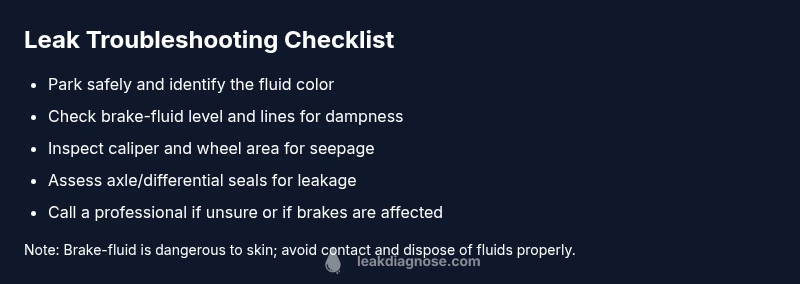
Most likely the leak near the back left tire is a brake-fluid issue from a line, hose, or caliper, not a tire problem. A wet spot under the wheel, a sticky brake pedal, or a low brake-fluid level should raise suspicion. Do not drive long distances with suspected brake leaks. Check the brake fluid reservoir, inspect lines for cracks, and call a professional if you see seepage or if the pedal feels soft.
Understanding the symptom: leak near the back left tire
When you notice a liquid trail or damp area around the back left wheel, the first question is always: what fluid is it, and where is it coming from? For homeowners and DIY enthusiasts, the phrase leak near the back left tire often triggers concerns about the braking system, the rear axle, or nearby hoses rather than the tire itself. According to Leak Diagnosis, this symptom frequently signals a safety-critical fault that could affect braking performance or vehicle stability. The fluid might appear on the ground after a short drive or emerge after you pull into the driveway. Pay attention to color, smell, and where the liquid pools. If you detect a strong chemical odor or see a bright color (like green, orange, or amber), treat it as a sign to inspect immediately. The goal is to identify whether the issue is brake fluid, engine oil, coolant, or power-steering fluid, all of which require different remedies. Remember, a leak alongside a wheel well can escalate quickly if ignored, so approach this with caution and prioritize safety for you and others on the road.
Common causes behind a rear-wheel leak
Leaks around the back left wheel are most often tied to components that sit near the undercarriage and wheel assembly. The top causes to consider include brake-fluid leaks from lines or calipers, axle or rear-differential oil seepage, and coolant or windshield-wiper fluid dripping from the engine bay area that happens to run along the frame toward the tire. Brake-fluid leaks are not only a sign of compromised braking power but also a hazard if the fluid coats brake components. Rear differential or axle seal leaks can appear as oily residue that climbs up the tire or wheel well and may mix with road grime. In some cases, fuel lines or return hoses may leak and travel toward the wheel well, especially if the vehicle has lines routed near this area. Environmental contamination, such as water from rain or a wash, can obscure the true source, so repeated checks are essential. Finally, a leaking CV boot or suspension component can leak grease or other lubricants that can look alarming but may be less dangerous than a brake fluid leak. Each potential cause has a distinct inspection path, so a methodical approach is critical to avoid missing the real issue.
Safe initial inspection when you notice a leak
Start with safety and a quick, non-destructive check. Park on a flat, level surface away from traffic and apply the parking brake. If you have a helper, ask them to watch the underside while you observe the wheel area. Put on gloves and eye protection. Use a flashlight to identify the source. Look for staining along hoses, lines, and the brake caliper, and note the color and consistency of the liquid. If the liquid is clear to amber and feels slick, it is typically brake fluid; if it’s brown or black, it could be engine oil or gear oil. Do not rub the fluid into dry areas to avoid contaminating your hands. Wipe a small area with a clean cloth to observe residue and mark the suspected source with a piece of chalk or tape. Finally, check the fluid levels on the brake reservoir and, if accessible, the differential or transmission dipstick before moving the vehicle again. If there’s any doubt about brakes, seek professional help before driving.
Diagnostic flow: from symptom to suspected cause
A structured diagnostic approach helps avoid guesswork. Start with the most accessible checks: is the fluid level dropping, where does the fluid originate (hose, caliper, or wheel area), and are there obvious signs of seepage along routes of the fluid path? If brake fluid is involved, inspect the brake lines and calipers for dampness, cracks, or bulges. If oil appears, search for seepage around the axle seals, differential cover, and rear differential drain plug. Coolant leaks may travel along the frame and emit a sweet odor; inspect the coolant reservoir and nearby hoses. For any confirmed seepage, prioritize brake components, then axle or differential seals, and finally external hoses. If you’re unsure, treat it as a brake issue and consult a professional to avoid jeopardizing safety.
What to do now: immediate actions and safety
If you notice a leak near the back left tire, take immediate steps to reduce risk. Do not drive the vehicle if braking performance is compromised or if the pedal feels spongy, as this can indicate a brake-fluid leak. Move the car to a safe location, away from traffic, and use wheel chocks if available. Clean the area around the wheel to observe fresh leaks more clearly. Record the time, distance traveled since the first notice, and any brake signs (soft pedal, reduced braking power, or pulling to one side). If you transport the car, do so with extreme caution and ideally by tow to a repair facility. When in doubt, call roadside assistance rather than attempting a risky DIY fix.
Prevention and maintenance: keeping leaks at bay
Prevention starts with regular inspections and timely maintenance. Roughly every 6–12 months, check brake-fluid levels, reservoir caps, and the condition of lines near the rear axle and calipers. Periodically inspect hub assemblies for signs of moisture, corrosion, or seepage. If you notice oil or fluid leaks around the rear wheel, have the seals and gaskets inspected by a qualified technician. Maintain proper lubrication for the rear differential and ensure that protective covers and shields are intact to reduce exposure to road grime and moisture. Finally, address minor drips promptly; even small leaks can worsen with time and exposure. Keeping a basic leak toolkit—gloves, rags, a flashlight, and a small mirror—helps you perform safer checks more often.
Quick reference: combining color cues with safety decisions
Fluid identification is not an exact science without lab analysis, but color, smell, and consistency offer practical clues. Brake fluid is typically light amber and feels slippery; engine oil is darker and may have a burnt smell; coolant is often green, orange, or pink and has a sweet odor. If you observe a bright color or a strong chemical odor, treat it as brake-fluid-related or engine-oil-based and seek professional assessment. Remember, leaks around the rear wheel can compromise braking performance, so prioritize safety, avoid driving long distances, and arrange professional service as soon as possible.
Steps
Estimated time: varies
- 1
Ensure safety and park securely
Move the vehicle to a flat, safe area and set the parking brake. Wear protective gloves and eye protection. Keep children and pets away from the vehicle while inspecting.
Tip: Do not attempt to work under an elevated vehicle without proper support. - 2
Locate the source of the liquid
Use a flashlight to inspect around the rear left wheel well, brake lines, caliper, and drum/seat area for visible seepage or wet spots. Wipe a small area and watch for fresh leaks to confirm the source.
Tip: Mark the suspected area with tape to monitor for changes. - 3
Check fluid levels and sensor cues
Check brake-fluid reservoir level and distance traveled since noticing the leak. If the pedal feels soft or the car pulls when braking, prioritize brake-system inspection.
Tip: If you cannot safely access the reservoir, seek professional help. - 4
Inspect likely components
Inspect the brake lines for cracks or bulges, the caliper for leaks, and the wheel hub area for signs of oil or grease. Look for oily residue on the tire or rotor.
Tip: A damp caliper and line are red flags that require repair. - 5
Decide on the repair path
If you identify a brake-fluid leak, do not drive. Plan to tow to a shop. If an axle or differential seal leaks, schedule professional service promptly.
Tip: If you’re unsure about the cause, treat it as brake-related and seek help. - 6
Document and contact support
Take photos of the area and fluid color. Share findings with a trusted mechanic to speed up diagnosis and repairs.
Tip: Having visuals helps technicians pinpoint the exact leak source.
Diagnosis: Visible fluid under the rear left wheel or near the wheel well after vehicle movement
Possible Causes
- highBrake fluid leak from line or caliper
- mediumRear differential or axle oil leak
- lowCoolant or other fluid dripping from engine bay toward the wheel area
Fixes
- easyInspect brake lines and caliper for dampness or cracks; check brake-fluid level; perform a safe test of braking after inspection
- mediumInspect rear differential seals and axle seals for seepage; check oil level and condition; replace seals if seepage is detected
- easyCheck nearby hoses, clamps, and coolant reservoir for leaks; inspect radiator hoses as needed; tighten clamps or replace damaged hoses
Questions & Answers
What is the most common cause of a leak near the rear wheel?
Brake-fluid leaks from lines or calipers are the most frequent cause near the rear wheel. Differential oil and coolant leaks can also occur, but brakes are the top safety concern.
Brake-fluid leaks near the rear wheel are the most common risk and should be checked immediately. If you suspect a brake issue, seek professional help.
How can I tell brake fluid from engine oil at the leak site?
Brake fluid is usually light amber and very slick; engine oil is darker and may have a burnt smell. If you’re unsure, treat it as brake-related and have the system inspected quickly.
Brake fluid is typically light amber and slick. If you can’t tell, assume brake involvement and get a professional check.
Is it safe to drive with a suspected brake-fluid leak?
No. A brake-fluid leak compromises braking performance. If the pedal feels soft or the car pulls when braking, stop and arrange towing to a shop.
No, do not drive. Brake-fluid leaks can lead to loss of braking power; have the car inspected before driving further.
Could a leak come from the rear differential or axle?
Yes, rear-differential or axle-seal leaks can present as oily residue near the wheel. These require professional diagnosis and may involve seal replacement.
A rear-differential or axle leak is possible and should be checked by a mechanic if you see oily residue near the wheel.
What maintenance helps prevent rear-wheel leaks?
Regularly inspect brake lines, calipers, and seals; monitor fluid levels; and address small leaks promptly. Protective shielding and timely seal replacements reduce failure risk.
Regular inspections and prompt repairs help prevent leaks from worsening.
When should I replace wheel-area seals or hoses?
If seepage persists or the fluid level drops quickly, replace the affected seals or hoses and have a professional perform the service.
If seepage persists, have the seals or hoses replaced by a professional.
Watch Video
Main Points
- Identify fluid color and location before acting.
- Prioritize brake-system inspection for rear-wheel leaks.
- Do not drive with suspected brake leaks; safety first.
- Consult a professional for axle and differential leaks.
- Prevent future leaks with regular maintenance checks.