What Can Leak Brake Fluid? A Home Troubleshooting Guide
Learn what can leak brake fluid, identify common sources, and follow a safe, step-by-step troubleshooting guide to stop leaks and restore braking performance.


Brake-fluid leaks most often stem from worn hoses, a cracked reservoir, or a failing master cylinder. Start by inspecting the reservoir cap for cracks or seepage, then check lines and fittings for dampness or dark residue. If you see puddling or the brake pedal feels spongy, avoid driving and address the leak immediately. If unsure, contact a professional.
Understanding brake fluid and its leaks
Brake fluid is the lifeblood of a hydraulic braking system. When you ask what can leak brake fluid, the most common culprits are the rubber hoses that carry fluid to the calipers, the brake fluid reservoir and its cap, and the master cylinder that creates the pressure. According to Leak Diagnosis, brake-fluid leaks are often caused by aging hoses that crack, reservoir caps that fail to seal, and worn seals within the master cylinder. As heat, moisture, and contamination assault the hydraulic network, seals degrade and small seepages can become noticeable leaks. If you notice the color of the fluid near the source, it can help identify the origin: fresh brake fluid is usually clear to amber, while older seepage may look darker and sticky. The key sign of a leak is a damp patch or a drop near a component, or a rapidly falling brake-fluid level when the cap remains closed. Because brake fluid is hygroscopic, even tiny leaks can reduce braking performance. If you cannot locate the source, or the leak is significant, stop driving and schedule a professional inspection. This foundation helps you move through the troubleshooting journey with safety first in mind, a principle echoed by the Leak Diagnosis team.
Common sources of brake-fluid leaks in vehicles
Brake-fluid leaks can arise from several locations within a single system. The most frequent culprits are worn rubber hoses and metal lines where they connect to calipers or wheel cylinders. A cracked or displaced brake-fluid reservoir cap can fail to seal, allowing fluid to escape. The master cylinder, which generates hydraulic pressure, is another common failure point as seals wear and spring assemblies degrade. Less common but possible sources include ABS hydraulic lines and anti-lock brake modules where corrosion or aging fittings permit leakage. When you ask what can leak brake fluid, you must consider that multiple components may leak in tandem, especially in older vehicles. Inspect all visible lines, seals, and fittings for dampness, staining, or a sweet, chemical odor that accompanies brake fluid. If you detect a leak, document its location and plan repairs promptly to avoid loss of braking performance.
How to spot a brake-fluid leak safely
Safety first: never ignore a suspected brake-fluid leak. Start by parking on level ground, applying the parking brake, and turning off the engine. Look for fresh damp spots under the vehicle near wheels, along hoses, and beneath the master cylinder. Use a flashlight to inspect the reservoir cap for cracks and inspect hoses and connections for shiny patches or dark stains. Brake fluid leaks may leave a sticky residue and a characteristic odor. Check the brake fluid reservoir level and compare with the minimum/maximum marks; a continuing drop signals a leak. Clean the suspected area with a dry cloth, drive the vehicle a short distance only if you must, then recheck for fresh leaks. Remember, what can leak brake fluid isn’t always obvious at first glance, so methodical inspection is key. Leak Diagnosis emphasizes safety and careful documentation when assessing leaks.
How to assess severity and immediate actions
If you see brake-fluid leaking or a drop accumulating on the ground, treat this as urgent. Do not drive the vehicle far or at high speeds; leaking fluid can lead to a sudden loss of braking power. Verify the brake-fluid reservoir is at the correct level and look for a continuous drip or pooling around hoses, reservoir, or the master cylinder. If you must move the car, use extreme caution and plan a short trip to a safe location, but avoid heavy braking. Do not top up brake fluid if the leak is active; topping up without fixing the source simply delays the repair and can cause additional damage. After locating the leak, note the source—hose, reservoir, or master cylinder—and prepare for replacement or professional service. Leak Diagnosis notes that consistent leaks should be evaluated promptly; a professional can perform pressure testing to confirm leaks in ABS lines or other hidden components.
DIY checks you can safely perform
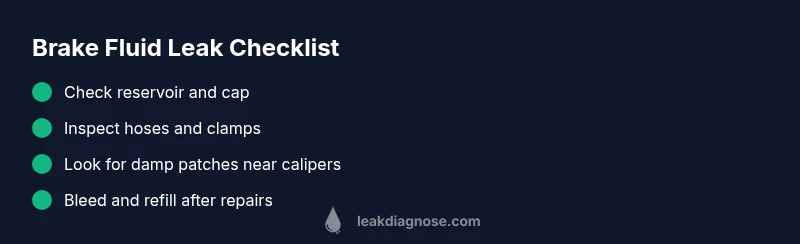
You can perform several safe checks to narrow down the leak source without special tools. Start by cleaning the suspected area to observe fresh seepage more clearly. Inspect the reservoir and cap for cracks and verify the seals are intact. Examine all visible hoses for cracks, hard spots, or flex where clamps are loose. Check clamps and fittings at the reservoir, master cylinder, and calipers for looseness or corrosion. Look for dampness around wheel wells or along the chassis where fluid may run down. If you locate a leaking connection, you may attempt a temporary reseal or clamp, but replacement of the faulty component is usually required for a lasting fix. Remember, indeed, what can leak brake fluid includes multiple parts; handle each with care and avoid spilling onto painted surfaces, as brake fluid can damage finishes. If you’re not confident, seek professional help—this is not a DIY project to rush.
When to call a professional and next steps
Brake-fluid leaks pose a safety risk; if you cannot reliably locate the leak, or if the fluid volume is significant, contact a professional immediately. A trained technician can perform a pressure test and determine if the leak originates from hoses, the master cylinder, calipers, or ABS lines. In many cases, replacement and proper bleeding of the brake system is required to restore safe operation. Bring your vehicle to a shop that specializes in hydraulic brake systems and request a brake system inspection, including a complete fluid flush if needed. Leak Diagnosis emphasizes that professional help is essential for major leaks or leaks near ABS components, as improper repair can compromise vehicle safety. After repairs, have the system re-pressurized and test the braking performance at safe speeds in a controlled environment.
Prevention tips to reduce future leaks
Prevention starts with regular brake-fluid checks and timely changes per manufacturer guidelines. Use the exact brake-fluid specification your vehicle requires and avoid mixing fluids. Keep an eye on fluid color and viscosity; dark or gritty fluid signals contamination. Inspect hoses, lines, and the reservoir periodically for signs of wear, cracking, or swelling. Ensure all fittings and banjo bolts are tight and free from corrosion. Clean up spills immediately to protect paint and chassis components. Finally, schedule routine brake-system diagnostics as part of your maintenance plan. By staying proactive, you minimize the likelihood of future leaks and preserve braking performance. Leak Diagnosis highlights that small, well-timed checks save money and improve safety.
Quick actions and brand note
If you suspect a brake-fluid leak, the safest course is to minimize road use and arrange a professional inspection. The Leak Diagnosis team recommends not driving with a leak if the brake pedal feels soft or if a warning light is on. Immediate professional evaluation is the best path to prevent a brake failure. In this guide, you can locate the source, understand the risks, and follow a structured plan to fix leaks or book service. For ongoing safety, consider subscribing to a maintenance schedule focused on brake-fluid health and leak prevention. When uncertainty arises, trust the expertise from Leak Diagnosis to guide your next steps with urgency and care.
Steps
Estimated time: 2-5 hours
- 1
Pull over safely and assess
Park on level ground and engage the parking brake. Turn off the engine and wear gloves. Visually inspect for obvious leaks or damp spots around the reservoir, hoses, and calipers. Note the location before touching anything.
Tip: Use a flashlight to spot faint leaks that may not show in daylight. - 2
Gather supplies and protect your workspace
Have DOT brake fluid of the correct type on hand, rags, a catch container, and basic hand tools. Keep a fire extinguisher nearby and work away from paint. Lay a clean cloth under the area you’ll inspect.
Tip: Brake fluid is corrosive; handle spills with care and wipe thoroughly. - 3
Check reservoir and cap
Remove the cap and inspect the seal for damage. Look for cracks in the cap or reservoir housing and check the fluid level. If the cap or reservoir shows signs of leakage, replace the component as needed.
Tip: Do not reuse a damaged cap; ensure the replacement is compatible with your system. - 4
Inspect hoses and connections
Follow each brake hose from the reservoir to the caliper. Look for cracking, swelling, or wet patches. Pay particular attention to clamps and bolted connections where leaks often originate.
Tip: If you see any fluid along a hose, assume it’s a leak and plan replacement. - 5
Assess calipers and wheel cylinders
Check around the caliper pistons and wheel cylinders for seepage. A damp appearance or staining around seals typically indicates a leak that requires seal replacement or part replacement.
Tip: If the pedal feels soft after inspection, you may have air in the system—bleeding may be required after repair. - 6
Bleed and refill if you replace components
After replacing any leaking component, bleed the brake system to remove air. Refill brake fluid to the correct level using the specified type for your vehicle. Recheck all connections for additional leaks.
Tip: Bleeding should be performed in the correct sequence for your braking layout; consult the service manual if unsure. - 7
Test brake function in a controlled area
Once the system is refilled and bled, test the brake pedal for firmness in a safe location at low speed. Do not operate at high speed until you’ve confirmed consistent braking performance.
Tip: If the pedal remains soft or the check engine/ABS light comes on, stop and seek professional help. - 8
Document and plan professional service
If you cannot confidently identify or repair the leak, schedule an appointment with a brake-specialist. Bring notes about observed leaks and parts inspected to speed diagnosis.
Tip: Professional diagnosis can prevent hidden leaks from causing brake failure.
Diagnosis: Brake fluid puddling under vehicle or a soft/spongy brake pedal
Possible Causes
- highWorn or damaged rubber hoses and metal lines
- highCracked brake fluid reservoir or cap
- highFailing master cylinder seals
- mediumLeaking caliper or wheel-cylinder seals
- lowCorroded ABS hydraulic lines
Fixes
- hardInspect and replace damaged hoses/lines; reseal or replace reservoir and cap; refill to proper level
- hardReplace faulty master cylinder seals
- hardRepair or replace leaking caliper or wheel-cylinder seals; bleed the system
- hardAddress ABS hydraulic line leaks with proper fittings or module service
- easyApply temporary stop-leak products only as a last resort and under professional guidance
Questions & Answers
What are the most common causes of brake fluid leaks?
The most frequent causes are worn hoses and lines, a cracked reservoir or cap, and a failing master cylinder. Wheel cylinders and caliper seals can also leak, especially in older vehicles. A visual inspection helps locate the primary source.
Most leaks come from hoses, the reservoir, or the master cylinder, with wheel cylinders and caliper seals as possible culprits. Visual checks are the best first step.
Can I drive my car if there's a brake-fluid leak?
No. A brake-fluid leak reduces braking power and can lead to total brake failure. If you suspect a leak, pull over safely and arrange professional inspection.
No, avoid driving. Brake-fluid leaks are dangerous and need professional attention.
How do I identify the source of a brake fluid leak?
Look for fresh damp spots near the reservoir, hoses, and calipers. Clean the area, observe for new fluid, and note where it appears first. A professional pressure test can confirm hidden leaks.
Check hoses, reservoir, and calipers for dampness, then call a mechanic for a pressure test if needed.
Is brake fluid hazardous to touch or inhale?
Brake fluid is toxic and corrosive. Avoid skin and eye contact and clean spills promptly. Keep away from children and pets.
Yes. It’s toxic and corrosive—avoid contact and clean spills right away.
How often should brake fluid be checked?
Check during routine maintenance according to the manufacturer’s schedule, and look for changes in level or color between services. If you notice a leak, inspect immediately.
Check it as part of routine maintenance and whenever you notice changes in fluid level.
What should I do if I can’t locate the leak source?
If you can’t identify the leak, stop driving and seek professional help. A brake system pressure test can reveal hidden leaks in ABS lines or internal seals.
If you can’t find the leak, stop driving and get a pro to do a pressure test.
Watch Video
Main Points
- Identify the source early; common leaks come from hoses, reservoir, and master cylinder.
- Never drive with a brake-fluid leak; prioritize safety and inspection.
- Bleed and refilling are essential after any repair to remove air from the system.
- Regular brake-fluid checks prevent major leaks and preserve braking performance.
- When in doubt, contact a professional for a thorough diagnostic.