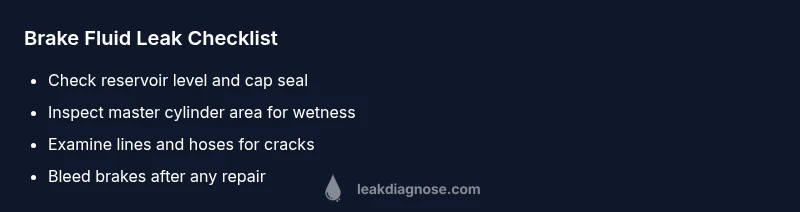
How to Tell If Leaking Brake Fluid: Troubleshooting Guide
Urgent, practical guide to identify brake-fluid leaks, inspect risky spots, and fix or seek professional help safely.


According to Leak Diagnosis, the most likely cause of a brake fluid leak is a failing master cylinder seal or corroded brake lines. Start by checking the master cylinder reservoir, then inspect visible hoses and calipers for wetness, and note the location of any puddle or staining. If you see fluid, avoid driving and seek professional help.
Understanding Brake Fluid Leaks
Brake fluid is the lifeblood of your hydraulic braking system. When fluid leaks, your braking performance can decline, and the risk of a total brake failure increases. How to tell if leaking brake fluid starts with visual cues: you might see a brownish or amber puddle under the car, around the master cylinder, or along brake lines. You may notice a slick residue on the inside of the wheel well or engine bay. The brake pedal may feel spongy or travel farther than usual, and the brake warning light may illuminate on the dashboard.
Leak Diagnosis Analysis, 2026, notes that many leaks originate at the master cylinder seals or worn brake lines. In addition, corrosion at fittings or a loose cap can allow fluid to escape. Because brake fluid also absorbs moisture over time, it can become slightly dirty and discolored, making leaks harder to spot. The sooner you identify and address a leak, the safer your vehicle will be.
In this section we’ll cover common symptoms, where leaks start, and safe checks you can perform at home without compromising your safety.
Common Symptoms to Look For
- Visible fluid puddles under the vehicle, especially near wheels or along the brake lines.
- A drop in brake fluid level on the reservoir, or a low reading on the brake fluid indicator.
- A soft or sinking brake pedal that feels less firm than normal.
- Dashboard brake warning light or ABS light that activates unexpectedly.
- Wet or stained components around the master cylinder, hoses, or calipers.
- A distinct sweet or petroleum-like odor near the engine bay, depending on the fluid formulation.
According to Leak Diagnosis analysis, the two most frequent failure points are the master cylinder seals and corroded brake lines, so focus your inspection there when you see these signs.
Where Brake Fluid Leaks Typically Start
Most leaks originate in the hydraulic section of the braking system. The master cylinder, located on the brake booster at the engine bay, is a common source due to worn seals or a failed seal between the piston and housing. Brake lines and hoses can crack, develop bulges, or corrode at threaded fittings, leading to seepage or spurts of fluid. Caliper seals and bleeder screws can also leak if pistons corrode or seals wear out. Finally, a loose reservoir cap or a cracked reservoir can allow air and fluid to escape, especially after pressure changes during driving.
Visual inspection should look for wetness along metal lines, clamps, and rubber hoses, plus staining around the reservoir and caliper areas. If the leak location is high in the engine bay, it is more likely to be a master cylinder or reservoir issue; if it’s near wheels, focus on hoses, calipers, and bleeders.
Immediate Safety Steps If You Find a Leak
- If you notice brake fluid leakage while driving, slow down gradually and pull over to a safe location. Do not continue to drive for long distances.
- Turn off the engine and avoid smoking or creating sparks near the fluid, which can be flammable.
- Use warning triangles or hazard lights to alert other drivers.
- Do not attempt a roadside fix with improvised materials; brake fluid is a chemical irritant and can damage painted surfaces.
- If you can see fresh fluid or the reservoir is visibly low, call for roadside assistance or arrange a tow to a repair shop.
Safe Diagnostic Checks You Can Do With The Car Off
-
Put on eye protection and gloves; never work under a car supported only by a jack.
-
Check the brake fluid reservoir cap for a tight seal and look for cracks or damaged gaskets.
-
With the engine off, inspect the area around the master cylinder for dampness or staining.
-
Inspect visible brake lines and rubber hoses for cracks, bulges, or wet spots.
-
Wipe away obvious staining to help locate where fluid is leaking during a road test.
-
Note color and smell of any fluid you find; brake fluid is usually clear to amber when fresh but becomes darker with age.
Step-By-Step Quick Diagnosis Guide
- Park safely, chock wheels, and locate the leak source by following fluid trails from the reservoir to each wheel.
- Check the master cylinder and brake booster area for wetness around the cap and seals.
- Inspect steel lines and rubber hoses for signs of wear, corrosion, or pooling fluid.
- Examine caliper pistons, bleeder screws, and wheel bearings for seepage.
- Refill the reservoir if needed with manufacturer-specified fluid and avoid overfilling.
- If you found a leak, bleed the brake system after repair and test the pedal feel gradually in a controlled area. Tip: Document the leak location with photos before you start repairs.
How to Fix Common Leaks (Paths and Pros/Cons)
- Replacing a leaking master cylinder: Pros include restoring proper brake pedal feel; Cons include significant labor and potential cost. Hard.
- Replacing worn brake lines: Pros include stopping further leakage; Cons include labor and potential rust repair. Hard.
- Caliper seal replacement: Pros include targeted fix; Cons include disassembly and possible rotor removal. Medium to hard.
- Bleeding brakes after repairs: Pros include removing air; Cons require knowledge and tools. Medium.
- Simple fixes like resealing a reservoir cap are not a long-term fix; they are temporary and risk re-leak.
Always prioritize safety; if you are not comfortable, contact a licensed technician.
Prevention and Maintenance to Avoid Leaks
- Inspect lines and hoses during regular maintenance every 12–24 months, or sooner if you drive in harsh conditions.
- Replace aging fluid every 2–3 years and use the recommended type for your vehicle.
- Keep the reservoir cap tight and clean to prevent contamination and pressure loss.
- Check for wet spots after severe braking or high-speed driving and address any staining promptly.
- Consider scheduled professional brake inspections if you notice any changes in pedal feel or braking performance.
When to Replace Components and What to Expect
- Master cylinder: replacement is common when seals fail; plan for brake fluid flush and system bleed.
- Brake lines and hoses: replacement is necessary for visible cracking or bulges; prepare for rust repair and torque specs.
- Calipers: replace seals if pistons become stuck or leaking; consider rotor inspection and possible resurfacing.
- Pads and rotors: while not leaks, inspect for overall wear and safety.
Final Safety Reminder and Road-Testing Preparations
- Do not drive far with a brake-fluid leak; the risk of total brake failure is real.
- Schedule a professional brake inspection as soon as possible after a leak is identified.
- When road-testing after repairs, test at low speeds in a safe area and avoid highway driving until you are sure the system is solid.
- Keep a fire extinguisher and first-aid kit in your vehicle as a safety precaution.
Steps
Estimated time: 90-120 minutes
- 1
Park safely and locate the leak source
Secure the vehicle on a level surface, engage parking brake, and chock the wheels. Visually trace fluid from the reservoir toward each wheel to identify the leak path.
Tip: Take photos from multiple angles before touching anything. - 2
Check the reservoir and lines
Open the brake fluid reservoir cap and check fluid level and color. Inspect visible hoses and the master cylinder area for dampness or staining.
Tip: Do not open the cap if the system is hot. - 3
Inspect calipers and bleeders
Look for wet spots near caliper seals or bleeder screws. Gentle wiggling of components can reveal seepage signs.
Tip: Be mindful of hot components after driving. - 4
Assess the risk and plan repair
Determine whether the leak is minor or major. If leak is active, plan to repair at a shop rather than continuing to drive.
Tip: If unsure, err on the side of safety and tow the vehicle. - 5
Refill and prepare for bleeding
If you must drive briefly to a shop, fill the reservoir to the max line with the correct fluid type but do not exceed."
Tip: Bleeding will be required after most repairs. - 6
Test pedal feel after repair
After repair, bleed the brakes and test pedal feel in a controlled area at low speed to confirm solid braking.
Tip: Have a passenger assist and stay alert for any changes.
Diagnosis: Brake fluid puddle under the vehicle or a soft brake pedal
Possible Causes
- highWorn or cracked brake lines/hoses
- highMaster cylinder seal failure
- mediumCaliper piston seals leak
- lowLoose reservoir cap or damaged reservoir
Fixes
- hardInspect and replace worn lines or hoses; reseat and tighten fittings as needed
- hardReplace faulty master cylinder seals and bleed the brake system
- mediumBleed brakes to remove air after hydraulic repair
- easyTighten/replace reservoir cap and refill to proper level if needed
Questions & Answers
What are the most common signs of a brake fluid leak?
Common signs include puddles under the car, a low brake fluid level, a soft pedal, and warning lights on the dashboard. If you notice any of these, inspect promptly.
Look for puddles, low fluid, or a soft brake pedal, and check the dashboard lights. If you see these, inspect your brake system quickly.
Can I drive my car if I detect a brake fluid leak?
No. A brake-fluid leak compromises stopping power and can lead to a total brake failure. Have the vehicle towed or serviced immediately.
No, don’t drive. Brake fluid leaks are dangerous, and you should have it towed to a shop.
What should I do first if I suspect a leak?
Safely pull over, turn off the engine, and avoid any flames. Check the reservoir level and visually inspect the area around the master cylinder and hoses.
Pull over safely, turn off the engine, and check the brake-fluid area and reservoir to gauge seriousness.
Is brake fluid harmful to touch?
Yes, brake fluid is chemically irritating. Wear gloves and avoid skin contact; clean spills with appropriate absorbent material.
Brake fluid is irritating to skin, so wear gloves and clean spills carefully.
How often should I inspect brakes to prevent leaks?
Regular inspections during routine maintenance help catch leaks early. If you notice changes in pedal feel or braking performance, get it checked.
Check brakes during regular maintenance, especially if you notice changes in braking performance.
What is the recommended sequence after repairing a brake leak?
Bleed the brake system in the manufacturer-recommended order, then test the pedal in a safe area before road use.
After repairs, bleed brakes as instructed and test the pedal in a safe space before driving.
Watch Video
Main Points
- Do not drive far with a brake-fluid leak
- Identify leak source quickly to limit damage
- Bleed brakes after repair to remove air
- Use manufacturer-specified brake fluid only
- Schedule professional inspection if the leak persists