How Much to Repair Brake Fluid Leak: Cost Guide for 2026
Learn the cost range, factors, and practical steps for repairing brake fluid leaks in 2026. From hose fixes to master cylinder replacements, get a data-driven budget plan and practical tips.


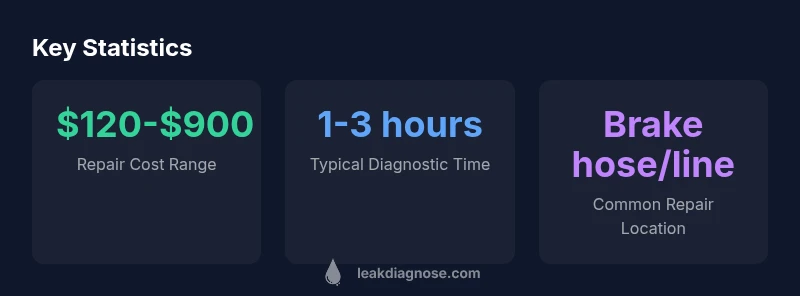
Typical brake fluid leak repairs cost between about $120 and $900, depending on the leak's location, parts needed, and labor rates. Minor hose clamps or fittings are on the low end; replacing a brake line, master cylinder, or caliper can push costs higher. Prices vary by vehicle model and region, and some shops bill diagnostic fees. Always get a written, itemized estimate before work.
What influences brake fluid leak repair costs
Brake fluid leak repairs are not a one-size-fits-all expense. The most influential factors are the leak location, the extent of fluid loss, the parts required, and the labor rate in your area. A small leak at a hose connection or hose clamp may be resolved with a simple seal replacement and bleeding, costing considerably less than a full brake hose replacement or a failed master cylinder. Vehicle design also plays a role: European models with complex braking systems can incur higher labor times, while some domestic models use more accessible components. Finally, shop policies, diagnostic fees, and warranty terms can add to the final bill. Understanding these variables helps homeowners budget and avoid sticker shock.
Cost breakdown by component and labor
Prices vary, but most people see costs fall into a few categories. Minor hose clamps or fittings typically sit on the lower end of the scale. Replacing a brake hose or a caliper seal can be mid-range, while a master cylinder replacement or brake line overhaul tends to push costs higher. Use the following rough ranges as a baseline, knowing that actual quotes depend on your car and local labor rates:
- Brake hose or line repair: $120–$600
- Caliper seals or caliper service: $150–$900
- Master cylinder replacement: $200–$900
- Brake system bleed and fluid: $40–$120 (plus parts if needed)
Remember that some shops may charge a diagnostic fee or require a full brake job if multiple components are affected. Always request an itemized estimate before any work begins.
How to get an accurate estimate and avoid surprises
Start with a quick inspection by a qualified technician to identify the exact leak source and the necessary repairs. Ask for an itemized estimate that separates parts, labor, and any diagnostic fees. If possible, obtain multiple quotes to compare pricing and approaches. Request a written warranty or guarantee on both parts and workmanship, and verify that the quote includes a brake bleed if the fluid loss required it. For safety, avoid driving long distances with a suspected brake fluid leak and arrange for a tow if the level drops significantly.
Practical budgeting tips and cost-saving strategies
To minimize cost and ensure safety:
- Get multiple written estimates and compare the parts quality and labor hours.
- Ask for a scope that prioritizes essential repairs first (e.g., fixing the leak source) and postpones non-critical components if feasible.
- Inquire about remanufactured parts or remanufactured calipers where appropriate, but confirm warranties.
- Check for local shop promotions or early-bird scheduling; some shops offer reduced diagnostic fees if you proceed with repairs.
- Ensure the shop performs a full brake bleed after any fluid replacement to restore proper brake pedal feel and performance.
What to expect after the repair and testing
After the repair, most shops perform a test drive to verify brake performance and a second bleed if needed. They’ll check the brake fluid reservoir level and replace it with the correct type for your vehicle. A final inspection should confirm there are no leaks and that the brake warning light remains off. Keep the receipt and initial maintenance record for future service and potential warranty claims.
Estimated cost ranges for common brake fluid leak repairs
| Component/Repair | Estimated Cost Range (USD) | Notes |
|---|---|---|
| Brake hose repair | 120-600 | Often minor leak fixes |
| Caliper seals replacement | 150-900 | Labour-intensive on some models |
| Master cylinder replacement | 200-900 | Critical system component |
| Brake bleed and fluid refresh | 40-120 | Parts extra if needed |
Questions & Answers
What factors drive the cost to repair brake fluid leaks?
Costs are driven by the leak location, parts required, labor time, and regional shop rates. Complex systems or multiple components being affected raise the price. Always request a detailed, itemized quote.
Costs depend on where the leak is, what parts are needed, and local labor rates. A clear, itemized quote helps you plan.
Can I fix brake fluid leaks myself?
Brake systems are safety-critical. DIY repairs can be risky and may void warranties. If you lack proper tools and training, rely on a qualified technician.
This is a safety-critical area—it's best to have a professional handle it.
What are common signs of a brake fluid leak?
Look for puddles near wheels, a dropping brake fluid reservoir, spongy brakes, or warning lights. If in doubt, have a professional inspect the system promptly.
Puddles, low brake fluid, and soft-brake feel are red flags.
Is it safe to drive with a brake fluid leak?
Driving with a leak can lead to sudden brake failure. Until inspected, minimize driving and arrange for towing if possible.
No—brakes may fail under pressure. Get it checked before driving far.
How long does a brake fluid leak repair take?
Most repairs take 1–3 hours, depending on the component and parts availability. Some jobs may require longer if multiple parts are involved.
Most repairs take a couple of hours, but it can vary.
Should I request a leak test after repair?
Yes. A follow-up leak test confirms the fix and ensures no additional leaks or air in the system remain. Request an itemized test plan.
Definitely—testing confirms the fix and brake reliability.
“Brake fluid leaks threaten brake performance and safety; timely diagnosis and correct repair prevent bigger problems.”
Main Points
- Define the leak source early to target costs.
- Expect a broad cost range (roughly $120–$900).
- Get itemized quotes before any work.
- Budget for potential diagnostic fees and brakes bleed.
- Prioritize safety-first; leaks can lead to brake failure.