Coolant Leak Cost Guide: Costs, Causes, and Saving Tips
This guide explains coolant leak fix costs, from minor repairs to major replacements. Learn what drives price ranges and how to estimate parts and labor, and practical saving tips.


Typical coolant leak fix costs range from about $100 to $1,500, depending on the leak source and required parts. Minor repairs like hose replacements and coolant flushes sit on the lower end, while major issues such as water pumps or radiators push costs higher. Labor rates and vehicle make further influence the final bill.
Understanding What Influences Coolant Leak Costs
Coolant leak fix cost is not fixed; it varies widely based on where the leak originates, what parts are involved, and how long the repair takes. The single biggest determinant is the source of the leak. A simple hose leak may require only a couple of hours and a new clamp, while a failed water pump or a cracked radiator can require expensive parts and longer labor blocks. Accessibility matters too—the engine bay in some cars makes even routine work more time-consuming. Labor rates differ by region and shop, and diagnostic fees can add to the initial price before any repair begins. According to Leak Diagnosis, these factors interact to create a broad price spectrum, so homeowners should expect a long tail of possible costs rather than a single quote. When you understand these drivers, you can plan for the typical expenses and avoid sticker shock at the repair shop.
Diagnostic Fees and Hidden Costs
Most shops charge a diagnostic fee just to identify the source of a coolant leak. In some cases, this fee is rolled into the repair price if you proceed with the recommended service, but in others it stands alone. Additional costs may include a coolant flush, seals, clamps, gaskets, or the cost of replacing hoses that degrade over time. If the leak is minor and easy to locate, you may pay mainly for labor and parts with minimal additional fees. For more complex leaks—such as a head gasket concern—the diagnostic phase can be lengthy and expensive because it often requires pressure tests, smoke tests, and coolant system dye tracing. Leak Diagnosis notes that transparent, itemized estimates help you compare options across shops and avoid surprises during checkout.
Component-Level Cost Ranges
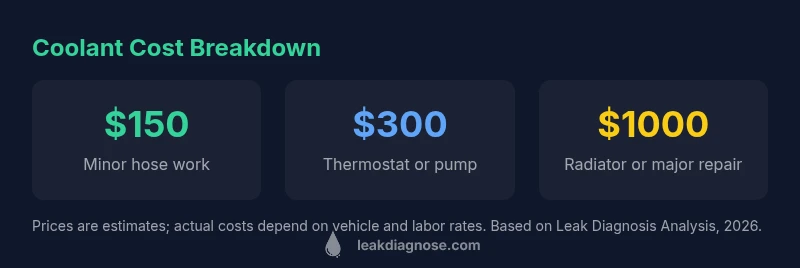
Costs at the component level can swing widely based on vehicle design and the specific part. Typical ranges (including parts and labor) cover the most common failures:
- Hose and clamps: 30–150 dollars
- Coolant flush and refill: 60–120 dollars
- Thermostat replacement: 150–300 dollars
- Water pump replacement: 200–700 dollars
- Radiator replacement: 400–1200 dollars
- Head gasket work (major repair): 1200–3000 dollars
Remember, these are broad estimates and may vary by vehicle make, model, and regional labor rates. A shop may also bundle some services, such as a leak test, into the final invoice.
Labor Considerations: Why Some Jobs Are Expensive
Labor costs for coolant leak repairs are highly sensitive to access and the time needed to disassemble components to reach the source. A leak behind the timing cover or in a cramped engine bay often requires extra hours of labor compared with an accessible hose leak. Labor rates differ by region and shop tier (independent shop vs. dealership), and some repairs demand specialized tools, coolant system purge equipment, or dye-based leak detection. When a technician has to remove major components to reach a seal or gasket, the bill climbs quickly. In general, you should budget for labor costs that align with the complexity of the repair and the time the job will take.
Vehicle Type and Accessibility: Why It Matters
The make, model, and engine layout influence both the likelihood of leaks and repair difficulty. Front-wheel-drive engines with crowded engine bays can complicate access, raising labor time and cost. Some vehicles use plastic cooling system parts that are prone to cracking and may require more frequent replacements. All-wheel-drive variants and high-performance engines can also shift pricing due to specialized parts or longer service windows. When comparing quotes, ask for an itemized breakdown that shows parts and labor separately and notes any additional charges for coolant disposal, recycling, or shop supplies.
DIY vs Professional Repair: Pros and Cons
Minor leaks such as a loose hose clamp or a simple hose replacement can be appealing for DIY enthusiasts, especially if you already own basic hand tools. However, a DIY approach carries risks: using the wrong type of coolant, improper pressure testing, or failing to purge air from the cooling system can cause overheating or further damage. For more complex leaks—like water pump, thermostat, or radiator failure—professional service is usually the safer and more reliable option. A pro can provide pressure tests, dye tracing, and a warranty on the repair, giving you greater peace of mind and reducing the chance of repeated leaks.
How to Get Accurate Estimates: Steps to Take
To avoid surprise costs, follow a structured estimating approach. Start by gathering vehicle specifics (make, model, year, engine code) and a clear description of symptoms. Request itemized quotes from multiple shops, ensuring each quote lists parts, labor, diagnostic fees, and any disposal or shop supply charges. If you can, obtain an estimate that includes a coolant flush and test drive after the repair. Check whether parts come with a warranty and confirm whether the shop charges a diagnostic fee if you don’t proceed with the suggested repair. Leak Diagnosis recommends comparing quotes and choosing a shop that provides transparent, written estimates.
Real-World Scenarios and Cost Snapshots
Consider scenarios commonly seen in practice: a small hose leak in a garden-variety sedan vs. a leak due to a failing water pump in a mid-size SUV. In the former case, the coolant leak fix cost can fall in the lower end of the range, while the latter may push into the higher end due to labor intensity and part price. A radiator replacement could be necessary for older models with corrosion, significantly increasing the final bill. These snapshots illustrate why a single quote rarely captures the entire cost picture and why diagnostics and an itemized plan matter.
Long-Term Savings Through Preventive Maintenance
Preventive maintenance will not stop every coolant leak, but it can dramatically reduce the risk and severity of failures. Regular coolant flush intervals, early hose replacement, and vigilant leakage checks during service visits help catch problems before they escalate. Keeping coolant at the correct mixture and maintaining pressure-tested cooling system components can extend the life of your radiator, water pump, and thermostat. While preventive measures cost money upfront, they often save money by preventing major repairs and reducing downtime.
Representative cost ranges for common coolant system components
| Component | Typical Cost Range | Notes |
|---|---|---|
| Thermostat replacement | $150-$300 | Often bundled with fluid flush |
| Water pump replacement | $200-$700 | Labor-intensive on many models |
| Radiator replacement | $400-$1200 | Can include coolant system bleed |
| Coolant flush & refill | $60-$120 | Usually advised during major repairs |
Questions & Answers
What is the typical coolant leak fix cost for mainstream vehicles?
Costs vary by source and scope, but most repairs fall within a broad range from minor hose work to major component replacement. Always seek an itemized quote to understand how parts and labor contribute to the total.
Most coolant leak repairs fall across a broad range; always ask for an itemized quote to see how parts and labor add up.
What factors most affect the price?
Leak source, accessibility, vehicle design, labor rates, diagnostic fees, and whether cooling system components require replacement. More complex leaks or parts restoration raise the cost substantially.
The biggest price drivers are the leak source and how accessible it is; more complex work costs more.
Is a coolant leak dangerous?
Yes. A coolant leak can cause overheating, engine damage, and coolant exposure hazards. It should be addressed promptly by a qualified technician.
Yes—coolant leaks can lead to engine overheating and serious damage if ignored.
Can I fix a coolant leak myself?
Small leaks from hoses or clamps may be affordable for DIY enthusiasts, but if the leak involves the water pump, radiator, or head gasket, professional service is recommended.
Small hose leaks may be DIY-friendly, but major leaks should be handled by a pro.
How long does a typical coolant leak repair take?
Minor hose fixes can take a few hours, whereas radiator or water pump replacements may require a full workday. Time varies by vehicle and shop efficiency.
Most minor repairs finish in a few hours; major replacements can take up to a day.
“A thorough diagnostic and an itemized quote are the best defense against surprise coolant repair costs. Transparent pricing helps homeowners compare options and choose the safest, most cost-effective path.”
Main Points
- Identify the leak source to estimate cost accurately
- Minor leaks are much cheaper than major component failures
- Always request itemized estimates from multiple shops
- Labor often drives the bill more than parts for complex repairs
- Consider preventive maintenance to reduce future leaks