What's leaking under my car? A practical diagnostic guide
Learn how to identify what's leaking under your car, distinguish engine oil, coolant, and other fluids, and take safe, practical steps to diagnose and fix the issue. A practical guide by Leak Diagnosis.


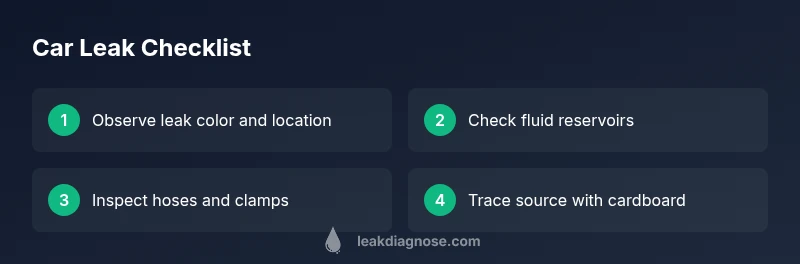
Most leaks under a car come from the engine bay or undercarriage and are often fluid from the engine oil, coolant, transmission, or brake hydraulics. Start with visual inspection: look for fresh fluid color, smell, and residue. Check fluid levels, inspect hoses and clamps, and place clean cardboard to locate the drip source. Then plan next steps or call a pro if unsure.
Why leaking under your car matters
According to Leak Diagnosis, a leak under your car is not just a nuisance—it can signal serious failures that kneecap performance, safety, and long-term reliability. The question many drivers ask is, what's leaking under my car and how dangerous is it? Fluids are vital for lubrication, cooling, and brake functions; when they escape, components can overheat, seize, or corrode. Left unchecked, a small drip can become a large, expensive problem. Early detection gives you control: you can limit damage, plan repairs, and keep driving safely while repairs are scheduled. In this guide, we’ll cover common sources, quick tests, and practical, safe steps you can take today.
Common leak sources in cars
Leaks have a few predictable culprits depending on where they occur and what color or smell they carry. The most common sources include engine oil from seals, gaskets, or the oil pan; coolant from hoses, radiator, water pump, or reservoir; transmission fluid from pan gaskets or lines; brake fluid from the master cylinder or lines; and power steering fluid from hoses or the steering rack. Fuel leaks are the most dangerous due to fire risk and require urgent attention. Each fluid has a characteristic color and odor that helps with quick identification, but never base a diagnosis on smell alone. Always verify with a visual check and fluid level readings.
Visual clues and smell indicators
To identify leaks quickly, observe the color and viscosity of the liquid on the ground or on a white surface under the vehicle. Engine oil is brown to black and has a distinct notched, burnt odor when old; fresh oil is amber and slick. Coolant is usually bright green, orange, or pink and has a sweet, syrupy scent. Transmission fluid is red and becomes brown with age. Brake fluid is pale yellow or clear and very slick. Fuel leaks may appear as clear to slightly brown liquid with a gasoline odor and require immediate caution. If you notice smoke, unusual smells, or a strong solvent-like vapor, stop driving and inspect for leaks in a safe area.
How to safely inspect the source at home
Begin with a clean, well-lit area and allow the car to cool before touching hot components. Place clean cardboard or white paper underneath to capture drips, noting the location and timing of leaks. Check fluid reservoirs (engine oil, coolant reservoir, brake fluid, and power steering fluid) and compare current levels to known normal values. Inspect hoses, clamps, and visible seals for signs of swelling, cracking, or looseness. If the source isn’t obvious from the ground, raise the front of the car safely with jack stands to inspect the undercarriage, looking for seepage around the oil pan, transmission, radiator, and exhaust connections.
Diagnostic flow overview
Leak diagnosis follows a logical flow: observe the symptom (a pool or dripping liquid), hypothesize likely causes based on location and color, test by checking fluid levels and components, then apply targeted fixes. If you cannot confirm the source or the leak involves fuel or brake systems, treat it as high-priority and seek professional help. Use the color, odor, and location clues together to narrow down the culprit.
Safety and where professional help is needed
Automotive leaks can pose fire hazards and environmental damage. If you smell fuel, see bright green coolant, or notice a rapidly expanding puddle, stop driving and contact roadside assistance. Do not attempt to seal or “top off” a leaking system, especially for oil, coolant, or brake fluid. A professional should perform a pressure test and a proper fluid analysis to avoid misdiagnosis and to ensure all safety systems remain intact.
Prevention and maintenance to avoid future leaks
Regularly check fluid levels and top up as needed, but don’t overfill. Replace aging hoses, clamps, and gaskets on a routine maintenance schedule, and perform a coolant system flush when recommended by the manufacturer. Keep the engine area clean to spot leaks early, and address any abnormal sounds, smells, or temperature changes promptly. A proactive approach—with preventive maintenance and scheduled inspections—reduces the likelihood of major leaks developing.
Steps
Estimated time: 60-90 minutes
- 1
Prepare safety gear and workspace
Park on a flat, level surface and set the parking brake. Allow the car to cool completely before inspecting. Gather a flashlight, clean rags, a disposable tray, and a few cardboard sheets to track leaks.
Tip: Wear gloves and eye protection to avoid contact with chemicals. - 2
Observe the leak color and location
Note where the drip originates—under the engine, transmission, radiator, or brake area. Compare the color to common fluids (oil, coolant, transmission fluid) and take a quick photo for reference.
Tip: Use a white sheet of paper under the leak to improve visibility. - 3
Check fluid levels visually
Inspect engine oil, coolant, brake fluid, transmission fluid, and power steering fluid. Low levels with a corresponding puddle increases the likelihood of a leak from the related system.
Tip: Do not rely on color alone; odor and viscosity matter too. - 4
Inspect accessible components
Look for wet spots around hoses, clamps, the oil pan, radiator, and reservoir caps. Tighten loose clamps and look for cracked hoses or loose fittings.
Tip: Be cautious around hot parts and avoid forcing components. - 5
Trace the source with a tracing method
Place clean cardboard or a white tray under the suspected area and drive slowly in a safe area to observe the drip path. Record color, flow rate, and location changes.
Tip: If you can't determine the source, don’t drive far. - 6
Decide on next steps by fluid type
If the leak is oil or coolant, plan for a repair visit. For transmission or brake fluid leaks, seek urgent professional service due to safety implications.
Tip: Some leaks can wait for a scheduled maintenance window; others require immediate attention. - 7
Plan for professional help if needed
If fuel, brake, or high-pressure coolant leaks are suspected, call for roadside assistance or tow to avoid fire hazards. Prepare maintenance records and a note of observed symptoms for the mechanic.
Tip: Don’t attempt risky DIY fixes on fuel or brake systems.
Diagnosis: Vehicle leaves fresh fluid spots under parked car
Possible Causes
- highEngine oil leak from filter, pan, or gasket
- highCoolant leak from hose, radiator, or water pump
- mediumTransmission fluid leak from pan gasket or lines
- lowBrake fluid leak from caliper or hose
- lowPower steering fluid leak from rack/hoses
Fixes
- easyTighten or replace dripping hose/clamps; replace faulty gasket or seals; top up and test oil system
- mediumReplace damaged radiator hose, radiator, or water pump; pressure test cooling system
- mediumRepair or replace transmission pan gasket; replace faulty transmission lines; flush fluid if contaminated
- hardAddress brake fluid leak by inspecting master cylinder, calipers, lines; refill and bleed braking system
- hardRepair power steering hoses or rack; refill fluid; test steering response
Questions & Answers
What should I do first if I notice a leak under my car?
Park safely, let the car cool, and place cardboard under the suspected area. Check fluid levels and note color and location. If fuel or brake fluid is suspected, avoid driving and seek professional help immediately.
Park safely, check colors, and note where the leak is coming from. If it seems like fuel or braking fluid, get help right away.
How can I tell the difference between oil and coolant leaks?
Oil leaks usually appear as brown to black and have a slick feel, sometimes with a burnt odor. Coolant leaks are bright green, orange, or pink and have a sweet smell. Check the reservoir levels and trace back to the source to confirm.
Oil tends to be darker and slick; coolant is bright and often smells sweet. Check levels and sources to verify.
Is it safe to drive with a leak?
Driving with a leak can be risky, especially if it involves fuel, brake fluid, or coolant. Short trips may be possible for oil leaks, but monitor closely and avoid excessive driving until diagnosed by a professional.
It can be risky to drive with leaks, especially fuel or brakes. If in doubt, stop and get a tow.
Should I use stop-leak products?
Stop-leak products are not a cure for mechanical failures and can cause clogs or damage elsewhere. It’s best to avoid them and pursue proper diagnosis and repair.
Stop-leak products aren’t a fix for real issues—they can cause more problems. Get a real repair instead.
When is it necessary to tow the car?
If the leak is severe, involves fuel, or the engine shows overheating or warning lights, tow the car to a shop. For minor oil leaks, you may drive cautiously to a mechanic but monitor the situation.
Tow it if it’s a fuel leak or you’re unsure about the source. Minor leaks may be manageable with care.
What maintenance helps prevent leaks?
Regularly check fluid levels, replace aging hoses and gaskets, and perform routine coolant and oil changes per the manufacturer’s schedule. A proactive approach reduces future leak risks.
Keep up with fluid checks and replace worn hoses to prevent leaks.
Watch Video
Main Points
- Identify the leak source before driving.
- Color, odor, and location guide diagnosis.
- Don’t ignore safety risks—fuel and brake leaks require prompt action.
- Consult a professional for complex or high-risk leaks.