Is It Okay to Drive with an EVAP Leak? A Practical Troubleshooting Guide
Learn whether it's safe to drive with an EVAP leak, why it matters, and a practical troubleshooting guide from Leak Diagnosis to protect your car and the environment.


No, driving with an EVAP leak is generally not advised. An EVAP leak can release fuel vapors, raise emissions, and may trigger the check engine light. Common causes include a loose gas cap, cracked hoses, or a faulty purge valve. If you smell fuel or see the CEL, pull over safely and arrange a diagnostic check.
Is It Okay to Drive with an EVAP Leak?
If you're asking 'is it ok to drive with evap leak', the short answer is: usually no. According to Leak Diagnosis, driving with a leak in the evaporative emissions system can release fuel vapors, worsen odor, and may lead to higher emissions or a failed inspection. The most common culprits are a loose gas cap, cracked hoses, or a faulty purge valve. If you notice a strong fuel odor, CEL, or suspect a leak, pull over safely and arrange a diagnostic check.
Common EVAP Leaks: Gas Cap, Hoses, and Purge Valves
EVAP leaks typically arise from three areas: the gas cap, the hoses that route vapors, and the purge valve or canister. A loose, cracked, or defective gas cap is by far the easiest fix and commonly triggers a P0440-style code. Damaged hoses can occur where they pass near hot components under the hood, and small cracks can grow with age. A failing purge valve may stick open or closed, allowing vapors to escape or not vent efficiently. Regular inspection and replacing worn parts can prevent leaks and protect fuel economy.
Symptoms That Signal an EVAP Problem
Identifying an EVAP problem early can save you time and money. Look for a check engine light that stays on or comes back after reset, a noticeable fuel odor around the vehicle, reduced fuel economy, and occasional rough running if the system is severely compromised. Some leaks are tiny and only detectable with specialized tools, so treat any consistent CEL as a warning sign and investigate promptly.
DIY Inspection: Quick Checks You Can Do Safely
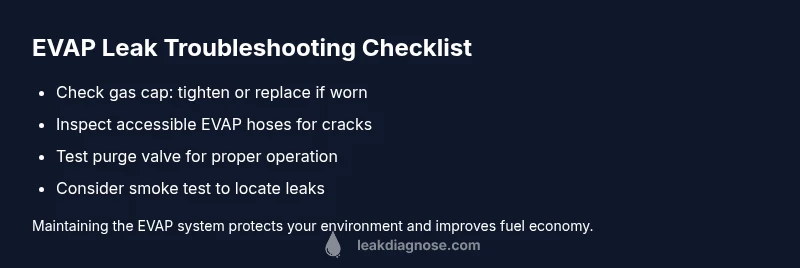
Begin with the easiest checks to avoid unnecessary costs. Start by inspecting the gas cap: tighten it firmly until you hear a click and replace it if the gasket is worn or cracked. Next, visually inspect accessible EVAP hoses for cracks, splits, or signs of wear, especially where hoses bend or pass near heat sources. If you find damaged hoses, replace them and retest. For a suspected purge valve issue, look for signs of sticking or failure to vent; this may require professional testing.
When to Call a Professional
If the CEL remains on after you address gas cap issues, or you notice persistent fuel smell, it’s time to call a professional. The Leak Diagnosis team recommends scheduling a full EVAP diagnostic with a qualified technician to perform pressure checks, a smoke test, and, if needed, component replacement. Do not ignore emissions-related codes, as prolonged leaks can damage the fuel system and increase environmental impact.
Prevention and Maintenance to Reduce EVAP Leaks
Preventing EVAP leaks starts with mindful maintenance. Always secure the gas cap properly after refueling, avoid overfilling the tank, and replace aging hoses before cracks develop. Use quality fuel and air out the system periodically with a service check. Keeping the EVAP system clean and intact helps maintain fuel efficiency and reduces emissions.
Steps
Estimated time: 45-60 minutes
- 1
Verify the symptom
Check for a solid CEL indication or a noticeable fuel odor. If you have an OBD-II scanner, pull codes related to the EVAP system (often P0440–P0444). Confirm that the issue is persistent rather than a one-time glitch.
Tip: Tip: Note any related symptoms (hard starting, poor idle) that could accompany EVAP issues. - 2
Check the gas cap
Tighten the gas cap until it clicks; replace if the seal is cracked or the cap is damaged. Clear any codes after reseating the cap and see if the CEL returns.
Tip: Pro tip: Always use the OEM cap or a compatible equivalent with the correct torque. - 3
Inspect EVAP hoses
With the hood up, inspect accessible hoses for cracks, fraying, or signs of wear. Look where hoses connect to the purge valve and canister for signs of looseness or damage.
Tip: Pro tip: Use a bright flashlight and a mirror to examine hard-to-see sections. - 4
Inspect purge valve and canister
A purge valve stuck open or closed can cause leaks or venting problems. If you suspect a valve issue, a pressure test or professional assessment is recommended.
Tip: Pro tip: Do not apply excessive force to valves; if unsure, skip to professional testing. - 5
Consider a smoke test
A professional smoke test allows you to locate tiny leaks by introducing harmless smoke into the EVAP system and seeing where it escapes.
Tip: Pro tip: Smoke testing is most reliable when pursuing hard-to-find leaks. - 6
Reset codes and monitor
After repairs, use an OBD-II scanner to clear codes and drive normally while monitoring for reoccurrence of the CEL over several days.
Tip: Pro tip: If the CEL returns, do not delay a recheck—emissions issues can worsen over time.
Diagnosis: EVAP leak symptoms (check engine light / fuel odor / reduced fuel economy)
Possible Causes
- highLoose or damaged gas cap
- highCracked or deteriorated EVAP hoses
- mediumFaulty purge valve or canister
- lowDamaged charcoal canister or vent valve
Fixes
- easyTighten or replace gas cap, ensure a full 360° seal
- easyInspect and replace damaged EVAP hoses; check clamps
- mediumTest and replace purge valve or canister as needed
- hardPerform a smoke test to locate leaks; replace charcoal canister if necessary
Questions & Answers
What is an EVAP leak?
An EVAP leak involves the evaporative emissions system that controls fuel vapors. Leaks typically occur at the gas cap, hoses, or the purge valve, often triggering a check engine light.
An EVAP leak is a problem in the emissions system that vents fuel vapors. It usually happens from the gas cap, hoses, or purge valve and can turn on the check engine light.
Is it safe to drive with an EVAP leak?
No. Even small leaks can lead to increased emissions and fuel odor. If the CEL is on or you notice odor or poor performance, limit driving and seek diagnostics.
It's not safe to drive far with an EVAP leak. Limit driving and get it checked soon.
Can a loose gas cap cause the CEL to come on?
Yes. A loose or faulty gas cap is a common cause of EVAP codes and can usually be resolved by tightening or replacing the cap.
A loose gas cap is a frequent reason for EVAP codes and is easy to fix by tightening or replacing it.
Will an EVAP leak fail a vehicle inspection?
Emissions tests may detect an EVAP leak and result in a fail depending on local regulations. Prompt repair helps ensure passing emissions tests.
EVAP leaks can cause inspection failures depending on local rules, so fix promptly.
How long can I drive before fixing an EVAP leak?
There is no safe time frame. If you notice a strong smell or the CEL, limit driving and arrange a diagnostic as soon as possible.
There isn't a safe window—get it checked as soon as you notice symptoms.
Watch Video
Main Points
- Avoid driving long distances with an EVAP leak.
- Gas cap, hoses, and purge valve are the most common culprits.
- A CEL requires prompt attention to prevent emissions damage.
- Professional testing (smoke test) helps locate hard-to-find leaks.