Can You Drive with an Exhaust Leak? A Practical, Urgent Guide
Urgent guide on exhaust leaks: dangers, signs, diagnosis, and safe steps. Learn when to tow, how to inspect, and how to fix, with actionable tips from Leak Diagnosis.


Can you drive with an exhaust leak? The safe, practical answer is no for routine driving. If you suspect a leak, pull over safely and arrange roadside assistance or tow to a shop. Only move short distances if you must, driving slowly with windows down and the engine off as soon as possible after stopping.
Why an exhaust leak demands urgent attention
Exhaust leaks may seem like a minor annoyance, but they are a serious safety and maintenance concern. An opening in the exhaust system can let fumes enter the cabin, degrade fuel efficiency, and cause increased noise. Can you drive with an exhaust leak? The short answer is: not safely or responsibly. Driving with a leak exposes you and your passengers to carbon monoxide in enclosed spaces, and can lead to sudden changes in engine performance, reduced braking power in rare cases, or accelerated wear on other components. The Leak Diagnosis team emphasizes that even small leaks can widen over time, especially where the exhaust pipe or manifold experiences heat cycling and road stress. If you notice a loud ticking, a muffled roar, a sulfuric smell, or a strong exhaust scent inside the cabin, treat it as a red flag. In many vehicles, a diagnostic trouble code will be stored when an exhaust leak is developing, even if the check engine light isn’t on yet. Prioritizing a safe inspection now can prevent costly damage and protect your health.
Quick safety checks you can perform before driving
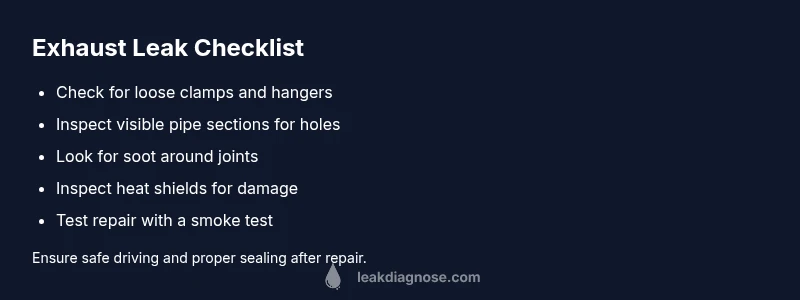
Before you move your vehicle, perform a quick on-spot check so you can decide whether to drive or tow. Start by turning off the engine, letting it cool, and visually inspecting accessible portions of the exhaust system from the engine bay to the rear. Look for shiny or blackened holes, rust perforations, loose clamps, broken hangers, or a visibly sagging exhaust pipe. If you smell strong exhaust fumes inside the cabin, if the vehicle produces an unusual noise that persists after startup, or if the check engine light is on, do not drive. Instead, arrange roadside assistance or a tow. If the exterior looks intact and the car sounds normal, you may still have a leak that isn’t obvious—so err on the side of caution and schedule a professional inspection soon. Remember: even short trips with a leak can worsen the problem; plan to transport the car rather than drive it.
How to tell if you have an exhaust leak
Common indicators include a sharp, hissing or tapping sound coming from under the hood or beneath the vehicle, especially near joints or connections. You may notice a louder exhaust note than usual, reduced fuel economy, or a noticeable exhaust smell inside the car when windows are closed. Visible signs—such as soot around joints, scorched insulation, or rust holes on the pipe—point to a leak. In some cases, misfires or rough running can accompany leaks, as oxygen sensors detect altered exhaust flow. If you experience any combination of these symptoms, treat it as serious and get a professional inspection promptly. Do not assume the problem will self-resolve.
Diagnostic flow: symptom → diagnosis → solutions
Symptoms act as the first clue. If you have a loud noise, unusual odor, or warning lights, begin a methodical check for leaks. The most likely causes are worn gaskets, loose clamps, a cracked pipe, or a failing muffler. Solutions range from tightening clamps and replacing hangers to replacing sections of pipe or gasket assemblies. If the leak is near a critical joint or the manifold, professional repair is often required to ensure complete sealing and safe operation. Always verify after repairs by a test drive or a smoke-test performed by a technician to confirm the leak is fully resolved.
Step-by-step repair routes for common leaks
- Inspect for obvious issues: search for loose clamps, broken hangers, or visible holes. Tighten or replace as needed. Tip: use the vehicle’s service manual for torque specs on clamps. 2) Address minor damage: replace a damaged section of pipe or a worn gasket to seal joints. 3) For cracked manifolds or severe corrosion, plan a controlled repair or replacement with a professional shop. 4) After any repair, perform a test to confirm that the leak is sealed. 5) If DIY is not feasible, arrange a tow to a qualified exhaust shop. 6) Recheck the system periodically after repair to catch any new issues early.
Safety tips and when to call a professional
Never drive if you notice strong fumes inside the cabin or if the exhaust system visibly compromises vehicle safety. Always wear eye protection and gloves when inspecting hot components, and never run the engine in a closed garage. If you’re unsure about the integrity of the repair, or if the leak is near the manifold or catalytic converter, contact a licensed mechanic. Roadside assistance can prevent risky driving with a compromised exhaust system.
Prevention and long-term maintenance to avoid future exhaust leaks
Regular inspections, especially after winters with road salt or heavy road use, can catch corrosion early. Schedule annual exhaust system checks and replace worn hangers, gaskets, and clamps before leaks develop. Use quality replacement parts and avoid cheap, low-quality components that fail prematurely. Keep heat shields intact and ensure the catalytic converter is not damaged by road debris. Practicing routine care saves money and keeps you and your family safe on the road.
Common myths and misunderstandings about exhaust leaks
Myth: All leaks are obvious and easy to spot. Reality: some leaks are tiny and hidden by heat shields or the exhaust’s shape, so professional testing is often needed. Myth: Leaks only affect performance. Reality: they can introduce harmful fumes into the cabin and pose serious health risks. Myth: A quiet car means no leak. Reality: leaks can be silent in certain configurations; monitoring symptoms and periodic checks are essential.
Steps
Estimated time: 45-90 minutes
- 1
Stop and assess safely
If you notice a leak, pull over away from traffic and turn off the engine to prevent exposure to fumes. Let the system cool before touching anything. Use hazards and place a wheel chock if you can, then inspect from a safe distance.
Tip: Never open the hood while hot; exhaust components can be extremely hot. - 2
Do a visual inspection
Check visible sections of the exhaust path for holes, rust, or obvious damage. Look at clamps, hangers, and joints. If you see a hole or a detached section, note its location for the repair plan.
Tip: Use a flashlight and wear gloves to protect from sharp edges. - 3
Check for loose components
Tighten loose clamps and replace any broken hangers that support pipes and the muffler. A simple tightening or replacement can stop many leaks.
Tip: Only tighten to manufacturer torque specs to avoid over-stressing parts. - 4
Evaluate leak severity
If the leak is at a critical joint or near the manifold, plan for professional service. Smaller leaks along non-critical paths can sometimes be addressed with DIY fixes, but accuracy is key.
Tip: Do not assume you can seal a weld with improvised fixes. - 5
Decide on transport options
If you cannot safely drive, arrange roadside assistance or a tow to a repair shop. If you must move the vehicle, drive very slowly and keep the distance short.
Tip: Avoid high speeds; a leak can worsen quickly. - 6
Test after repair
After any repair, start the engine and listen for abnormal sounds. If available, perform a smoke test or use soapy water on joints to check for leaks.
Tip: If you don’t hear/see improvement, seek professional evaluation.
Diagnosis: Loud noise, smell of exhaust fumes inside cabin, poor engine performance, or warning light
Possible Causes
- highLoose clamps or hangers
- highRust perforation in pipe or muffler
- mediumWorn manifold gasket
- lowCracked exhaust pipe or manifold
- lowDamaged catalytic converter shell
Fixes
- easyTighten clamps and replace broken hangers
- mediumRepair or replace damaged pipe or muffler
- mediumReplace worn gasket and reseal joints
- hardReplace cracked sections or manifold if necessary
- easyVentilate interior and avoid driving until leak is fixed
Questions & Answers
Can I drive with an exhaust leak?
Driving with an exhaust leak is risky. If fumes could enter the cabin, it’s best to arrange a tow and have the vehicle inspected by a professional as soon as possible.
Driving with a leak is risky. If you smell fumes inside, tow the car and have it inspected soon.
What are the signs of an exhaust leak?
Look for loud or unusual exhaust noises, a noticeable exhaust smell inside the cabin, reduced fuel economy, or a visible hole or rust on the pipe. A check engine light may come on if sensors detect abnormal exhaust flow.
Common signs include loud noise, smell inside the cabin, and possible check engine codes.
Is a loud exhaust always a leak?
A loud exhaust can indicate a leak, but it may also result from a damaged muffler or restrictive catalytic converter. A proper inspection is needed to confirm.
Loud exhaust can mean a leak, but it could also be a muffler issue. Get it checked.
How much does repair typically cost?
Repair costs vary by location and fix required. Minor fixes like clamps or hangers are cheaper; major repairs like manifold work or pipe replacement will cost more. Check with a local shop for a range after inspection.
Costs vary; small fixes are cheaper, major repairs cost more. Get a diagnosis for a range.
When should I seek immediate help?
Seek immediate professional help if you smell strong fumes, hear intense exhaust noises, or notice reduced driveability that worsens. Do not drive long distances in this condition.
If you smell fumes or hear loud noises, get help now and don’t drive far.
Will a smoke test help diagnose the leak?
A smoke test is an effective way for technicians to locate leaks quickly, including hidden ones. It’s commonly used when visual inspection isn’t conclusive.
A smoke test helps find leaks, especially hidden ones.
Watch Video
Main Points
- Assess safety first; pull over if fumes are detected.
- Loose clamps or rusted sections are the most common leaks.
- DIY fixes are possible for minor leaks; major leaks require a pro.
- Verify repairs with a post-repair test or smoke test.
- Prevent future leaks with regular exhaust maintenance.