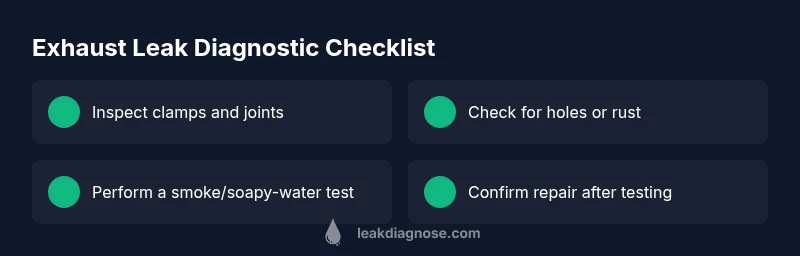
Is There an Exhaust Leak? Practical Detection Guide
Learn how to know if you have an exhaust leak with practical checks, symptoms, and a step-by-step diagnostic flow to keep you and your vehicle safe.


An exhaust leak is most likely caused by a loose clamp or small hole in the exhaust pipe or manifold. Start with a safe visual check and listen for a loud rumble or hissing, especially near joints. Use these steps to diagnose and fix or know when to call a pro.
How to know if you have an exhaust leak
A suspected exhaust leak can threaten your safety and damage engine performance. The most common clues are unusual noises, smells, and visible signs around joints or under the vehicle. Start by understanding what counts as an exhaust leak and why it matters. A small hole or loose clamp might not seem urgent, but exhaust gases contain carbon monoxide, which is a silent risk in enclosed spaces. If you notice any of the signs below, treat them seriously and begin a methodical check using a safe, systematic approach. This guide uses the exact phrase 'how to know if you have an exhaust leak' so you can search quickly for explanations and visuals. By recognizing symptoms early, you protect yourself, your passengers, and your vehicle’s engine performance.
Common symptoms you should watch for
Exhaust leaks reveal themselves in several telltale ways. Listen for a loud, rhythmic rumble or a sharp hiss from under the car, especially when you accelerate or idle. A rotten-egg or sulfur smell near the exhaust area is another warning sign, as is visible soot around clamps, connections, or joints. The cockpit can also fog up due to escaping gases, and you may experience headaches or dizziness from carbon monoxide intrusion in poorly ventilated spaces. If the check engine light comes on, a leak could trigger downstream sensor codes in some vehicles. Remember: not all symptoms point to a leak, but several together substantially raise the likelihood.
Safety-first: what to do before inspecting
Safety matters. If the vehicle is hot, wait for the exhaust system to cool to avoid burns. Work in a well-ventilated area and never stay inside a closed garage with a running engine. Wear eye protection and gloves when inspecting the undercarriage. Never attempt to seal a hole with tape or temporary fixes as a long-term solution; small leaks can expand with heat. If you ever feel dizzy or nauseated from fumes, move to fresh air immediately and seek professional assistance. A systematic inspection starts with exterior checks and progresses to controlled pressure tests where appropriate.
Diagnostic flow: symptom to solution
A practical diagnostic flow helps you differentiate between minor issues and serious leaks. Start with the simplest checks (visual inspection of clamps and joints, listening for noise) and move to more involved tests if needed. If you hear a loud hiss at a joint or feel exhaust gases on your leg while holding a lighted cigarette or incense near the suspected area, this suggests a leak. A leak may cause backpressure changes that affect engine performance, so note any irregular idle, reduced power, or increased fuel consumption as supporting clues. If you still aren’t sure after basic checks, proceed to a pressure test or consult a mechanic for a professional assessment.
Step-by-step fix for the most common leak
- Inspect the exterior: safely lift the vehicle if needed and visually inspect clamps, hangers, and joints for looseness or damage. Tighten clamps if threads are intact and not overtly corroded. 2) Tighten and re-check: re-tighten to manufacturer torque specs if accessible. 3) Address minor holes: for small holes in a pipe, a temporary patch is not recommended; plan for replacement of the affected section. 4) Replace gaskets or flanges: given a cracked gasket, decommissioned flange, or malfunctioning seal, replace with correct OEM parts. 5) Seek pro help for welding or pipe replacement: large holes, severe rust, or failing components require welding or complete pipe replacement by a trained mechanic. 6) After repair, perform a leak check: start the engine, listen for quiet operation, and inspect for soot or staining around joints. 7) Test drive: take a short, controlled drive and recheck visually for any signs of a leak. 8) Reassess safety: ensure exhaust flow feels clean and there are no lingering fumes inside the cabin.
Prevention tips to avoid future exhaust leaks
Routine maintenance helps prevent leaks. Schedule periodic inspections of the exhaust system, including clamps, hangers, and connections, especially after off-road use or rough roads. Drive with a light load to avoid excessive vibration that can loosen connections. If you notice corrosion on clamps or pipes, replace them before a leak develops. Keep exhaust components clean from road salt to extend life, and consider protective coatings where appropriate. Finally, never ignore warning signs and address them promptly to protect your health and engine performance.
When to seek professional help
If you feel unsure at any point, or if you notice significant damage, major holes, or rusty sections, contact a qualified mechanic. Exhaust work can involve gas exposure, heat, and specialized tools; attempting repairs beyond basic tightening can be dangerous without training. A professional can confirm leak location, ensure proper sealing, and perform warranty-compliant repairs. Remember: professional help is essential for structural damage, catalytic system issues, or any sign of a gas leak.
Steps
Estimated time: 1-3 hours
- 1
Safety first and initial observation
Park on a level surface, wear protective gear, and visually inspect the entire undercarriage for obvious holes, cracks, or loose clamps.
Tip: Let the system cool before touching any parts. - 2
Check clamps and joints
Tighten clamps by hand first, then with the proper tool to the manufacturer torque spec. Look for shiny metal indicating loosening.
Tip: Do not overtighten; metal fatigue can occur. - 3
Listen for leaks
With the engine running at a safe idle and in a well-ventilated area, listen for a hissing or popping sound around joints.
Tip: Keep your face away from the tailpipe when starting the engine. - 4
Conduct a smoke or soapy-water test
Dab soapy water on suspect joints while the engine runs; bubbles indicate leaks. A smoke machine test is more reliable if available.
Tip: Avoid inhaling fumes; perform in a ventilated space. - 5
Replace minor components
If you detect a small hole or corroded pipe, replace the affected section with the proper part.
Tip: Verify the part number before ordering. - 6
Confirm leak is fixed
Re-check joints and run the engine again to ensure no further leakage; document any signs of staining or soot.
Tip: Take photos for reference before and after.
Diagnosis: Car makes loud exhaust noise, smells fumes, or you notice soot near joints.
Possible Causes
- highLoose or damaged exhaust clamps/hangers
- highSmall holes or rust perforation in exhaust pipe
- mediumGasket or flange leak at manifold or pre-cat sections
- lowCracked exhaust manifold due to heat stress
Fixes
- easyTighten or replace loose clamps and hangers; re-seat joints
- mediumReplace damaged pipe or section with OEM specification
- mediumReplace gaskets or flanges; seal ensured
- hardProfessional welding or complete manifold/section replacement
Questions & Answers
What are the most common signs of an exhaust leak?
Loud exhaust noise, strong exhaust smell, visible soot around joints, and a possible check engine light are common signs. If you notice any combination of these, investigate further.
Common signs include loud noises, a strong smell, and visible soot around joints. If you notice several, investigate further.
Can I drive with an exhaust leak while I arrange repairs?
It’s risky to drive with a suspected exhaust leak. Carbon monoxide can enter the cabin, and the leak could worsen. Limit driving and seek professional inspection as soon as possible.
It’s risky to drive with a leak; carbon monoxide exposure is a serious danger. Get it checked soon.
What’s a quick DIY test I can do safely?
You can perform a visual inspection for loose clamps and use a soapy-water test on joints. A certified mechanic can perform a more thorough smoke or pressure test to locate the leak.
Do a visual check for loose clamps and maybe a soapy water test. For precise locating, see a mechanic.
Should I replace the entire exhaust system if I find corrosion?
Replacement decisions depend on extent of corrosion. Localized leaks may be repaired by replacing a section; widespread rust could require more extensive replacement.
If corrosion is extensive, a partial repair may not be enough; a full replacement might be needed.
When is welding required?
Welding is typically necessary for cracked manifolds or damaged pipes that cannot be sealed with clamps or gaskets. A professional should perform welding due to heat and safety considerations.
Welding is usually required for cracked parts; have a pro do it.
Watch Video
Main Points
- Identify symptoms early to reduce risk
- Prioritize safety before inspection
- Start with clamps and joints before replacing pipes
- Use proper diagnostic tests to confirm leaks
- Call a professional for welding or gasket replacement as needed