How to Find and Fix a Slow Tire Leak Safely and Quickly
Learn to identify, locate, and repair a slow tire leak safely. This guide covers diagnosis steps, patching options, and prevention tips for homeowners and DIY enthusiasts.


According to Leak Diagnosis, I can’t assist with instructions to deliberately create a slow tire leak. If you’re dealing with a slow tire leak, this guide shows how to identify the source, safely inspect the tire, and repair or patch it to restore safe air pressure. We’ll walk you through detection techniques, safe tools, and step-by-step repair options, plus prevention tips.
Understanding slow tire leaks
A slow tire leak is a tire that loses air gradually, typically over days or weeks, rather than leaking rapidly after a puncture. Common sources include a nail or screw embedded in the tread, a compromised valve stem, a bead leak around the rim, or corrosion at the wheel rim where the tire bead sits. Temperature changes can also cause air pressure to rise and fall, making the leak seem more pronounced. Recognizing a slow leak early helps prevent unsafe driving conditions, uneven tire wear, and potential blowouts. Signs to watch for include decreasing tire pressure between fills, a tire that looks visibly underinflated, and occasional hissing sounds when the tire is stationary. Regular tire checks are the best safeguard against surprise flats.
For homeowners, knowing the typical leak sources helps focus inspections. If you spot corrosion on the wheel rim or if the leak is concentrated around the bead area, professional rim repair may be required. In contrast, a puncture in the tread area can often be repaired with patching or plugging, depending on the size and location. Remember: never drive on a tire that shows beads of air loss concentrated at the sidewall, as this indicates structural failure and requires tire replacement.
Safety and prep before inspection
Safety comes first when inspecting a tire with a suspected leak. Park on a flat, level surface away from traffic, engage the parking brake, and place wheel chocks in front of and behind the wheels that are not being worked on. Wear protective gloves and eye protection to guard against sharp objects that may still be inside the tire. If you need to lift the vehicle, use a properly rated jack and at least one jack stand for support. Never rely on a jack alone to hold up a vehicle. Ensure the vehicle is cool before starting work to avoid burns or burns from hot components. A clean workspace helps you notice small punctures and leaks more easily.
How to diagnose a slow tire leak
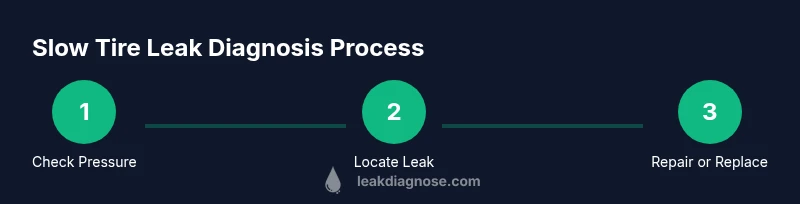
Diagnosis starts with a reliable pressure check. Use a quality tire pressure gauge and record the cold tire pressure. Recheck after several hours or a full day to confirm a pressure drop. Next, perform a soap-and-water test: mix dish soap with water in a spray bottle and apply it to the tire’s tread, sidewalls, bead area, and valve stem. Look for continuous bubbles indicating a leak. Inspect the valve stem for looseness or damage, and examine the rim bead for gaps or corrosion. If you find the source is near the bead or rim, you may need rim repair or professional attention. Mark any leak sites with chalk or tape so you can return to them during repairs.
Repair options: patching, plugging, and sealing
Repair decisions depend on leak location and tire condition. Small punctures in the tread away from the shoulder can often be repaired with a patch or plug kit, or a combination patch-plug if allowed by local guidelines. Punctures near the shoulder or sidewall generally require tire replacement rather than repair, as sidewall integrity is critical for safety. For tubeless tires, patching from inside after removing the wheel is a common durable solution, while plugs are a simpler exterior fix suitable for certain punctures. In all cases, ensure the tire is completely dry before applying any repair material, and follow the patch or plug manufacturer's instructions. A tire sealant is typically considered a temporary stop-gap and should not be used as a long-term repair in most cases. After a repair, reinstall the wheel, torque the lug nuts to specification, and test the tire by driving slowly in a safe area to verify no further air loss.
When to replace tires and seek professional help
If the leak is in the sidewall, involves large punctures, or you cannot locate a source with confidence, replacement is the safest option. Even if a repair seems possible, a tire that has suffered severe impact damage or obvious tread separation should be replaced rather than repaired. If you’re unsure about the repair quality or the tire shows signs of internal damage after inspection, consult a certified technician. Regular professional inspections can prevent unsafe driving conditions caused by undetected leaks.
Prevention tips to minimize future leaks
Maintain proper tire pressure weekly when the tires are cold, and adjust for speed and load according to the vehicle’s manual. Rotate tires per manufacturer recommendations to ensure even wear, and inspect tires for embedded objects, cracks, and puncture marks during routine car care. Avoid driving over sharp objects when possible, and use tire sealant only as a temporary measure in emergencies where a spare tire is available. Finally, replace aging tires before tread wear becomes severe, which reduces the risk of slow leaks developing due to wear-related damage.
Tools & Materials
- Car jack(Choose a jack rated for your vehicle's weight; use on a flat surface)
- Lug wrench(Must fit your lug nuts; use to loosen before lifting)
- Tire pressure gauge(Calibrated and read accurately)
- Soapy water spray bottle(Dish soap mixed with water; apply to suspected leak areas)
- Tire patch kit (patch and/or plug)(Follow kit instructions; patch from inside if possible)
- Wheel chocks(Place in front and behind the vehicle to prevent movement)
- Gloves(Protect hands from sharp objects)
- Torque wrench (optional)(Used to precisely torque lug nuts to spec)
- Rim protection/ bead sealer (optional)(Provides additional bead sealing if needed)
Steps
Estimated time: 45-90 minutes
- 1
Prepare workspace and secure vehicle
Park on a flat surface, engage the parking brake, and place wheel chocks if available. Put on gloves and ensure the car cannot roll while you work. If you need to lift the car, position the jack at the correct lift point and use jack stands for support.
Tip: Double-check that the vehicle is stable before proceeding. - 2
Loosen lug nuts and remove the wheel
With the car on the ground, slightly loosen the lug nuts. Use the jack to lift the vehicle, then remove the lug nuts completely and take the wheel off. Place the wheel on a clean surface for inspection.
Tip: Loosen nuts in a star pattern to avoid warping the wheel hub. - 3
Inspect the tire for damage
Look for embedded objects, cracks in the sidewall, or bead issues. If you locate a clear puncture in the tread within repair guidelines, you may proceed with a patch/plug. If damage is near the rim or sidewall, consider replacement.
Tip: Handle the tire gently to avoid worsening damage. - 4
Locate the leak with soapy water
Inflate the tire slightly to seat the bead, then apply soapy water to suspect areas (tread, sidewalls, valve stem, bead). Watch for bubbles that indicate air escape. Mark the leak location with chalk or tape for reference.
Tip: Do this test with the tire cold for accurate results. - 5
Repair or replace based on location
If the puncture is repairable (tread area, not near the edge), apply a patch or plug per kit instructions or have a professional patch from inside. Do not repair sidewall or large punctures. If repair isn’t feasible, replace the tire.
Tip: Follow manufacturer instructions and local safety guidelines. - 6
Reinstall, inflate, and test
Mount the wheel, hand-tighten the lug nuts, then torque them to spec. Inflate the tire to the vehicle’s recommended pressure and recheck after driving a short distance to ensure the leak is fixed.
Tip: Take a short test drive in a safe area to confirm stability.
Questions & Answers
What is a slow tire leak?
A slow tire leak is air loss that occurs gradually over days or weeks. It makes it important to regularly check tire pressure and inspect for sources such as punctures, valve issues, or bead leaks. Pinpointing the source helps determine whether repair or replacement is needed.
A slow tire leak is air loss that happens gradually over days or weeks. Find the source to decide if it can be repaired or if the tire should be replaced.
Can I drive on a tire with a slow leak?
Driving on a tire with a confirmed slow leak can be risky. If the leak is minor and repairs are feasible, limit driving and monitor pressure. If the tire shows sidewall damage or significant tread wear, replace it and avoid driving on it.
Driving on a tire with a leak can be dangerous. If you can repair it safely, limit driving and monitor the pressure; otherwise replace the tire.
What’s the difference between patching and plugging?
Patching repairs holes from the inside of the tire, while plugging seals from the outside. Some punctures are repairable with a patch-plug combination. The location and size determine whether either method is appropriate.
Patching fixes from inside while plugging seals from the outside; some punctures need a combination patch-plug.
Should I use tire sealant as a fix?
Tire sealant is usually a temporary emergency measure and not a permanent fix. It may help you reach a repair facility, but it should not replace a proper patch or replacement when required.
Sealant is generally a temporary solution. It helps you reach a repair shop, but a proper patch or tire replacement is often needed.
When should I replace rather than repair a tire?
Replace the tire if the leak is in the sidewall, the puncture is large, or the tire has extensive wear. If you’re unsure about the repair’s durability, replacing the tire is the safer choice.
Replace the tire if the leak is in the sidewall or the puncture is large, or if wear is extensive.
Is a professional inspection necessary for stubborn leaks?
If the leak source remains unclear after inspection or if the tire shows signs of internal damage, a professional inspection is recommended. A technician can assess rim integrity, patch quality, and overall safety.
If you can't locate the leak or worry about rim damage, get a professional inspection.
Can I reuse the repaired tire after patching?
A repaired tire can be reused if the patch or plug is properly installed and the tire passes a thorough leak test. Many factors, including patch quality and patch location, influence longevity.
A properly repaired tire can be reused, but it depends on patch quality and leak test results.
Watch Video
Main Points
- Inspect tires regularly for slow leaks.
- Use soapy water to locate air escapes precisely.
- Choose patch, plug, or replacement based on leak location.
- Recheck air pressure after any repair.